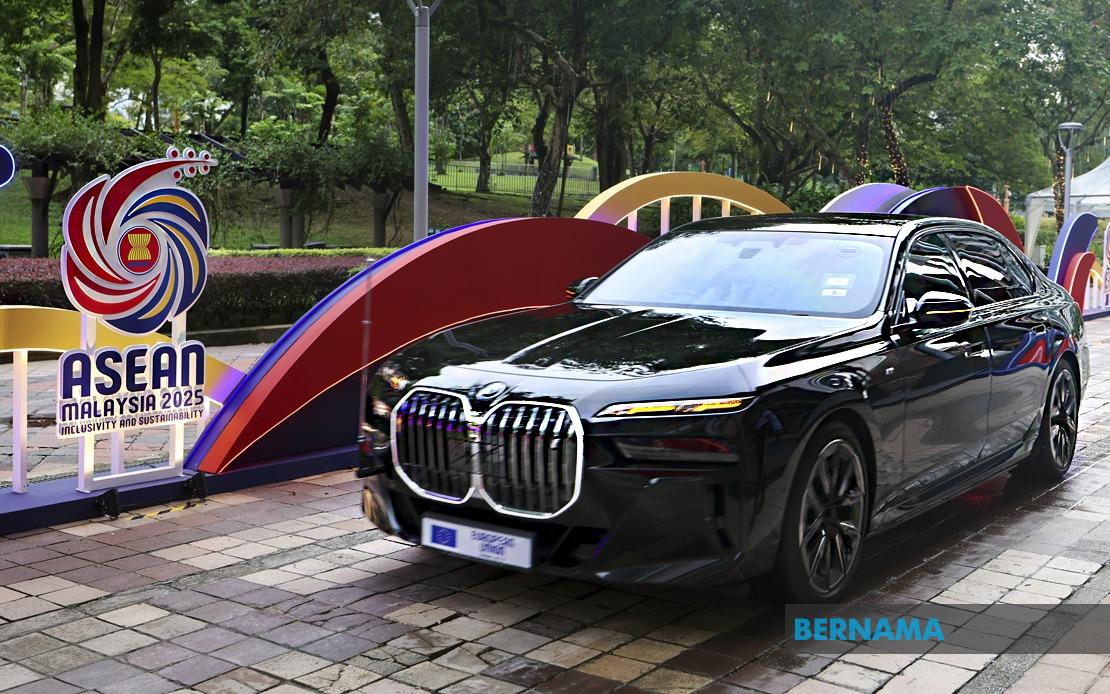
The Prime Minister's Department (JPM) has moved to quash growing speculation on social media about the procurement and ownership of a luxury BMW vehicle spotted accompanying Prime Minister Datuk Seri Anwar Ibrahim in recent days. In a statement issued through Facebook, JPM and the Ceremonial and International Conference Secretariat Division (BIUPA) clarified that the vehicle is not a fresh acquisition but rather an existing asset that has long been part of Malaysia's official government inventory.
The clarification addresses widespread rumours and conjecture that had circulated across digital platforms questioning whether the government had purchased the high-end vehicle as a new official transport. Such public queries are not uncommon in Malaysia, where government spending on ministerial vehicles has historically attracted scrutiny from taxpayer advocates and opposition politicians alike. The transparency effort by JPM reflects growing pressure on government agencies to explain purchases and asset allocations in real time.
According to the department, the BMW falls under the administrative responsibility of BIUPA and is specifically designated for official logistics operations at the state level. Rather than serving as the Prime Minister's everyday transport, the vehicle fulfils a specialised diplomatic function. It is deployed primarily to support the complex security and logistical requirements that accompany official state visits when foreign heads of state or government—those holding the rank of president or prime minister—visit Malaysia on formal business.
The security specifications embedded in the vehicle represent a critical component of Malaysia's commitment to international protocols and safety standards. The BMW has been engineered to withstand multiple modern threats that dignitaries and high-ranking officials face. These security features include reinforced ballistic protection capable of resisting high-caliber ammunition, blast-resistant components designed to mitigate explosive attacks, and sophisticated systems to counter contemporary security risks including unmanned aerial vehicle threats. Such specifications are standard for vehicles used in official state protocols across the region and internationally.
PM Anwar Ibrahim's deployment of the BMW is temporary in nature and follows a security assessment and recommendation made by the Royal Malaysian Police (PDRM). The timing of this shift in vehicle use coincides with scheduled maintenance of the Prime Minister's primary official vehicle, which was a gift from the Yang di-Pertuan Agong. Regular servicing and upkeep of executive transport vehicles is a routine administrative function that occasionally necessitates temporary substitutions to ensure uninterrupted official duties and security coverage.
The distinction between temporary and permanent deployment is significant in Malaysian governmental context. By emphasising the interim nature of the BMW's use, JPM signals that the arrangement is not a permanent upgrade to the Prime Minister's fleet and that the primary official vehicle will resume service once maintenance is completed. This clarification helps manage public perception regarding government asset management and spending priorities, areas that remain sensitive in Malaysian public discourse.
The vehicle's specialised security architecture represents an investment made years prior, likely under previous administrations, reflecting the ongoing nature of Malaysia's diplomatic commitments and security obligations. The nation regularly hosts high-level international delegations and participates in multilateral forums where such protected transport is essential. Understanding that the asset predates recent decisions provides important context for public accountability discussions.
International security protocols governing dignitary protection have become increasingly sophisticated and costly in recent decades. Nations throughout Southeast Asia and globally maintain fleets of specially equipped vehicles to comply with established security standards. These vehicles typically involve collaboration between automotive manufacturers and specialist security firms to integrate protection systems while maintaining functionality and operational reliability. The presence of such vehicles in Malaysian government inventory reflects both the nation's standing in regional and international affairs and the genuine security threats that accompany high-office positions.
The public clarification by JPM exemplifies how government agencies in Malaysia are adapting to the demands of digital-age transparency and information management. With social media enabling rapid dissemination of speculation, official departments increasingly face pressure to provide timely explanations for visible government activities. The Facebook statement represents a direct engagement strategy aimed at controlling narrative and preempting sustained criticism or conspiracy theories from taking root online.
For Malaysian readers and observers, this episode underscores the ongoing balance between protecting executive security—a legitimate governmental function—and maintaining public transparency regarding state assets. The deployment of sophisticated security vehicles is neither unusual nor inherently problematic, but public understanding of their purpose and existing status reduces fertile ground for unfounded speculation. The case also highlights how routine maintenance schedules can occasionally trigger public questions about government operations, necessitating clear and timely communication from relevant authorities.
Moving forward, the incident suggests that regular public updates about major government asset inventory and their operational status might preemptively address similar questions. As Malaysia continues positioning itself as a significant player in regional diplomacy and international engagement, the infrastructure supporting such activities—including specialized security vehicles—remains an important if sometimes misunderstood component of statecraft and executive protection.

