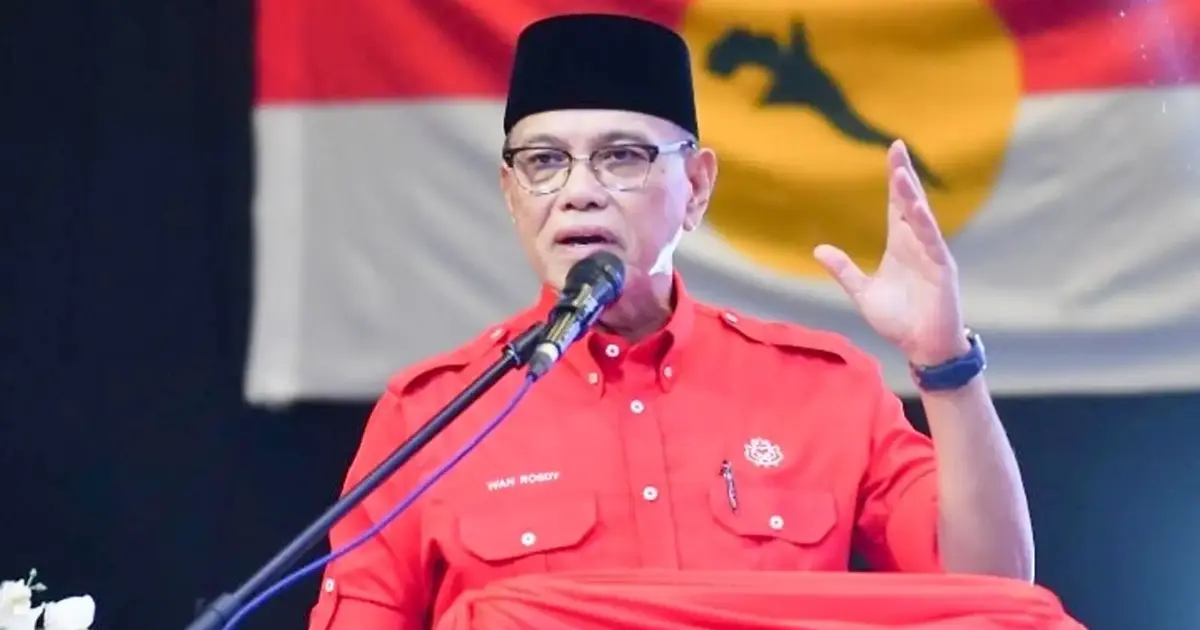
A prominent Umno figure has dampened expectations of any forthcoming collaboration between Barisan Nasional and Perikatan Nasional ahead of Malaysia's sixteenth general election, indicating that both coalitions remain focused on their immediate political priorities rather than national-level electoral engineering. Wan Rosdy, serving as Umno vice-president, made clear that substantive talks aimed at forging an alliance have not materialised, and that the present moment favours consolidation over negotiations.
The remarks carry significance given the evolving landscape of Malaysian coalition politics, where the traditional dominance of Barisan Nasional has been challenged repeatedly since the 2018 general election. Perikatan Nasional's emergence as a viable opposition force, particularly after its near-victory in Peninsular Malaysia during GE15 in 2022, has prompted speculation about potential realignments. The question of whether these two blocs might eventually collaborate, rather than contest against each other, has become a recurring theme in political commentary, with observers attempting to gauge the likelihood of such a merger occurring before the next electoral cycle.
Wan Rosdy's statement suggests that at least from the Umno perspective, the practical demands of governance currently override strategic calculations about future electoral positioning. Negeri Sembilan recently underwent a significant political transition, with a new state government taking office following recent developments in the state assembly. The process of establishing stable administrations at the state level, appointing officials to key positions, and implementing promised policies typically consumes the political bandwidth of those directly involved in such transitions. For an Umno vice-president to emphasise this focus implies that the party views the strengthening of its hold on Negeri Sembilan as more urgent than pursuing broader coalition negotiations.
This prioritisation reflects a broader pattern observable in Malaysian politics, where leaders frequently manage multiple timescales simultaneously. State-level political stability represents the foundation upon which national-level negotiations become possible. If Barisan Nasional were to encounter difficulties in managing its newly consolidated Negeri Sembilan government, it would undermine the coalition's overall credibility as a governing force, making it a weaker negotiating partner in any future talks with Perikatan Nasional. Conversely, demonstrating competent stewardship at the state level enhances a coalition's bargaining position.
The absence of talks between the two major coalitions at this juncture does not necessarily indicate a permanent distance between them. Malaysian political dynamics have historically shown remarkable fluidity, with coalitions forming, dissolving, and reforming according to shifting circumstances and calculations. Perikatan Nasional itself was born out of such realignments, emerging as a distinct political force through combinations of previously separate components. The relationship between Barisan Nasional and Perikatan Nasional remains largely adversarial at present, but the volatility of electoral mathematics means that mutual interest in cooperation could arise under altered conditions.
For Southeast Asian observers and investors monitoring Malaysia's political trajectory, such signals about the timing and likelihood of major political reorganisations carry practical implications. Uncertainty about whether the next general election will see a two-coalition contest or a more complex multi-sided arrangement affects assessments of governmental stability, policy continuity, and economic governance prospects. International actors invested in Malaysian affairs often prefer clarity about the rules of political competition, as this allows for more predictable forecasting of policy outcomes and institutional resilience.
The Malaysian electorate, having grown accustomed to increasingly fluid political arrangements over recent years, has developed greater sophistication in reading such signals from party leaders. Wan Rosdy's comments will be interpreted by party insiders and political observers as indicating that Umno's current strategy involves demonstrating governmental competence rather than seeking protective alliances, at least in the immediate term. This approach carries inherent risks and rewards: success in Negeri Sembilan could validate Barisan Nasional's claim to effective leadership, while stumbles would vindicate those who doubted the coalition's capacity to govern.
The timeline to GE16 provides ample opportunity for political calculations to shift. General elections in Malaysia must occur within five years of their predecessor, and with GE15 held in November 2022, the constitutional window for GE16 extends across several years. This extended horizon means that positioning statements made today should be understood as reflecting current priorities rather than iron-clad commitments regarding future arrangements. Political leaders frequently leave themselves rhetorical wiggle room, using language that technically forecloses nothing while signalling present intentions.
Peering into the longer arc of Malaysian coalition politics, the current stance adopted by Barisan Nasional leadership suggests a period of consolidation and confidence-building rather than desperate seeking of electoral pacts. Whether this reflects genuine strength or merely confident messaging remains an open question that will be tested through the actual performance of Barisan Nasional-led governments, particularly in Negeri Sembilan. The true nature of that performance will ultimately shape the feasibility and desirability of future negotiations with Perikatan Nasional.

