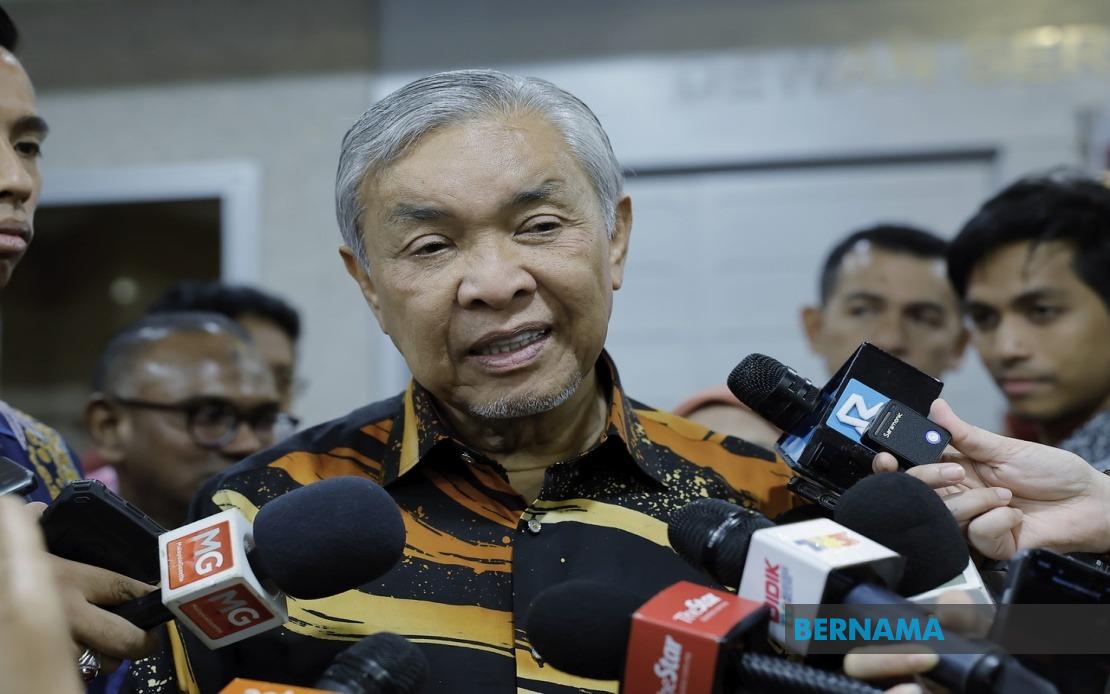
Deputy Prime Minister Datuk Seri Dr Ahmad Zahid Hamidi has issued a firm warning that Barisan Nasional and UMNO will adopt a zero-tolerance approach towards any misconduct or administrative failures within Tabung Haji, reiterating the coalition's commitment to accountability across government institutions. Speaking in Putrajaya following the Rural and Regional Development Ministry's monthly assembly, Ahmad Zahid emphasised that wrongdoing within statutory bodies cannot be overlooked or minimised under any circumstances, and that those implicated must face appropriate consequences.
His statement arrives at a critical juncture for the pilgrims' fund, which faces renewed scrutiny following the release of the Royal Commission of Inquiry report on July 29. The comprehensive investigation into Tabung Haji's management and operational practices between 2014 and 2020 uncovered troubling evidence, including suspicious financial transactions and deliberate concealment of material information. The findings have sparked significant concern among the millions of Malaysian Muslims who have contributed to the institution over decades, viewing it as a sacred trust for their pilgrimage savings.
The RCI's recommendations centre on conducting a thorough forensic audit of investment decisions that precipitated the substantial erosion of Tabung Haji's asset base. This recommendation reflects the severity of the financial deterioration the institution experienced during the investigated period, a decline that has understandably alarmed contributors and policymakers alike. The scale of asset depletion prompted the commission to call for detailed technical examination of how these investments were made and approved, seeking to establish accountability chains and identify systemic weaknesses.
Parliament is scheduled to hold a dedicated session on August 11 specifically to debate and scrutinise the RCI report's findings and recommendations. This parliamentary discussion represents a crucial democratic accountability mechanism, allowing elected representatives to question government officials and demand transparency regarding how the nation's most vulnerable citizens' savings have been managed. The session signals serious political commitment to addressing the issues identified, though implementation will prove the true test of resolve.
For Malaysian stakeholders, particularly the estimated 9.8 million Tabung Haji contributors, Ahmad Zahid's public commitment carries significant weight given his position as both Deputy Prime Minister and BN chairman. His unequivocal language about not compromising on wrongdoing suggests the government intends to pursue reforms and potentially hold individuals accountable, pending the forensic audit's conclusions. However, observers note that such pronouncements require concrete follow-up actions to restore public confidence in an institution that occupies a unique place in Malaysian Islamic finance and social policy.
The Tabung Haji situation intersects multiple policy concerns. Beyond the immediate financial management questions, it touches on governance standards within Malaysia's statutory authorities, the adequacy of oversight mechanisms, and the government's capacity to protect citizens' savings entrusted to state institutions. The case has become emblematic of broader concerns about institutional integrity, particularly regarding government-linked entities managing sensitive public funds.
From a Southeast Asian perspective, the Tabung Haji case carries implications beyond Malaysia's borders. As a region with significant Muslim populations and growing Islamic finance sectors, how Malaysia addresses this institutional failure will influence regional confidence in government-backed Islamic financial instruments. Other countries in ASEAN managing similar pilgrimage funds or faith-based financial institutions will be watching closely to assess whether Malaysia's governance response provides a credible model or cautionary tale.
The RCI's work represents the investigative process operating as intended—independent inquiry revealing systemic problems and recommending corrective action. The government's response, as exemplified by Ahmad Zahid's statement, will determine whether these findings translate into meaningful institutional reform or become another high-profile report shelved without substantive implementation. The forensic audit recommended by the RCI will be pivotal, as it should provide granular detail about decision-making processes and identify specific individuals responsible for problematic transactions.
Restoring trust in Tabung Haji presents a dual challenge: addressing the historical mismanagement while simultaneously implementing governance improvements that prevent recurrence. This requires not merely identifying and penalising wrongdoers, but fundamentally strengthening institutional architecture, board oversight, investment committees, and external auditing mechanisms. Ahmad Zahid's emphasis on accountability and consequences suggests the government recognises this imperative, though political will must be sustained through the complex implementation process ahead.

