Barisan Nasional is banking heavily on the continued backing of Federal Land Development Authority communities as it contests the Kulai parliamentary constituency in the 16th Johor state election. The coalition's local leadership believes the party can significantly improve its performance in four FELDA settlements—Taib Andak, Inas, Bukit Permai, and Bukit Batu—which together house approximately 7,000 registered voters spread across three state assembly seats. This confidence marks a notable shift from earlier electoral disappointments, when FELDA communities turned away from BN in substantial numbers.
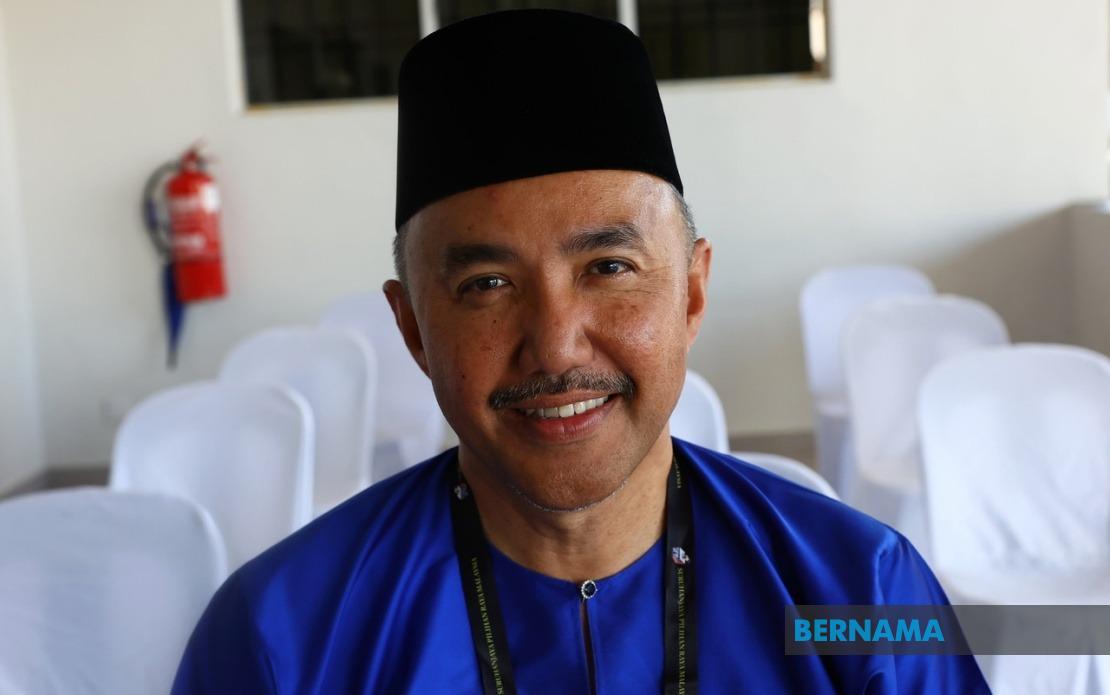
The optimism stems from what Datuk Mohd Jafni Md Shukor, the Kulai BN chairman defending his Bukit Permai seat, characterizes as the Johor state government's sustained dedication to improving conditions for FELDA residents. Over the past four years under Menteri Besar Datuk Onn Hafiz Ghazi's administration, the state has rolled out a range of targeted support mechanisms designed to address long-standing grievances. Jafni's assessment suggests that the previous collapse of BN support in FELDA areas—particularly evident during the 2018 state election—represented not ideological abandonment but rather temporary frustration with specific governance failures that are now being remedied.
One cornerstone of the state government's strategy has been tackling the education needs of FELDA families through the Johor Education Foundation, providing financial assistance to students from these settlements. This initiative directly addresses a critical concern for FELDA communities, where income volatility and agricultural uncertainties have traditionally made funding children's education a source of anxiety. By institutionalizing educational support through a state-level foundation, the government has attempted to demonstrate tangible commitment beyond electoral rhetoric, creating a mechanism that provides ongoing benefits regardless of political cycles.
Equally significant has been the resolution of a protracted land title dispute that has haunted FELDA communities for years. The Johor government reports that it has now settled ownership applications affecting 99.9 percent of affected settlers, representing what officials present as a historic breakthrough in safeguarding property rights and economic security. For FELDA residents who have felt marginalized and forgotten during previous administrations, this resolution of a technical bureaucratic problem carries profound psychological and economic weight, validating their sense that the current state government takes their concerns seriously enough to prioritize resolution of complex, long-standing issues.
However, Jafni's confidence must be interpreted within a context of persistent uncertainty. The 2022 election showed improved BN performance in FELDA areas compared to 2018, but this improvement came from a very low baseline. The improved trajectory does not necessarily indicate a full return to the dominance BN once enjoyed in these communities. FELDA voters have demonstrated in recent years that they are willing to switch allegiances when dissatisfied, suggesting they have moved beyond the automatic party loyalty that once characterized rural constituencies in Malaysia. The current contest, therefore, represents a test of whether incremental improvements in service delivery can genuinely restore dormant support.
The electoral mathematics of Kulai also underscore the significance of FELDA backing. Within the parliamentary constituency, BN must contest across three state assembly seats: Bukit Permai, Bukit Batu, and Senai. The party is defending Bukit Permai, where Jafni secured a majority of 4,755 votes in 2022, and targeting gains in the other two seats. While 7,000 FELDA voters distributed across these constituencies may seem modest compared to total electorate sizes, in a competitive three-way or four-way contest, concentrated support from a geographically defined community can prove decisive. FELDA settlements have historically delivered bloc voting patterns that can swing tight races.
Jafni's four-cornered contest in Bukit Permai reflects the fractured opposition landscape in the Johor election. Facing him are Muhammad Aidil Riduan Mohd Yusof of the newer Parti Bersama Malaysia, Mohamad Shafwan Ani representing the Pakatan Harapan coalition, and M. Lina Manoh from Perikatan Nasional. This division of opposition forces may inadvertently benefit the incumbent, particularly if FELDA voters remain persuadable but lack enthusiasm for any single opposition alternative. The fragmentation means no opposition party can claim consolidated support from these communities, potentially allowing BN's messaging around welfare improvements to achieve disproportionate resonance.
Jafni has explicitly framed the election as a mandate-renewal exercise, arguing that four years of BN governance represents insufficient time to realize the full development agenda envisioned for Johor. This framing invites voters to view the election not as judgment on past performance but as approval to accelerate ongoing initiatives. For FELDA constituencies where improvements are tangible but perhaps not yet deeply felt across all households, this narrative carries weight. The implicit message—that more time will yield more visible benefits—appeals to communities that have learned through experience that political transitions often result in disruptions and reversals of ongoing projects.
The appeal to FELDA voters also reflects broader BN strategy in Johor, where the coalition must defend its overall state-level majority. FELDA communities represent one of the few constituencies where BN retains relatively strong traditional support networks and where targeted welfare programs can generate measurable electoral impact. Unlike urban constituencies, where voting behavior has become increasingly unpredictable and issue-driven, FELDA settlements offer the coalition a more stable pool of persuadable voters where investment in community-specific programs can translate into electoral returns.
Yet the sustainability of this strategy remains uncertain. Malaysia's FELDA communities face structural economic challenges stemming from palm oil price volatility, aging settler populations, and land constraints that prevent expansion. No state government program, however well-intentioned, can fully insulate these communities from global commodity price fluctuations or provide employment alternatives sufficient to retain younger generations. If economic conditions deteriorate during the coming term, gains in political support achieved through welfare initiatives risk evaporating. The 2018 swing away from BN in FELDA areas reflected primarily economic desperation rather than ideological conversion, suggesting that support remains conditional on tangible material improvement.
The polling is scheduled for July 11, with early voting available on July 7, giving both BN and opposition parties just over a week from Jafni's statement to consolidate support. For FELDA residents in Kulai, the election represents an opportunity to either endorse the current trajectory of incremental improvement or to gamble on opposition alternatives offering different policy frameworks. Given the four-way split in the Bukit Permai contest and similar patterns across other state seats in the constituency, the actual outcome may depend less on absolute enthusiasm for any party than on which coalition manages the most effective mobilization of its core supporters.

