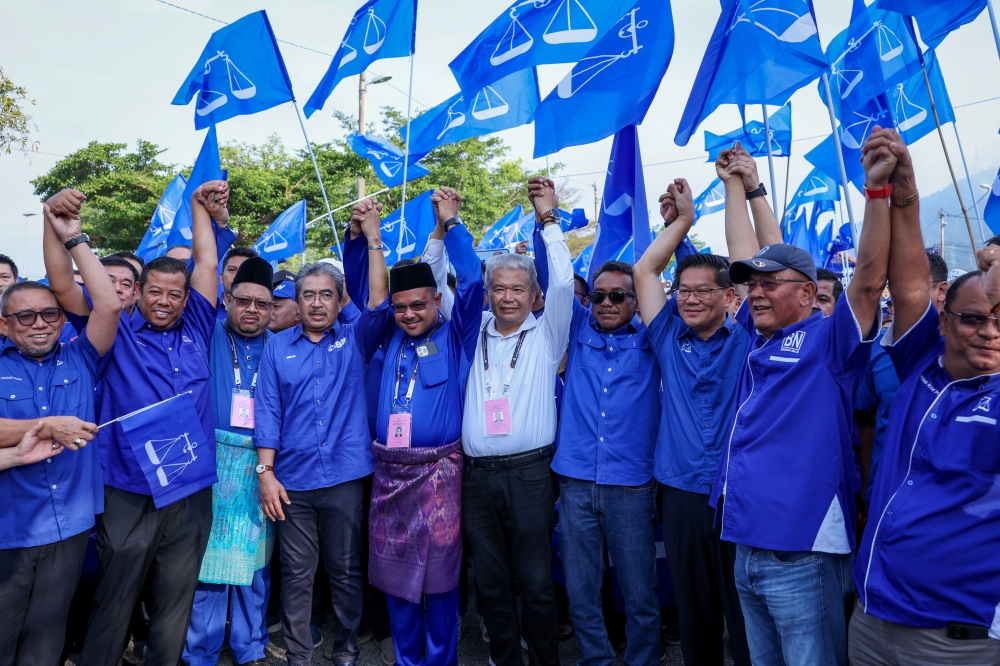
Barisan Nasional has committed itself to maintaining a civilised and dignified campaign throughout the forthcoming Negeri Sembilan state election, according to a statement from senior Umno leadership made in Tampin on July 18. The coalition's intention reflects broader concerns within Malaysia's political establishment about the tone and conduct of electoral contests, particularly at the state level where regional sensitivities and local community interests often intensify partisan messaging.
The assurance comes at a strategically significant moment for the ruling coalition, which faces mounting pressure to rebuild public confidence following previous electoral setbacks and recurring controversies surrounding political financing and governance standards. By explicitly signalling a commitment to ethical campaign practices, BN leadership appears to be repositioning the coalition as a responsible custodian of democratic norms at a time when voter sentiment increasingly favours parties perceived as operating with integrity and transparency.
Negeri Sembilan represents a politically crucial state for BN's broader peninsular strategy. The state's composition of diverse constituencies—ranging from urban areas in Seremban and Kuala Lumpur's dormitory towns to rural Malay-Muslim majority districts—requires a calibrated approach that can simultaneously appeal to cosmopolitan urban voters concerned with governance quality whilst maintaining traditional support in rural heartlands. A civil campaign framework aligns with this multi-dimensional electoral challenge by elevating substantive policy discussion rather than relying on divisive rhetoric.
The pledge to conduct dignified politics also carries implications for inter-coalition dynamics within BN itself. The partnership between Umno, MCA, and MIC requires delicate management, particularly in states where component parties compete for distinct voter demographics. A commitment to civil campaigning helps prevent intra-coalition friction from escalating into public disputes that could undermine the broader BN project, whilst simultaneously projecting unity and stability to potential voters concerned about governance capacity.
Historically, Malaysian state elections have occasionally witnessed heated campaigns featuring personal attacks, religious or racial innuendo, and inflammatory rhetoric that polarised communities beyond the election period. BN's explicit commitment to avoiding such tactics suggests recognition that electoral outcomes increasingly depend upon swing voters in urban and semi-urban areas who penalise parties seen as promoting divisive messaging. This demographic shift has fundamentally altered the calculus of electoral strategy across Malaysia's political landscape.
The Negeri Sembilan election occurs within a broader context of heightened political activity across Malaysia, with multiple state-level contests anticipated over the coming years. BN's positioning on campaign conduct may establish precedent for how other coalitions and parties approach upcoming electoral contests. Should the coalition successfully execute a civil campaign whilst achieving competitive electoral results, it could vindicate this approach and encourage adoption elsewhere. Conversely, any failure to maintain these standards would significantly undermine the credibility of such commitments.
From a voter perspective, the emphasis on civilised campaigning addresses documented concerns about political polarisation and social fragmentation. Malaysian society has grown increasingly anxious about the divisive potential of unrestrained political competition, particularly regarding religious and ethnic sensitivities. Voter preference for parties demonstrating restraint and ethical conduct has become particularly pronounced among younger, educated, urban-based populations who increasingly view political integrity as central to governance legitimacy.
The BN commitment also reflects tactical calculations regarding opposition positioning. By occupying the moral high ground on campaign conduct, BN attempts to force opposition parties into either matching this standard—limiting their communication options—or appearing to embrace negative campaigning. This asymmetric positioning provides the ruling coalition with rhetorical advantage even if actual campaign conduct becomes contentious.
Implementation of civil campaign standards requires institutional discipline within BN. Party machinery must ensure that candidates, grassroots operatives, and party supporters adhere to stated principles rather than engaging in local-level attacks that could undermine leadership commitments. This supervisory challenge intensifies in contested constituencies where electoral stakes run high and activists may resist communication constraints imposed by national leadership.
The broader regional context matters significantly for understanding BN's positioning. Across Southeast Asia, ruling coalitions increasingly face voter demands for governance quality and ethical politics. Successful incumbents in the region have generally built electoral victories upon platforms emphasising stability, competence, and inclusive governance rather than divisive mobilisation. BN's approach arguably reflects learning from regional precedents regarding sustainable political dominance.
For Malaysian observers monitoring coalition dynamics, BN's civil campaign pledge warrants close scrutiny during the actual electoral period. The commitment provides measurable standard against which the coalition's actual conduct can be evaluated. Should campaign implementation deviate significantly from stated principles, the episode would reinforce voter scepticism regarding political promises. Conversely, successful adherence to ethical standards would strengthen BN's positioning heading toward potential future national-level electoral contests.
The Negeri Sembilan election ultimately serves as significant test case for BN's broader strategic reorientation toward emphasising governance quality, democratic propriety, and social cohesion rather than relying primarily upon traditional patronage networks and identity-based mobilisation. How effectively the coalition executes this repositioning will substantially influence electoral trajectories not merely in Negeri Sembilan but across Malaysia's political landscape.

