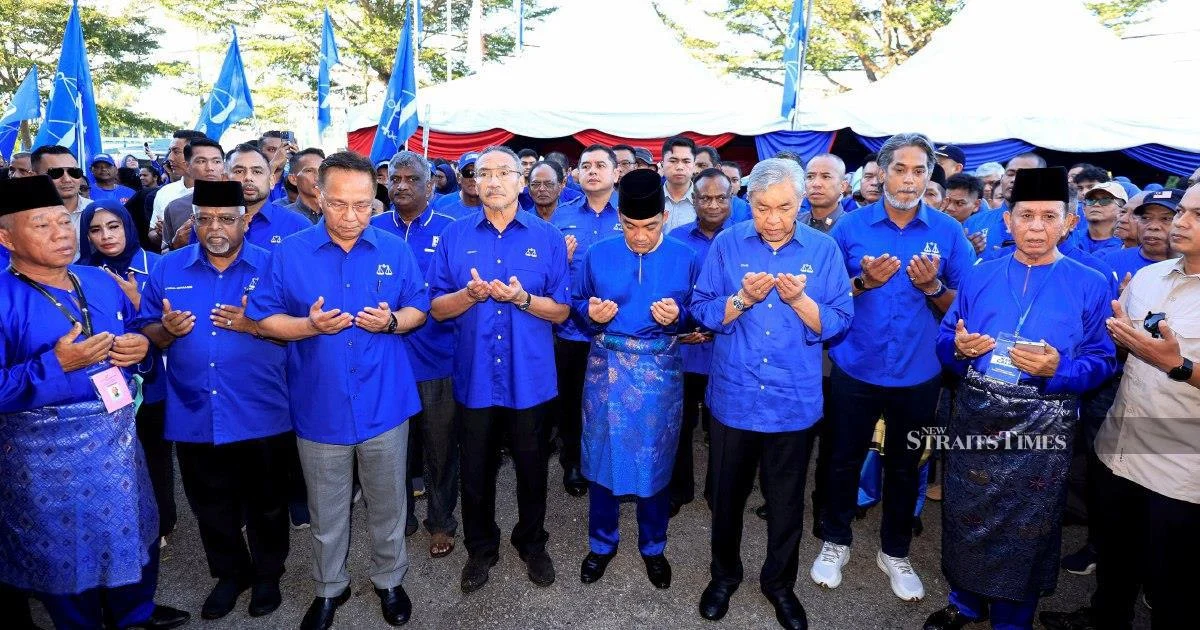
The appearance of prominent Barisan Nasional figures at Simpang Renggam District Council marks a significant show of force by the ruling coalition in its efforts to consolidate support around Johor Chief Minister Datuk Onn Hafiz Ghazi. The coordinated deployment of BN heavyweights underscores the party's recognition that maintaining its stronghold in the southern state remains a critical objective in Malaysia's evolving political landscape.
Johor has long represented a BN bastion, though recent electoral trends across the country have prompted party strategists to invest considerable resources in shoring up traditional support bases. The gathering of multiple senior figures in a single location serves as both a morale-boosting exercise for grassroots members and a calculated messaging strategy aimed at potential swing voters. Such demonstrations of party unity carry particular weight in Malaysian politics, where faction-building and internal competition frequently undermine collective efforts.
Onn Hafiz's position as Johor's chief minister places him at the forefront of state-level governance during a period of significant economic and social challenges. The presence of national-level BN representatives alongside him signals that party leadership views his continued prominence as essential to the coalition's broader electoral prospects. This alignment also reflects confidence in his stewardship of state affairs, though it remains to be seen whether such top-down support translates into sustained grassroots enthusiasm.
The Simpang Renggam locale carries strategic significance within Johor's political geography. As an interior district with a diverse demographic composition, it represents the type of mixed constituency where elections are frequently decided. BN's concentration of effort in such areas suggests a recognition that victory margins in future contests may depend on mobilizing support in constituencies beyond traditional urban strongholds. The symbolic weight of senior leaders visiting such locations cannot be underestimated in Malaysian campaign dynamics.
Within the broader context of Malaysian politics, this gathering illustrates BN's attempt to demonstrate cohesion and forward momentum at a time when opposition coalitions have made inroads in several states. The coalition has faced successive electoral setbacks since 2018, prompting party leaders to adopt more aggressive campaign strategies. Johor's relative stability under BN governance provides the party with a substantive platform upon which to build its electoral messaging.
The participation of multiple heavyweights also addresses potential internal party concerns. By bringing together figures from different BN component parties—whether from UMNO, MCA, MIC, or other allied organizations—the gathering demonstrates commitment to the coalition's continued relevance as a multiracial political force. This becomes particularly important in Johor, where the state's demographic complexity requires messaging that resonates across different community segments.
Onn Hafiz's own political trajectory has been noteworthy. His rise through state-level politics and assumption of the chief minister position reflects generational shifts within UMNO and broader BN leadership structures. The public backing he received at Simpang Renggam suggests that senior party figures view him as a capable custodian of BN interests in Johor and potentially as a figure with national-level potential. Such endorsements, when orchestrated effectively, can significantly influence voter perception of a politician's viability and momentum.
From a Southeast Asian perspective, Johor's political dynamics merit close observation. As Malaysia's most developed southern state with significant economic interdependencies with Singapore and broader regional trade networks, developments in Johor politics carry implications beyond state boundaries. Political stability in the state, and BN's ability to maintain governance credibility, affects investor confidence and regional economic planning.
The timing of this show of force also reflects BN's strategic calendar. Whether this gathering precedes formal electoral announcements or represents part of an ongoing campaign cycle, the party's decision to invest in such high-profile displays suggests conviction that the electoral environment remains favourable within Johor. However, opposition parties have similarly intensified their activities, indicating that complacency would prove strategically inadvisable for any political force.
For Malaysian voters observing BN's Johor strategy, the message conveyed by multiple party heavyweights clustering around a single chief minister carries both reassurance and implicit messaging. It signals that the party's decision-making hierarchy views this state as sufficiently important to warrant concentrated leadership attention. Simultaneously, it raises questions about the distribution of party resources and whether other states receive comparable levels of senior-level engagement.
The gathering at Simpang Renggam ultimately reflects BN's determination to retain its grip on Johor governance while simultaneously projecting an image of party unity and purposeful direction. Whether such symbolic displays translate into tangible electoral advantages will depend on numerous factors beyond the impressive attendance of senior figures, including on-ground campaign effectiveness, voter sentiment regarding governance performance, and the quality of opposition challenges. The coming months will reveal whether this concentration of leadership attention on Onn Hafiz translates into sustained electoral momentum or remains merely a high-profile but ultimately inconsequential display.

