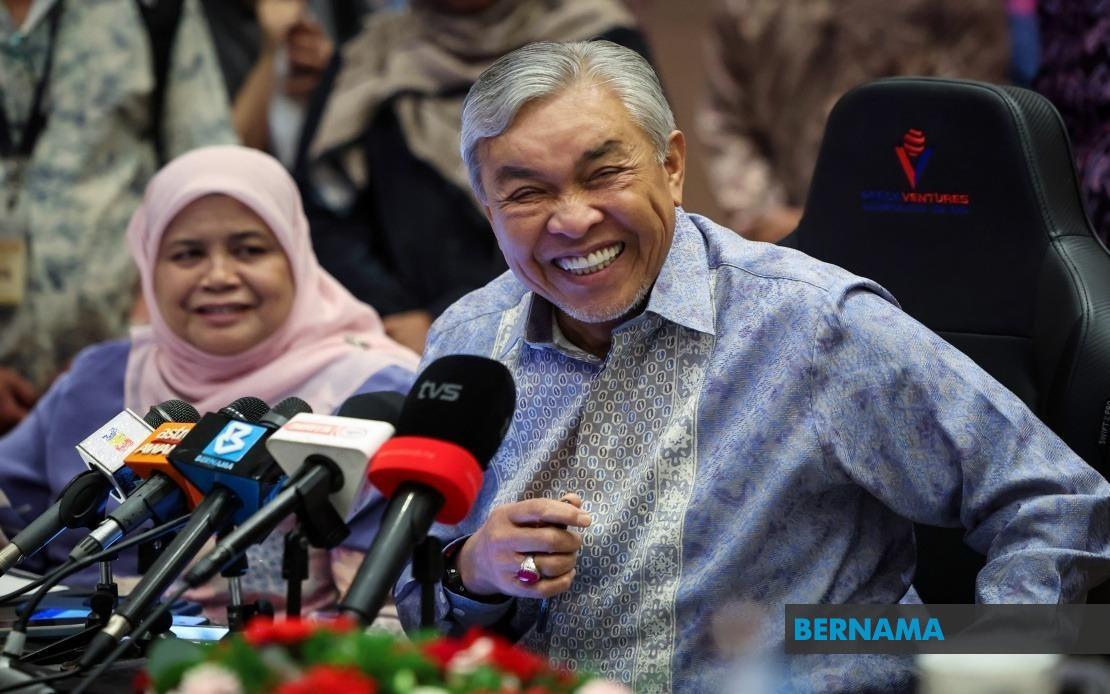
Barisan Nasional has moved to quell persistent speculation about its future role in Malaysia's governing coalition, with the bloc's leadership affirming its pledge to remain part of the Unity Government until the conclusion of the 15th Parliament's term. Speaking in Penang on July 23, Deputy Prime Minister and BN chairman Datuk Seri Dr Ahmad Zahid Hamidi made unequivocal statements rejecting suggestions that the coalition might pursue alternative political arrangements, dismissing references to dramatic power shifts with characteristic bluntness.
The remarks arrive against a backdrop of frequent political rumour-mongering that has characterised Malaysian politics since the formation of the Unity Government in late 2022. Ahmad Zahid's forceful language—specifically rejecting references to "Bangkok Move" or "Dubai Move" scenarios—underscores the seriousness with which BN leadership treats such speculation. These terms have become colloquialisms in Malaysian political discourse, referring to coups or sudden governmental shifts engineered from abroad, and their invocation reflects the genuine anxiety that persists within certain quarters about the stability of the current administration.
The constitutional foundation for the Unity Government emerged from the Yang di-Pertuan Agong's directive following the 2022 General Election, when no single coalition achieved a decisive parliamentary majority. This scenario created unprecedented political circumstances requiring multiple blocs—BN, Pakatan Harapan, and smaller parties—to collaborate in governing. Ahmad Zahid's statement emphasises that BN's involvement originated from royal decree rather than opportunistic political maneuvering, a framing that carries considerable symbolic weight within Malaysia's constitutional monarchy framework. His insistence that the commitment "has never wavered" serves to position BN as a responsible stakeholder in the constitutional order.
For Malaysian observers and regional analysts, the timing of these reaffirmations matters considerably. They coincide with the Negeri Sembilan state election campaign, where internal BN tensions have surfaced. The controversy surrounding a BN polling district centre in Klawang, which suspended operations in protest after the coalition declined to field a candidate for the state seat, illustrates the strains that arise even within formally committed political alliances. Ahmad Zahid acknowledged the dispute directly, confirming discussions with Negeri Sembilan UMNO chief Datuk Seri Jalaluddin Alias and expressing confidence the matter would be resolved within nine days before polling.
The Klawang constituency situation itself illuminates broader complexities within Malaysia's coalition politics. The three-way contest between Pakatan Harapan's Bakri Sawir, Perikatan Nasional's Danni Rais, and Bersatu's Muhammad Adib Musa demonstrates how the national Unity Government arrangement does not automatically translate into seamless coordination at state level. When BN declines to contest a seat—potentially allowing a rival coalition component to face multiple challengers—grassroots party members may perceive this as sacrificing electoral opportunities for abstract national stability. Ahmad Zahid's need to personally intervene in resolving such tensions reveals the ongoing friction points within ostensibly united coalitions.
A significant dimension of Ahmad Zahid's statement concerns his explicit denial of formal negotiations regarding a proposed "Perikatan Barisan Nasional" (PBN) alliance with Perikatan Nasional. He clarified that while such an arrangement has been mentioned during campaign speeches, no official discussions have occurred between the two major coalitions. This distinction carries considerable importance, as it forestalls speculation that BN might be quietly preparing alternative configurations should the current Unity Government collapse. The careful qualifier that any such proposals would require "careful consideration" by relevant parties suggests Ahmad Zahid's recognition that even discussing such possibilities could undermine confidence in the existing coalition.
The personal dimension of Malaysian political dynamics also featured prominently in Ahmad Zahid's remarks. His light-hearted response to Prime Minister Anwar Ibrahim's recent pantun—responding with his own verse—demonstrates an attempt to project cordiality despite the two leaders campaigning on opposing sides in the Negeri Sembilan election. This Malaysian political ritual of exchanging pantun verses, particularly between rivals, carries symbolic significance beyond mere wordplay. It signals respect for traditional cultural forms while simultaneously demonstrating that electoral competition need not translate into personal animosity or governmental dysfunction.
For Southeast Asian regional observers, Malaysia's continuing navigation of coalition politics offers instructive lessons in managing political fragmentation without sacrificing democratic institutions. Unlike some neighbouring countries where political uncertainty has prompted military interventions or constitutional crises, Malaysia has maintained civilian democratic governance despite extraordinary coalition complexity. This stability reflects both structural constitutional features and pragmatic willingness among political competitors to acknowledge mutual dependence. Ahmad Zahid's repeated affirmations that BN will honour its commitment until Parliament concludes represent more than mere political rhetoric—they constitute the foundation upon which investor confidence, bureaucratic predictability, and the ordinary functioning of Malaysian governance rests.
The broader regional context cannot be overlooked. Throughout Southeast Asia, coalition governments face persistent pressures from multiple directions: populist movements challenging elite consensus, economic pressures constraining government spending, and the ever-present temptation for ambitious politicians to engineer power transitions. That BN has resisted such temptations—or at least, according to Ahmad Zahid's account, has firmly committed to doing so—reflects calculations about electoral mathematics, constitutional norms, and perhaps genuine commitment to institutional stability. Whether the commitment will withstand the inevitable pressures of a five-year parliamentary term remains fundamentally uncertain, but Ahmad Zahid's explicit foreclosure of alternative scenarios at least temporarily steers Malaysian political discourse away from speculation toward institutional continuity.
Looking forward, the sustainability of BN's commitment depends substantially on whether the Unity Government delivers sufficient policy coherence and perceived legitimacy to satisfy constituent parties and their respective voter bases. Internal tensions over candidate selection, resource allocation, and policy priorities will almost certainly continue surfacing, particularly at state level where electoral dynamics differ from national calculations. Ahmad Zahid's acknowledgement that such matters "are being resolved" through discussion with state party leadership suggests ongoing management of tensions rather than their elimination. The nine-day timeline for resolving the Klawang situation reflects the compressed timeframes within which Malaysian political actors must address grievances without allowing them to metastasise into existential threats to coalition arrangements.

