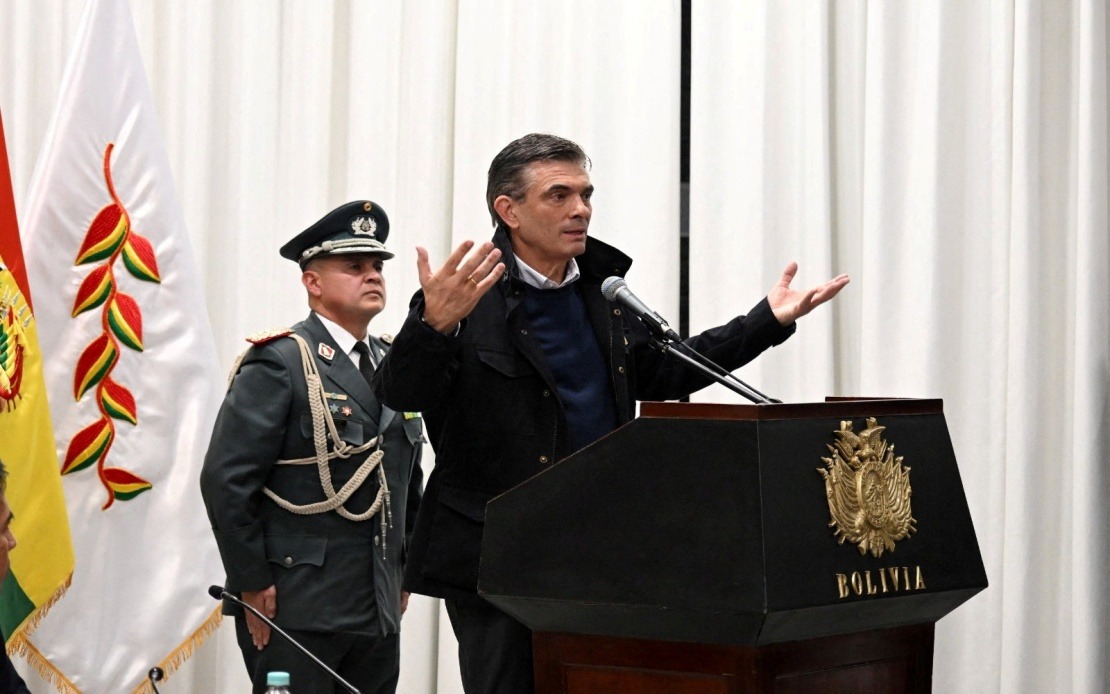
Bolivia has entered a period of acute political turbulence with President Rodrigo Paz invoking emergency powers to address a deepening crisis rooted in economic hardship and widespread public discontent. The declaration, announced in a televised address over the weekend, represents an escalation of tensions that have mounted steadily over the preceding seven weeks as unions and agricultural associations tightened their grip on the nation's transportation networks.
The blockades, orchestrated primarily by organised workers' movements and farming communities, reflect simmering frustration with the government's handling of the economy and its inability to contain cost pressures that have squeezed household budgets. Demonstrators have demanded President Paz step down, viewing his administration as unresponsive to mounting inflation and economic stagnation that has diminished purchasing power across multiple sectors. The protests underscore deep divisions between the government and key constituencies whose cooperation is essential for social stability.
For 50 days, road blockades have strangled the free movement of goods and services throughout Bolivia, creating cascading shortages that have touched nearly every aspect of civilian life. Food distribution networks have fractured, leaving supermarket shelves depleted in affected regions. Petrol and diesel supplies have become scarce, forcing businesses to curtail operations and citizens to queue for hours at filling stations. Healthcare facilities have reported critical shortages of medicines and medical equipment, imperilling patients dependent on regular treatment and threatening to overwhelm already-strained public health infrastructure.
The economic reverberations extend well beyond immediate supply disruptions. Manufacturing plants have halted production due to lack of raw materials and inability to transport finished goods. Mining operations, central to Bolivia's export economy, face paralysis as blockades prevent workers from reaching facilities and prevent ore shipments from leaving the country. Service sectors have contracted sharply as businesses struggle to operate without reliable access to fuel and supplies. The cumulative effect threatens to deepen the very economic malaise that sparked the protests in the first place.
President Paz's invocation of emergency powers grants his administration expanded authority to deploy military forces across the country with the stated objective of clearing roads and restoring normal circulation of goods and people. In his address to the nation, Paz framed the measure as necessary to preserve basic freedoms and dignity, arguing that Bolivians cannot be held hostage by blockades that prevent ordinary activities including work, education, healthcare access, and procuring food. The rhetoric emphasises the government's commitment to protecting the broader population from the disruptions caused by the protesting groups.
The decision to invoke military force carries significant risks in a nation with a complex history of armed intervention in political disputes. Such deployment could escalate tensions if security forces resort to aggressive tactics against demonstrators, potentially triggering more widespread unrest rather than resolving underlying grievances. The government faces a delicate balancing act between restoring order and avoiding actions that might be perceived as heavy-handed repression, which could galvanise additional opposition and international criticism.
From a regional perspective, Bolivia's crisis reflects broader economic pressures affecting Latin America following years of commodity price volatility and pandemic-related disruptions. Many neighbouring countries grapple with similar inflation and unemployment challenges that have empowered protest movements and tested government legitimacy. The Bolivian situation demonstrates how economic dysfunction can rapidly metastasise into systemic political instability, particularly when governments struggle to communicate effectively or implement convincing recovery strategies.
For Malaysian observers, the Bolivian case offers relevant lessons about the fragility of supply chains when political instability constrains logistics and transportation. Just as blockades in Bolivia have created shortages affecting food security and healthcare, similar disruptions in Southeast Asia could pose risks to economic activity and public welfare. The incident highlights why maintaining dialogue between governments and organised constituencies—particularly unions and agricultural groups with capacity to disrupt commerce—remains essential for preserving both stability and economic function.
The path forward for Bolivia remains uncertain. Whether the military deployment succeeds in clearing blockades without triggering further escalation depends partly on the government's willingness to address underlying economic concerns rather than treating the protests as purely a law-and-order challenge. International observers, including neighbouring governments and multilateral organisations, will likely monitor developments closely to assess whether Bolivia moves toward genuine negotiation or deeper confrontation. The coming weeks will reveal whether emergency measures can restore normalcy or whether they merely suppress symptoms while leaving fundamental causes unresolved.