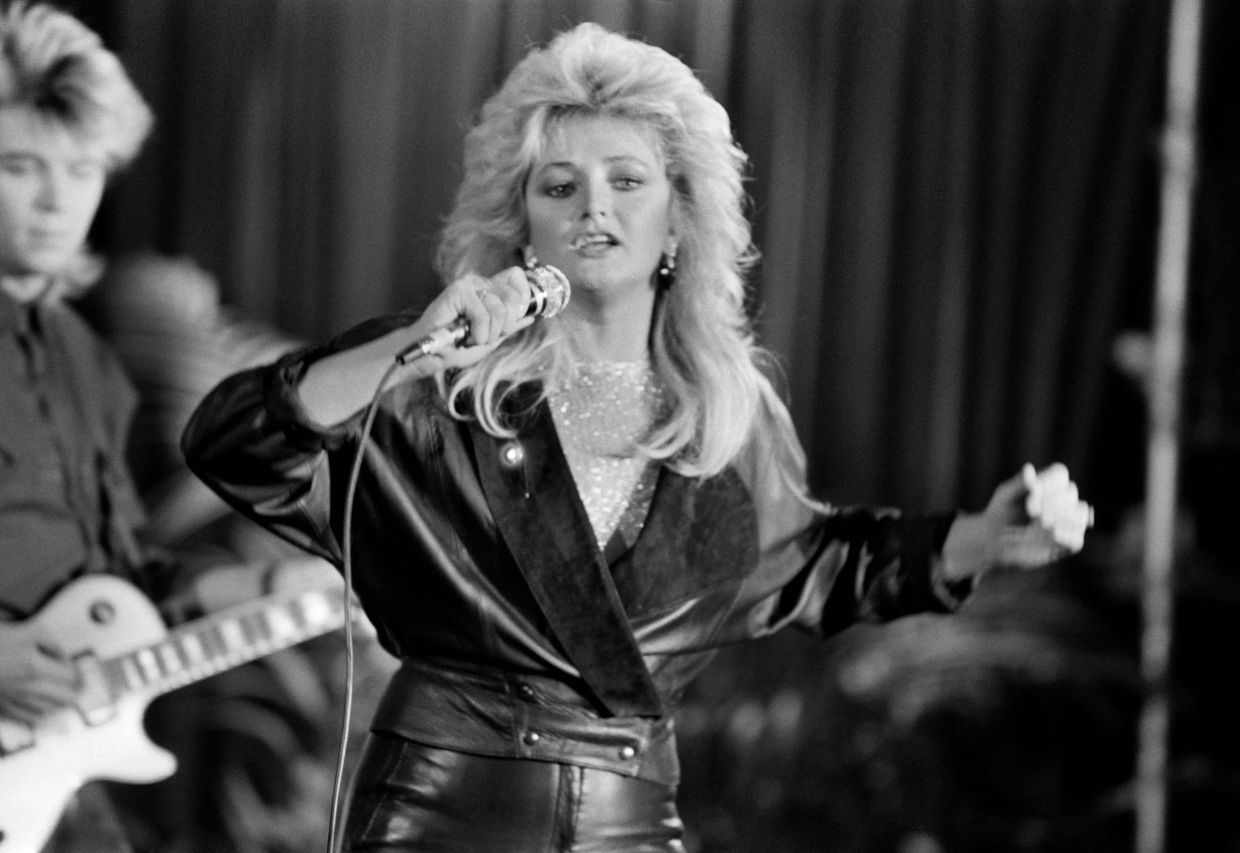
Bonnie Tyler, the distinctive Welsh vocalist whose gravelly voice defined one of pop music's most enduring power ballads, has passed away unexpectedly at the age of 75. The Grammy-nominated artist died in a hospital in Portugal, where she had been undergoing treatment for an illness. Her family announced her death Thursday, revealing that she had been hospitalised in May in Faro for emergency intestinal surgery before being placed in an induced coma from which she did not recover.
Tyler's career and cultural legacy remain inseparably bound to "Total Eclipse of the Heart," the 1983 chart-topping ballad that transformed her into an international star. The song's four-week run at number one, combined with its music video surpassing one billion views, represents merely the foundation of its remarkable staying power. What truly cemented the track's place in popular consciousness was its cyclical resurgence during solar and lunar eclipses, moments when millions of people worldwide simultaneously rediscover and stream the song, introducing it to new generations with each astronomical event. The track has accumulated over one billion streams, a testament to its peculiar position straddling genuine artistic achievement and cultural meme status.
The production of "Total Eclipse" reflected a deliberate artistic collaboration between Tyler and legendary songwriter-producer Jim Steinman, best known for his work with Meat Loaf. Steinman had crafted the composition from his 1969 college musical "The Dream Engine," specifically extracting the memorable hook "Turn around, bright eyes" for this new context. He presented the song to Tyler as material from a proposed musical adaptation of "Nosferatu," setting expectations for the gothic, theatrical arrangement that would define the final recording. Featuring contributions from the E Street Band's Roy Bittan on piano and Max Weinberg on drums, the song functioned as a meditation on romantic loss, with Tyler's distinctive vocal delivery rendering the melancholic lyrics with operatic intensity.
The accompanying music video became as iconic as the song itself, filmed in a genuinely unsettling location: an abandoned psychiatric hospital in Surrey where the facility's guard dogs refused to enter the basement areas that had housed electroshock treatment rooms. The visual presentation embraced theatrical excess through imagery that seemed surreal even by 1980s MTV standards—slow-motion doves, countless candles, dancing ninjas and greasers, swimmers in goggles drenched with water, fencers, gymnasts, wind machines, and Tyler herself clad in improbably large shoulder pads. When music analysis outlet Stereogum revisited the song in 2020, they described it as "an extinction-level event rendered in musical form," capturing the track's overwhelming sensory assault and spectacular presentation that transcended typical pop songcraft.
Despite the monumental success of her breakthrough album "Faster Than the Speed of Night," Tyler could not replicate such heights. The album itself garnered Grammy recognition in the best rock vocal performance category, losing to Pat Benatar's "Love Is a Battlefield," while "Total Eclipse of the Heart" earned a nomination for best pop vocal performance, ultimately losing to Irene Cara's "Flashdance - What a Feeling." Tyler received three Grammy nominations throughout her career, with these early recognitions remaining her most significant achievements in the Recording Academy's eyes. However, she maintained relevance through movie soundtrack contributions, most notably "Holding Out For a Hero" from the 1984 film "Footloose," demonstrating an ability to craft compelling material beyond her signature composition.
The song's cultural permeability proved remarkable, with numerous artists recognising its intrinsic appeal. English singer Nicki French covered the track in 1995, while the Irish boy band Westlife recorded their interpretation in 2006. The song appeared in cinematic contexts as varied as the 2001 crime film "Bandits," where Cate Blanchett performed it while striking Billy Bob Thornton with her automobile, and in the 2003 comedy "Old School" at a wedding sequence. Later, One Direction performed "Total Eclipse" on the United Kingdom version of "The X Factor" in 2010, introducing the composition to viewers unfamiliar with its original context and demonstrating its transgenerational appeal across demographic boundaries.
Tyler's journey to international stardom began in the post-industrial landscapes of South Wales. Born Gaynor Hopkins, the daughter of a coal miner, she grew up in Skewen, a working-class community approximately seven miles outside Swansea, living in public housing with an exterior toilet—circumstances that grounded her in the realities of ordinary Welsh life. She was one of five siblings, surrounded by the cultural influences of the era, developing a passion for rock and soul music through iconic figures including Janis Joplin, Nina Simone, Tina Turner, Wilson Pickett and Otis Redding. In her memoir "Straight From the Heart," Tyler recalled spending formative years listening to "Top of the Pops," recording performances on reel-to-reel equipment and meticulously transcribing lyrics, while entertaining herself by singing into a hairbrush with what she would later recognise as an unusually husky vocal quality.
A significant turning point arrived in 1976 when Tyler underwent throat surgery to remove nodules, a procedure that paradoxically refined her voice into the distinctive instrument that would define her artistic identity. Her early recording attempts occurred under the stage name Sherene Davis while fronting a soul ensemble, until talent scout Roger Bell identified her potential and facilitated demo sessions in London. RCA Records eventually signed her, and under the label's preferred stage name Bonnie Tyler, she released her debut album "The World Starts Tonight" in 1977, which spawned the minor hit "Lost in France" and generated sufficient industry interest to secure a Brits Awards nomination for breakthrough artist. A number three hit arrived the following year with "It's a Heartache," yet her momentum faltered thereafter, leading to a period of relative obscurity before her strategic decision to work with Jim Steinman transformed her fortunes entirely.
Tyler's later career demonstrated artistic versatility and longevity uncommon among artists defined by a single composition. Her 2019 album "Between the Earth and the Stars" featured collaborations with established stars including Rod Stewart, Cliff Richard and Status Quo's Francis Rossi, suggesting continued respect within the music industry. That same year, she performed at a Vatican Christmas concert attended by Pope Francis, an honour reflecting her status as a respected elder stateswoman of rock music. In 2013, she pursued a country music direction with the Nashville-recorded album "Rocks and Honey," a genre exploration that included a Vince Gill duet and the ballad "Believe in Me," composed by Desmond Child alongside British songwriters Lauren Christy and Christopher Braide. That composition was selected to represent the United Kingdom at the Eurovision Song Contest in Sweden, where Tyler placed nineteenth, further cementing her association with the British cultural landscape.
Tyler's final recognition came through a 2023 MBE award from Queen Elizabeth II for her services to music, an honour acknowledging her immeasurable contribution to British and international pop culture. The decision to honour her reflected the profound and lasting impact "Total Eclipse of the Heart" maintained across decades, particularly as the song experienced renewed surge in interest during the 2017 and 2024 solar eclipses, when millions of listeners simultaneously streamed the composition, transforming an artistic achievement into a recurring cultural phenomenon. For Malaysian and Southeast Asian audiences familiar with this enduring ballad through its ubiquitous presence in popular culture, Tyler's passing marks the departure of an artist whose single composition achieved the rare distinction of transcending temporal and generational boundaries, continuing to move audiences through its emotional intensity and theatrical grandeur long after its initial release.

