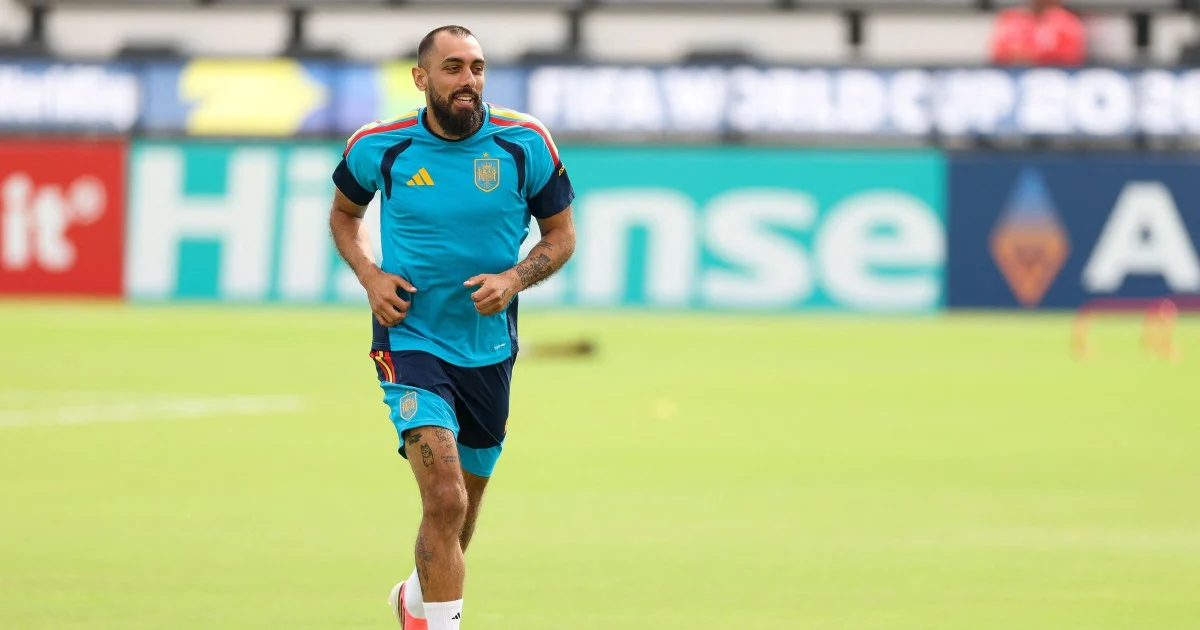
Borja Iglesias, the Spanish striker who competed in the World Cup, has become a distinctive voice in professional football by refusing to observe the sport's unwritten code of silence on contentious social and political matters. Through his actions and words, including his choice to paint his nails as a form of personal expression, Iglesias has cultivated a reputation for tackling difficult subjects that most players of his stature avoid in public discourse. His outspokenness has earned him the sardonic designation of 'the alien of football'—a telling reflection of how unconventional his behaviour appears within a sport that typically prizes conformity and neutrality among its highest-profile athletes.
The characterisation itself reveals much about the conservative nature of professional football as an institution. Players at the elite level operate within powerful commercial ecosystems where endorsement deals, sponsorship agreements, and corporate partnerships create financial incentives to maintain an apolitical public persona. Clubs, leagues, and international federations have historically discouraged players from using their platforms to address divisive issues, preferring instead that athletes remain focused on their sporting performance and maintain broad commercial appeal. Iglesias's willingness to depart from this script positions him as an outlier in an environment where most of his peers have learned that controversial statements carry professional risks.
The issues Iglesias has chosen to address publicly demonstrate a particular commitment to human rights concerns with significant global resonance. His statements regarding Gaza reflect an engagement with Middle Eastern geopolitics at a moment when the Israeli-Palestinian conflict has intensified dramatically, attracting scrutiny from international observers and public figures across all sectors. By lending his voice to this conversation, Iglesias acknowledges that footballers possess platforms of considerable influence and arguably bear some responsibility in how they deploy that visibility. The decision to speak carries particular weight given the predominantly Western European context in which he operates professionally.
Homophobia represents another frontline issue where Iglesias has demonstrated vocal commitment. Football has long struggled with exclusionary attitudes toward LGBTQ+ participants and supporters, with homophobic chanting and discrimination persisting across European leagues despite official prohibitions and awareness campaigns. Players willing to address these dynamics explicitly remain comparatively rare, particularly among those competing at the highest competitive levels where masculine heteronormativity has traditionally dominated locker-room culture. Iglesias's openness on this topic potentially contributes to gradual cultural shifts within the sport, normalising conversations that younger players and supporters increasingly expect from their role models.
The act of painting his nails functions as a subtle yet potent symbolic gesture that complements his verbal advocacy. Nail art represents a deliberate departure from the aesthetic expectations placed upon male professional athletes, challenging conventional presentations of masculinity within football. This form of self-expression, when coupled with his willingness to discuss social justice matters, constructs a coherent alternative to the typical footballer archetype. For a player operating in Spanish and European football contexts, where certain traditional attitudes persist more visibly than in other markets, such personal choices carry amplified significance.
Spain itself brings particular context to Iglesias's position. Spanish football has produced notable socially conscious athletes, yet the broader Spanish sports culture maintains conservative elements, especially regarding gender expression and political speech. The Spanish national team operates within a federation answerable to diverse political constituencies, and individual players' public statements inevitably reflect upon the institution they represent. Iglesias's autonomy in addressing social issues therefore occurs against a backdrop where such independence from institutional messaging remains somewhat exceptional.
The nickname 'the alien of football' captures a fundamental reality about contemporary sport: deviation from established norms generates outsider status, regardless of whether those norms serve the sport's broader values or merely convenience commercial interests. This designation, while somewhat tongue-in-cheek, carries an undertone suggesting that Iglesias's behaviour falls outside accepted boundaries of professional athlete conduct. The very fact that speaking honestly about injustice warrants such terminology indicates how narrow the perceived range of acceptable discourse has become within elite football.
From a Southeast Asian perspective, Iglesias's stance carries relevance beyond European football contexts. The region hosts significant football communities, passionate supporter bases, and emerging talent development ecosystems increasingly influenced by global football culture. Athletes and fans across Malaysia, Thailand, Vietnam and neighbouring countries consume European football content extensively and absorb cultural cues about how professional players should conduct themselves. When a World Cup-level striker demonstrates that candid engagement with social justice issues remains compatible with elite athletic achievement, this message resonates across different sporting cultures.
Moreover, the normalisation of diverse self-expression among footballers—whether through nail art, political speech, or other forms of activism—carries implications for how younger athletes in Southeast Asian contexts might negotiate their own identities. Regional football cultures often maintain more conservative attitudes toward gender expression and political speech than players encounter in European contexts. Iglesias's example, however symbolic, suggests that sporting excellence and authentic self-presentation need not remain mutually exclusive, even at the highest competitive echelons.
The sustainability of Iglesias's position remains an open question. Whether football's institutional power structures will gradually accommodate greater player autonomy in social commentary, or whether pressure to conform will ultimately constrain such voices, depends partly on whether other elite players follow similar trajectories. Cultural change in professional sports typically accelerates once early pioneers demonstrate that minority positions command broader support. Iglesias's willingness to occupy a non-conformist space potentially creates space for other athletes across different sports and regions to question inherited assumptions about what professional athlete conduct should entail.
Ultimately, Iglesias represents an emerging category of athlete who views platform visibility as carrying inherent responsibilities beyond sport itself. His approach directly challenges assumptions that athletes should remain detached from social and political questions, instead embracing a model where athletic excellence and civic consciousness operate together. Whether football's establishment proves capable of accommodating such integration remains to be seen, but Iglesias's persistence in speaking his mind suggests that professional sport's old rules may increasingly struggle against athletes determined to exercise the full range of their humanity.

