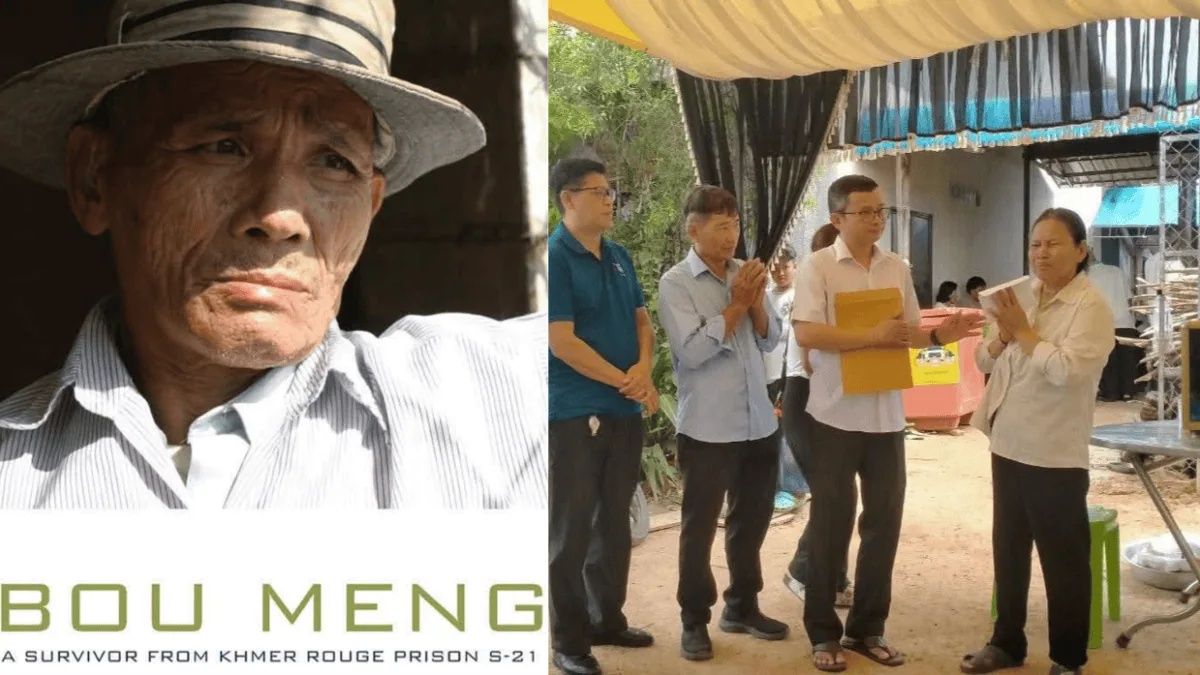
The death of Bou Meng on August 14, 2026, marks the loss of a living link to one of the twentieth century's darkest chapters. At 85 years old, Meng represented an increasingly rare voice—among merely seven known survivors—who endured the systematic horrors of S-21, the Khmer Rouge's infamous detention and torture centre in Phnom Penh. His passing arrives at a moment when Cambodia's aging cohort of genocide witnesses are gradually disappearing, taking irreplaceable first-hand accounts of Pol Pot's regime with them.
The Tuol Sleng Museum, which now occupies the former prison compound, announced Meng's death with acknowledgment of his singular importance as a historical figure. Between 1975 and 1979, S-21 functioned as a killing factory where an estimated 17,000 people were systematically tortured, interrogated, and executed. The survival of any inmate remained extraordinarily rare; the prison's meticulous record-keeping and methodical brutality were designed to eliminate virtually all evidence of dissent. That Meng survived at all speaks to both chance and the particular skills that made him momentarily valuable to his captors.
Meng's path through S-21 differed from most victims in one crucial respect: his talents as a painter proved his lifeline. While thousands perished in the facility's underground torture chambers, Meng's artistic abilities granted him a fragile reprieve from immediate execution. Yet survival came at an immeasurable cost. When he and his wife were imprisoned in 1977, their children were separated and sent to a labour camp for young people. He would never see any of them again—a grief that shaped the remainder of his existence even after liberation.
The imprisonment itself represented the Khmer Rouge's characteristic approach to eliminating perceived enemies of their agrarian utopia. Intellectuals, urban dwellers, ethnic minorities, and political suspects disappeared into S-21 at a rate that devastated Cambodia's educated classes. Meng's ability to document his own survival and later articulate what he witnessed provided investigators and prosecutors with crucial testimony about the mechanics of state-sponsored terror. Few other survivors could offer such comprehensive accounts of the daily operations within the prison or the mentality of those who administered it.
Decades after the regime's collapse in 1979, Meng's contributions to justice processes proved instrumental. He testified at the trial of Kaing Guek Eav, known as Comrade Duch, who commanded S-21 throughout its operation. The Extraordinary Chambers in the Courts of Cambodia (ECCC), established through a partnership between the Cambodian government and the United Nations, relied heavily on survivor testimony to construct its case against senior Khmer Rouge figures. Meng's presence in court—physically embodying the regime's crimes—carried symbolic and evidentiary weight that documentary evidence alone could not provide. His willingness to confront his tormentors and speak publicly about their actions demonstrated a courage that extended far beyond his initial survival.
In his final years, Meng transitioned from courtroom witness to educator and guide. He regularly spent time at the Tuol Sleng Museum, welcoming visitors from Cambodia and around the world. Through personal conversation and guided tours, he shared his experiences, framing them not as isolated tragedy but as essential history. His narrative served multiple purposes: honouring the memory of those who did not survive, warning future generations about the dangers of totalitarianism, and humanising abstract statistics that can otherwise feel distant and incomprehensible to those born after the genocide ended.
The significance of Meng's death extends beyond Cambodia's borders. Southeast Asia continues grappling with historical traumas and accountability mechanisms. Thailand's periodic military interventions, Myanmar's ongoing conflict and civilian casualties, and Philippines' extrajudicial killings all raise questions about how societies process state violence. Meng's example illustrated both the possibility and the difficulty of bearing witness to atrocity. His participation in the ECCC demonstrated that justice, though delayed by decades, remains possible—yet his loss reminds observers that accountability processes must move quickly, as survivors naturally age and pass away.
The shrinking pool of Tuol Sleng survivors underscores the urgency surrounding historical preservation and education in Cambodia. Museums, documentary projects, and oral history initiatives have become increasingly vital as direct testimony becomes rarer. Meng's death places heightened responsibility on these institutions to ensure his recollections and those of remaining survivors are meticulously documented and made accessible to future researchers and students. Without such preservation efforts, understanding of the genocide risks becoming secondhand, filtered through interpretation rather than grounded in personal testimony.
Meng's legacy encompasses both his survival and his subsequent choices about how to live after trauma. Rather than retreating into private grief, he positioned himself as a public custodian of collective memory. His decades of work at the museum, his courtroom testimony, and his willingness to engage with visitors represented an active commitment to ensuring the Khmer Rouge's crimes remained known and condemned. In an era when genocide denial and historical revisionism pose ongoing threats across the region, such sustained witness-bearing becomes a form of resistance against forgetting.
Cambodia's leadership acknowledged Meng's contribution through the museum's official statement, recognising him as an irreplaceable historical witness whose passing represented significant loss. Yet his influence will persist through the countless visitors he educated, the testimony he provided for historical record, and the example he set about the possibility of meaning-making after mass atrocity. As one of history's rare voices from inside S-21's darkness, Bou Meng's death closes a chapter—but the story he spent his final decades sharing will continue reaching new audiences.

