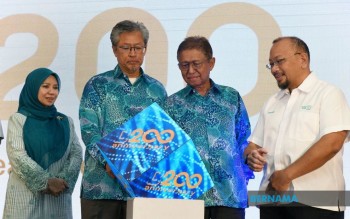
Boustead Holdings Bhd is embarking on an ambitious transformation to expand its revenue threefold over the next five years, charting a course from its current RM12 billion base towards RM30 billion through a strategic realignment centred on three pillars: defence capability, property development and commercial services. The conglomerate, marking its bicentennial year in 2028, is reinventing itself under new shareholder direction and Defence Ministry guidance, positioning Malaysia to develop greater self-sufficiency in military technology and infrastructure.
The 200-year-old company, which has its roots in colonial-era agriculture through coconut trading and warehousing operations, has received a fresh mandate to lead critical national defence initiatives alongside leveraging property assets for commercial development. Group managing director Datuk Dr Ahmad Sabirin Arshad articulated this vision during the soft launch of Boustead's 200-year journey celebration in George Town, emphasising that the transformation reflects broader government objectives outlined in the National Defence Industry Policy introduced in January. This policy framework provides the strategic underpinning for private sector involvement in bolstering Malaysia's defence manufacturing capabilities and reducing dependence on foreign imports.
Central to Boustead's defence strategy is a commitment to cultivate local industry participation, with the company targeting a minimum 30 per cent local content threshold in defence technology products by 2030. This represents a deliberate push to nurture domestic engineering and manufacturing expertise rather than relying solely on international suppliers. The company intends to develop approximately 400 vendors across the defence industry ecosystem, effectively creating an interconnected supplier network that can generate sustainable economic value while building indigenous technological competency. Such an approach mirrors defence industrialisation strategies adopted by regional competitors and developed nations seeking to strengthen their manufacturing bases.
Boustead has been assigned responsibility for four major national defence projects, each reflecting distinct capability gaps that Malaysia aims to address. These include satellite development, rolling chassis manufacture for armoured vehicles, light weapons production, and Combat Management System development. The breadth of these assignments underscores the government's confidence in the company's capacity to execute complex programmes whilst simultaneously demonstrating the scope of Malaysia's defence modernisation agenda. For a country that has traditionally emphasised peaceful resolution of regional disputes, this defence industry expansion represents a calculated investment in technological sovereignty and industrial resilience.
Beyond weaponry and military equipment, Boustead has assumed stewardship of a transformative urban development initiative centred on Batu Cantonment in Kuala Lumpur. In partnership with the Armed Forces Fund Board, the company is orchestrating the relocation of nine military installations to consolidate defence infrastructure and free premium real estate for commercial redevelopment. This strategic land-use realignment serves dual purposes: modernising military facilities whilst generating substantial revenue through commercial development of valuable central Kuala Lumpur property. Such mixed-use transformation projects are increasingly common in major regional cities seeking to optimise underutilised defence estates.
Chairman General (Retired) Tan Sri Abdul Aziz Zainal reinforced the governance dimensions of Boustead's expansion, stressing that the conglomerate must discharge its responsibilities with comprehensive accountability and rigorous corporate governance standards. The emphasis on stakeholder returns—particularly to Malaysian Armed Forces contributors and members—reflects the dual nature of Boustead's obligations as both a commercial enterprise and custodian of defence-related public interests. This balancing act requires transparent decision-making and demonstrated value creation across defence, infrastructure and property portfolios.
The defence sector dimension carries particular significance for Southeast Asia and Malaysia specifically. The region faces evolving security dynamics, territorial claims in contested waters, and the imperative to maintain credible defence capabilities amid great power competition. By developing indigenous defence manufacturing capacity, Malaysia reduces vulnerability to supply disruptions and geopolitical leverage from external powers. Local content development in defence industries also fosters technological spillovers into civilian sectors such as advanced manufacturing, aerospace components and precision engineering, creating broader economic benefits beyond military applications.
Boustead's strategy of pursuing strategic international partnerships for technology transfer reflects pragmatic recognition that Malaysia cannot achieve complete defence-industrial autarky. Instead, the company aims to negotiate collaborations that embed foreign technical expertise within local industrial contexts, progressively building Malaysian capability. This selective technology transfer model requires careful partner selection to ensure that intellectual property development serves long-term national interests rather than creating continued dependency on foreign providers. The 30 per cent local content target by 2030 establishes a measurable benchmark against which progress can be evaluated.
The property development component, whilst less strategically prominent than defence manufacturing, remains crucial to the financial model underpinning Boustead's revenue expansion. Kuala Lumpur's commercial real estate market remains competitive, and successful development of Batu Cantonment could generate substantial capital returns. These earnings would cross-subsidise defence industry investments, many of which may operate on constrained margins or longer payback periods. The diversification across defence, property and commercial services therefore provides financial stability whilst pursuing strategic objectives.
Boustead's existing tourism and insurance subsidiaries will reportedly continue strengthening, suggesting the company views these sectors as complementary rather than peripheral. Tourism in Malaysia faces recovery and growth opportunities post-pandemic, whilst insurance remains essential to broader financial system development. These businesses provide revenue stability and cross-selling opportunities within the broader Boustead corporate ecosystem.
The transformation of Boustead represents a microcosm of Malaysia's broader industrial policy evolution, reflecting growing recognition that private sector capabilities must complement public sector capacity in building comprehensive national capabilities. Defence industrialisation remains nascent across Southeast Asia, with few countries successfully developing indigenous capacity. Malaysia's determination to move beyond importing finished systems towards manufacturing critical components positions it competitively within regional defence markets and potentially for international exports.
Investor sentiment towards Boustead's transformation will likely depend on demonstrable progress in executing the four assigned defence projects whilst maintaining commercial returns from property and service divisions. The company faces inherent execution risks in managing complex military procurement programmes alongside commercial real estate development, requiring sophisticated project management and financial discipline. The next five years will test whether Boustead can deliver on its ambitious RM30 billion revenue target whilst maintaining governance standards and shareholder confidence.

