Brazil came from behind to claim a dramatic 2-1 victory over Japan at Houston Stadium, booking their passage into the Round of 16 of the 2026 FIFA World Cup. The South American giants weathered an unexpectedly difficult challenge from the Japanese side, who came agonisingly close to recording their first-ever World Cup knockout stage victory before Gabriel Martinelli's late intervention sealed the outcome in the 90+5th minute.
The match unfolded as a tactical battle between contrasting philosophies. Japan adopted a compact defensive structure throughout the opening period, deploying a disciplined 5-4-1 formation that proved remarkably effective at suffocating Brazil's creativity. The Samurai Blue showed remarkable discipline and organisation, systematically closing down spaces and forcing the Selecao into hurried decision-making. Despite enjoying substantial possession, Brazil found themselves unable to fashion clear-cut opportunities, with their usual attacking fluidity stifled by Japan's defensive compactness.
Japan's disciplined approach yielded a stunning reward in the 29th minute when Kaishu Sano punished a lapse in concentration from the Brazilian defence. The midfielder intercepted a careless pass from Danilo before advancing purposefully toward goal and executing a composed low finish from the edge of the penalty area that eluded goalkeeper Alisson. The breakthrough represented Sano's maiden international goal and handed Japan a deserved advantage at the interval, positioning them tantalizingly close to a historic milestone in their World Cup journey.
For Japan, that first-half lead carried profound significance. Entering the tournament, the nation had never advanced past the group stage into the knockout rounds, and they were 45 minutes away from etching a new chapter in their World Cup history. Under Carlo Ancelotti's management, Brazil faced an unfamiliar predicament—trailing against determined opposition and unable to impose their usual dominance over the proceedings.
The interval provided the catalyst for a complete shift in momentum. Brazil emerged with noticeably heightened intensity and purpose, abandoning some of their possession-based approach in favour of more direct attacking transitions. The Selecao's wide players became increasingly influential, stretching Japan's defensive shape and delivering a sustained barrage of crosses into the danger zone. This tactical adjustment proved decisive in disrupting Japan's carefully constructed defensive framework.
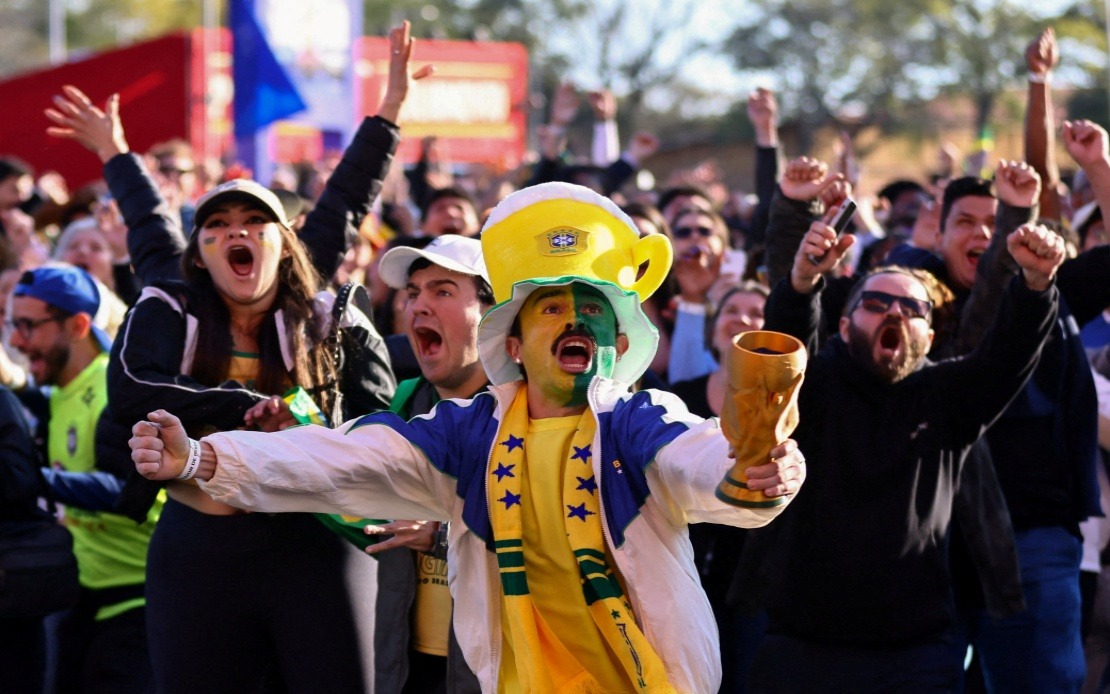
The equaliser arrived in the 56th minute when Casemiro rose decisively at the back post to direct Gabriel Magalhaes' cross past goalkeeper Zion Suzuki. The Brazilian supporters in Houston erupted with relief as their team restored parity, but Japan refused to capitulate despite losing their advantage. The contest remained delicately poised with both sides capable of snatching victory, creating a gripping narrative as the match entered its final stages.
Just when extra time seemed inevitable, Brazil delivered a hammer blow that would decide the encounter. In the fifth minute of stoppage time, Bruno Guimaraes surged forward before threading a perfectly weighted pass into the path of Gabriel Martinelli, who applied a clinical finish past Suzuki despite the goalkeeper managing to get a touch on the ball. The goal, arriving at the cruellest moment for Japan, extinguished their hopes of progress and sent them out of the tournament having come so close to realising their historic ambition.
The victory consolidates Brazil's position as one of the tournament's heavyweight contenders while simultaneously delivering a bitter disappointment to Japan, whose spirited performance demonstrated substantial improvement in their footballing capabilities. The Selecao's comeback showcases their trademark resilience and quality—attributes that have established them as five-time World Cup champions—though their unconvincing first-half display against Japan suggests potential vulnerabilities in their armour.
Brazil now advances to face either Norway or Ivory Coast in the Round of 16, with their path through the knockout stages beginning to take shape. The victory exemplifies the fine margins that define tournament football, where tactical discipline and organisational excellence can nearly overcome the weight of international prestige and experience, yet where quality and composure ultimately prove decisive when the stakes are highest.

