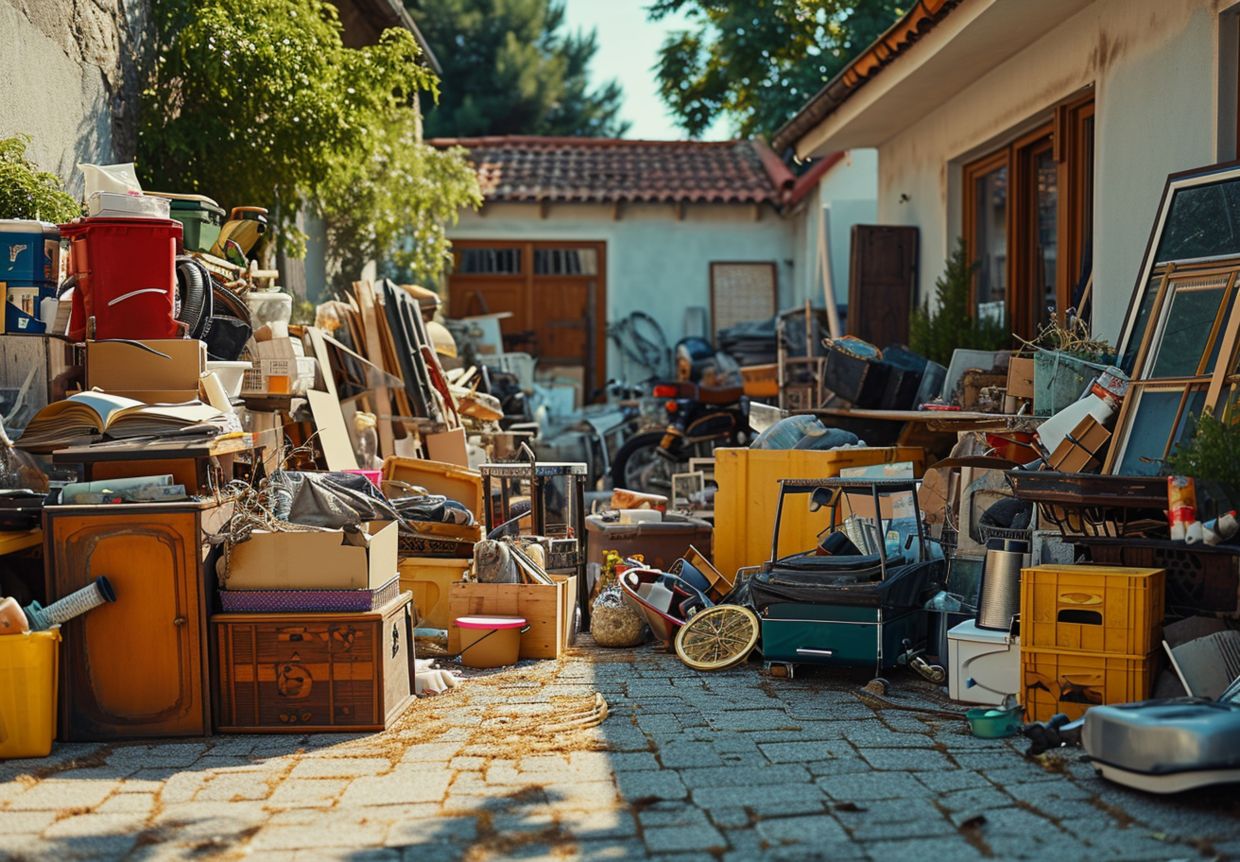
The hallways grow narrower each year. Boxes accumulate in corners, appliances stack against walls, and everyday items pile into precarious towers until the living space transforms into something barely navigable. To the casual observer, the solution appears straightforward: organise and discard. Yet mental health specialists across Malaysia are urging the public to look deeper, arguing that what appears to be slovenliness or poor housekeeping often masks a genuine psychological condition requiring compassion and professional intervention rather than judgment.
Hoarding disorder, recognised in the current edition of the Diagnostic and Statistical Manual of Mental Disorders, describes a persistent difficulty in parting with possessions regardless of their actual value, coupled with an overwhelming compulsion to accumulate and retain items. The International OCD Foundation estimates that between 2% and 6% of the global population experiences this condition, yet in Malaysia, awareness remains strikingly low. Clinical psychologist Kelly Chan of Soul Mechanics Therapy observes that individuals rarely present for treatment identifying hoarding as their primary concern. Instead, they arrive seeking help for depression, anxiety, or stress, and only through deeper exploration do hoarding behaviours emerge as a coping mechanism that has developed alongside these other mental health struggles.
Dr Hiran Shanake Perera, a psychology lecturer at Sunway University, acknowledges that popular culture and television documentaries have introduced Malaysians to hoarding-related content, yet meaningful research into the condition remains sparse within the local context. "We still don't have enough information about it," he explains. "There are a lot of grey areas, which is why misconceptions continue to exist." This knowledge gap fuels widespread misunderstanding, with the most pervasive misconception being the conflation of hoarding with simple untidiness. A person who is disorganised may feel satisfied and relieved after tidying their space; someone with hoarding disorder experiences significant psychological distress at the prospect of discarding possessions, a distinction that fundamentally separates the two experiences.
The difference extends beyond emotional response to the nature of acquisition itself. Collectors deliberately seek specific items, organise them methodically, and take pride in displaying their assemblages. Hoarding, by contrast, involves items that accumulate almost passively until the environment deteriorates and daily functioning becomes compromised. For Farah, whose identity is protected for privacy, this distinction became painfully evident as her mother's spending habits over years created an impossible living situation. Perfumes, appliances, bedsheets, and wooden cabinets amassed until only narrow pathways remained passable. The mother, whose career had afforded spending capacity, viewed each purchase as a valuable investment that might prove useful eventually. When Farah suggested discarding items, her mother responded with anger rooted not in defiance but in genuine distress at the thought of losing possessions purchased through her own labour.
This emotional attachment to objects, however irrational it may appear to outsiders, represents a central feature of hoarding disorder. Dr Perera emphasises that the person experiencing the condition genuinely perceives value in items that others consider worthless. They may harbour legitimate beliefs about future utility or carry emotional significance attached to objects that represent lost relationships, past identities, or cherished memories. The disconnect between the individual's internal valuation and external reality creates a private world where the hoarded items function as emotional anchors. For someone grieving, like Meera, whose parents' passing in her teenage years left deep wounds, returning to a family home frozen in time meant that discarding anything felt tantamount to erasing memory itself.
The physical and psychological toll of living within such environments extends far beyond aesthetic concerns. For Farah, the accumulation profoundly affected her health, triggering frequent infections and a persistent sense of depletion. Each morning brought fresh psychological weight as her gaze landed on endless piles of objects. She describes the experience as suffocating, a sensation reflecting research suggesting that hoarding environments contribute to depression, anxiety, and social isolation. The person affected becomes trapped not merely by physical obstacles but by shame and the internalised judgment of others who perceive their situation as evidence of laziness, negligence, or moral failing.
This stigmatisation creates a destructive barrier to treatment. Kelly Chan notes that her clients are acutely aware their homes have become unmanageable; they desperately wish to change yet struggle to seek help precisely because negative social labelling has convinced them they are undeserving of professional support. The shame becomes self-reinforcing, discouraging them from reaching out to mental health services or admitting their circumstances to family members. When society frames hoarding as a character flaw rather than a symptom of underlying psychological distress, individuals internalise that shame and retreat further into isolation.
Dr Perera emphasises that greater public education could fundamentally shift how hoarding disorder is understood and treated in Malaysia. Currently, many people remain unaware that hoarding constitutes a diagnosable condition warranting professional intervention rather than moral censure. By distinguishing hoarding from messiness, by recognising the emotional roots of item retention, and by acknowledging the genuine distress experienced by those affected, Malaysian society could create space for individuals to seek help without fearing judgment. This shift toward understanding represents not merely an academic exercise but a practical necessity for a nation where mental health awareness is gradually improving yet still lags in many areas.
The path toward normalising treatment for hoarding disorder requires effort from multiple quarters. Mental health professionals must continue documenting local experiences and developing culturally appropriate interventions. Media representation should move beyond sensationalism toward nuanced storytelling that humanises those affected. Family members and friends must learn to offer support rather than criticism, understanding that their compassion directly influences whether someone seeks professional care. Most fundamentally, Malaysians must recognise hoarding disorder for what it genuinely is: not a character defect but a complex mental health condition affecting vulnerable individuals who deserve understanding, dignity, and access to evidence-based psychological treatment. By embracing this perspective, Malaysia can help countless people reclaim their homes and their lives.

