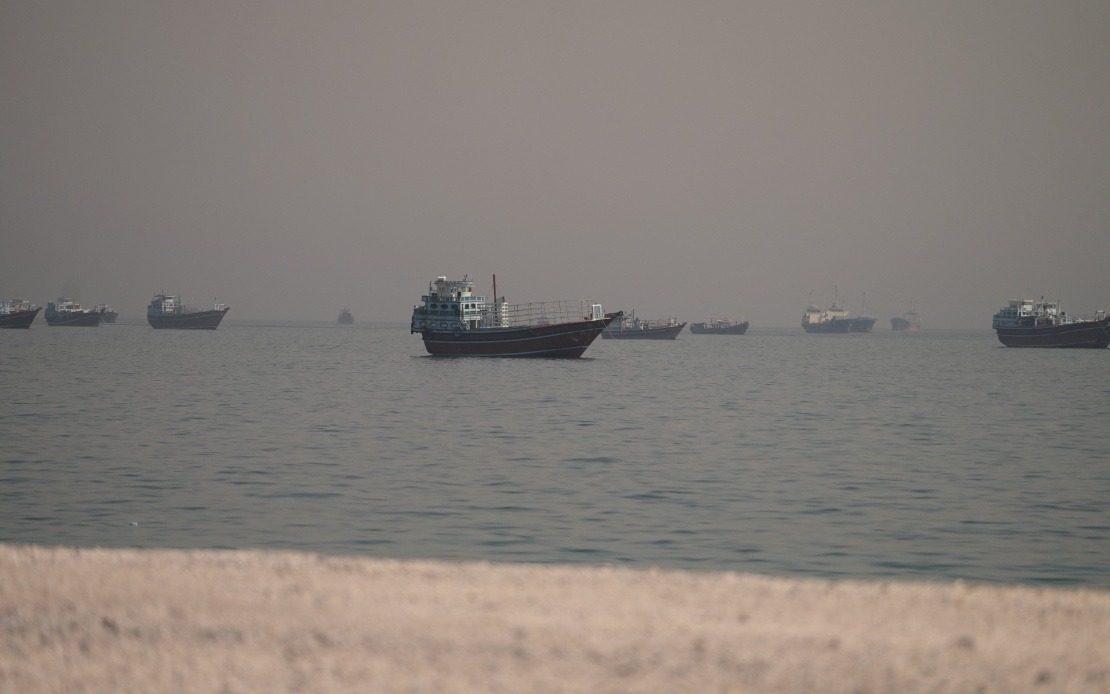
Prime Minister Keir Starmer and President Emmanuel Macron jointly announced Friday their nations' preparedness to establish a multinational military operation aimed at guaranteeing safe passage through the Strait of Hormuz, one of the world's most strategically important maritime corridors. The declaration, made amid escalating tensions with Iran, underscores Europe's determination to protect global trade routes that transit through the chokepoint between the Persian Gulf and the Gulf of Oman.
The joint statement from London and Paris emphasizes that the Strait of Hormuz represents a vital economic lifeline for the international community. Both leaders stressed that restoring unimpeded navigation for vessels of all nations through these waters constitutes a matter affecting global interests rather than regional concerns alone. This framing represents a deliberate positioning of the initiative as a response to threats to international commerce rather than as confrontational action against any single nation.
A significant diplomatic achievement underpinning the European initiative is Oman's agreement to cooperate with Britain and France in facilitating safe passage through its territorial waters. This cooperation provides crucial legitimacy to the multinational mission, as it demonstrates consent from a littoral state rather than the imposition of external powers in the region. Oman's willingness to engage reflects the sultanate's pragmatic approach to balancing relationships with Gulf neighbours and maintaining stability in waters adjacent to its sovereignty.
Britain and France have indicated their readiness to anchor a broader multinational military operation designed to support freedom of navigation throughout the area. The term "anchor" suggests these European powers view themselves as foundational participants rather than unilateral actors, implying that additional nations may join or contribute to the mission. Such an arrangement would distribute both military responsibility and political legitimacy across multiple countries, reducing the appearance of Western intervention in Middle Eastern affairs.
For Malaysia and other Southeast Asian nations, this development carries significant implications. The Strait of Hormuz handles approximately one-third of global maritime trade, with Asian economies among the heaviest users of this corridor. Disruptions to shipping through these waters directly affect energy prices, supply chain reliability, and economic growth across the region. Any credible mechanism to ensure stable passage benefits Malaysian trade and energy security substantially.
The timing of this announcement reflects persistent concerns about maritime security in the Persian Gulf region. Iran has repeatedly warned against foreign military presence in the Strait of Hormuz, asserting that only the littoral states possess the legitimate authority to oversee security operations within these waters. Iranian officials have consistently maintained that regional states should manage navigation security through cooperative arrangements, viewing the presence of extra-regional military forces as both unnecessary and provocative.
The European initiative represents a carefully calibrated response to these Iranian objections. By emphasizing multilateralism, securing Oman's cooperation, and framing the mission as a support for international law and freedom of navigation rather than a containment strategy, Britain and France attempt to occupy a middle ground between respecting regional sovereignty and protecting global maritime interests. This approach suggests the European powers understand the sensitivity of the issue while remaining committed to ensuring unimpeded shipping flows.
The statement from Starmer and Macron reaffirms their commitment to regional stability, respect for state sovereignty, and cooperation with regional partners. This language attempts to address Iranian concerns about sovereignty while simultaneously making clear that Britain and France will not accept Iranian actions that threaten international commerce. The balancing act reflects the complexity of navigating great power competition in waters where multiple interests intersect.
For Malaysia's regional position, this European initiative adds another layer to the multipolar competition already characterised by American, Chinese, and Russian presence in Middle Eastern waters. While Malaysia maintains careful neutrality and pragmatic engagement across these powers, developments in the Strait of Hormuz inevitably influence Asian security calculations. Any military operation in the region, regardless of intent, carries potential for unintended escalation that could disrupt trade and energy supplies upon which Malaysia and its neighbours depend.
The success of this multinational approach will depend on whether Iran accepts the framework or perceives it as an encroachment on regional prerogatives. Should tensions escalate, the implications extend beyond bilateral British-French-Iranian relations to affect global energy markets and supply chain stability. Southeast Asian economies would face the consequences of any significant disruption to these vital shipping lanes, making the trajectory of this situation a matter of direct concern to Malaysian policymakers and business interests.
The European announcement also signals that traditional Western powers intend to maintain active involvement in Middle Eastern security arrangements despite shifting global power dynamics. This determination suggests the Strait of Hormuz will remain a focal point for international competition and cooperation, with Malaysia and other Asian nations necessarily engaged as stakeholders in whatever arrangements ultimately govern safe passage through these critical waters.

