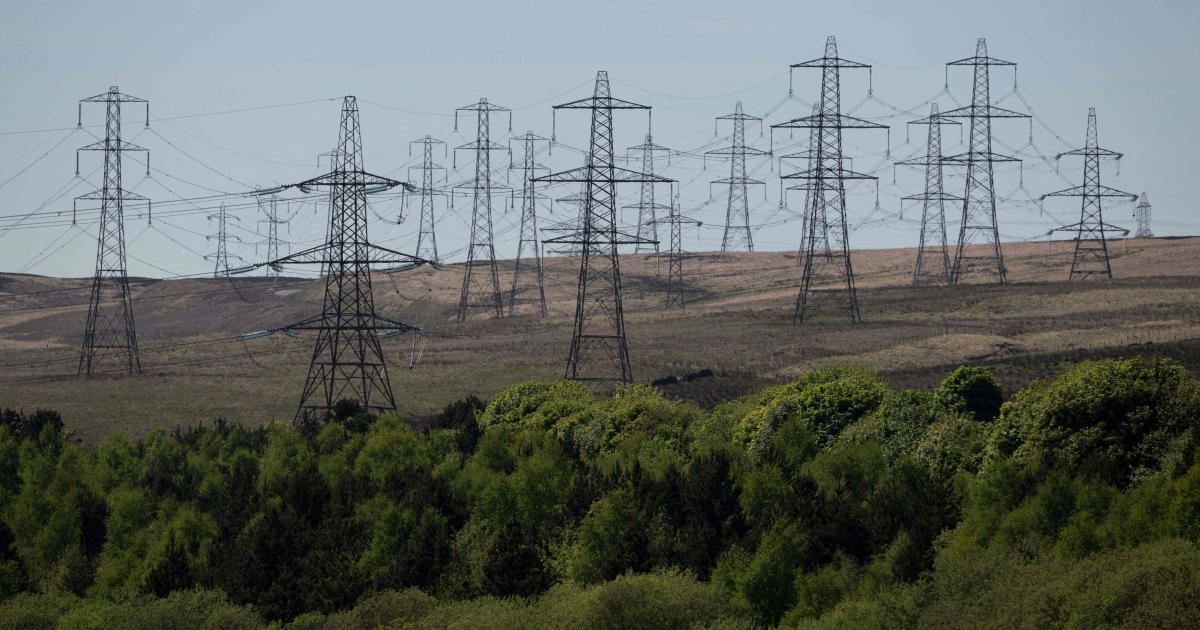
Britain's newly installed Prime Minister Andy Burnham has signalled his administration's intent to reduce the tax burden on household electricity bills, marking an early policy move to address mounting financial pressures on British families. The announcement, released through Downing Street on Tuesday, underscores the government's prioritisation of relief from the ongoing cost-of-living squeeze that has dominated British politics and household finances for over a year.
The electricity tax cut represents a direct attempt by Burnham to translate campaign promises into concrete action during his initial weeks in office. As energy costs have remained stubbornly elevated across Europe—and Britain in particular—the political calculus around utility pricing has become increasingly urgent. By moving quickly on this measure, the Prime Minister is signalling that his government intends to tackle cost pressures head-on, rather than allowing the issue to define the opposition's narrative.
For Malaysian observers of British politics, this development reflects broader challenges facing advanced economies as they contend with inflation and energy security concerns. The decision to use taxation as a tool for consumer relief demonstrates how democracies attempt to balance fiscal responsibility with immediate household needs, a tension that resonates across the region as Southeast Asian nations also navigate post-pandemic economic adjustments.
Electricity taxation in Britain carries particular weight because of the energy system's reliance on fossil fuels and the transition to renewable sources, both of which create complex pricing dynamics. Tax reductions on bills may provide immediate relief but raise questions about long-term funding for infrastructure investment and the green energy transition—trade-offs that policymakers worldwide are grappling with simultaneously.
The Burnham government's approach differs from previous British administrations' handling of energy costs. Earlier interventions had relied heavily on price caps and direct subsidies, whereas a tax reduction represents a different lever: removing the fiscal layer that sits atop energy consumption. This signals a philosophical shift toward reducing regulatory burden rather than simply increasing state support.
For regional context, energy affordability has become a critical political issue across Asia-Pacific. Malaysia, Indonesia, and other nations have similarly grappled with balancing affordable energy access against fiscal sustainability. Burnham's move to prioritise household bills may influence broader regional policy discussions about how governments should redistribute the costs and benefits of energy systems during periods of economic strain.
The timing of this announcement matters significantly. British households have experienced winter energy bills that, whilst somewhat stabilised from peak 2022-2023 levels, remain elevated compared to historical averages. Public discontent with energy poverty has become a mobilising political force, and Burnham's willingness to act quickly on this issue suggests his administration recognises the urgency of restoring public confidence in government responsiveness.
The mechanics of how this tax cut will be implemented remain to be detailed in forthcoming policy documentation. Whether the reduction applies across all consumer categories, takes effect immediately, or phases in over time will determine its real economic impact and political effectiveness. The government's communication strategy around these details will be crucial to managing expectations and demonstrating tangible benefit to households.
Regionally, Britain's experience with utility pricing and government intervention offers lessons for Southeast Asian policymakers. As nations in the region advance economically and face their own energy transitions, questions about how to price energy fairly—recovering costs whilst maintaining affordability—will become increasingly pressing. The Burnham government's experiment with tax-based relief rather than subsidies may provide a reference point for alternative policy approaches.
The broader economic context cannot be overlooked. Britain's energy cost pressures stem partly from reduced Russian gas supplies flowing to Europe, a geopolitical shock that has reverberated through global energy markets. This external factor limits how much domestic tax policy alone can resolve the underlying problem, though it does provide political cover for governments attempting relief measures whilst acknowledging structural constraints.
Burnham's announcement also signals confidence in his government's fiscal position to absorb reduced tax revenue on electricity without immediately compromising other spending areas. This requires either offsetting revenue measures elsewhere or acceptance of temporarily higher public borrowing—political choices that shape how broadly the government can pursue its agenda across other policy domains.
The effectiveness of this measure will ultimately be evaluated against whether it meaningfully improves household finances and whether it contributes to sustained relief from cost-of-living pressures. Early success or failure will influence both domestic British politics and broader international conversations about how governments should respond when energy systems stress household budgets. For Malaysia and the region, watching how this policy performs will provide valuable intelligence about alternative approaches to energy affordability that extend beyond conventional subsidy models.

