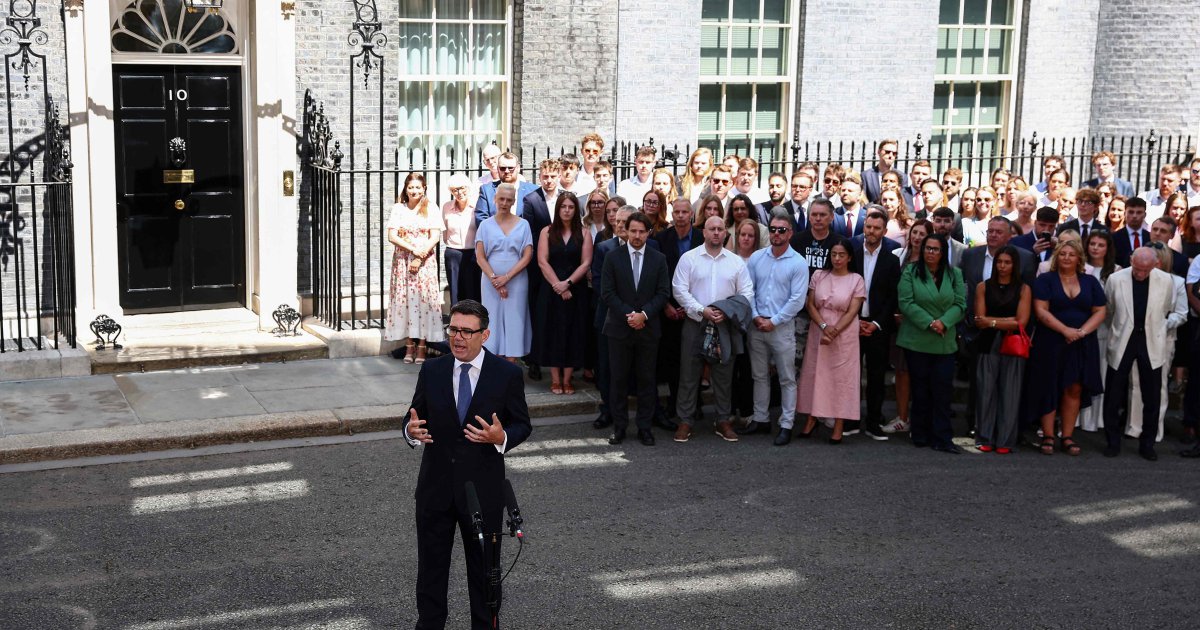
Andy Burnham's arrival at 10 Downing Street marks a striking moment of exasperation for the British electorate. Since early 2016, the United Kingdom has cycled through seven different prime ministers, a frequency that has left ordinary citizens depleted by the endless succession of new faces and fresh starts. Claire Walker's weary response—"not another one"—captures a sentiment that resonates across the country as Britons grapple with what feels like perpetual leadership chaos rather than governance continuity.
The scale of this political turnover is historically extraordinary. In most developed democracies, such rapid changes at the top would signal either profound national crisis or democratic collapse. Yet Britain has managed this sequence during what have ostensibly been years of relative peace and economic functioning, albeit troubled ones. The United Kingdom's experience differs sharply from neighbouring Europe, where France, Germany, and other nations have maintained greater stability in executive leadership. This distinction matters for understanding how British political institutions are perceived both domestically and abroad.
Voter frustration extends beyond mere annoyance at procedural changes. Each transition has typically brought fresh promises of policy direction, often contradicting the previous administration's approach. This pattern creates a sense of directionlessness for the electorate, many of whom struggle to identify consistent governing philosophy or coherent long-term strategy. Public confidence in political institutions naturally erodes when leadership appears transient rather than rooted in sustained vision. The cumulative effect is a population increasingly cynical about whether Westminster can deliver meaningful solutions to persistent challenges.
The underlying causes of this unprecedented churn vary across the nine-year period. Brexit's divisive aftermath fractured traditional party unity and created conditions where prime ministerial tenures shortened dramatically. Personality clashes, parliamentary rebellions, and fundamental disagreements over policy direction have each played roles in toppling various premiers. Unlike transitions in other democracies that often follow electoral processes or occur during natural political cycles, Britain's changes have been characterized by internal party upheaval, scandal, and resignation waves—patterns that suggest systemic dysfunction rather than healthy democratic evolution.
For Malaysian observers, Britain's instability offers instructive comparative lessons. While Southeast Asian nations have experienced their own leadership transitions, the frequency and chaotic nature of British changes present a cautionary tale about institutional resilience. Countries maintaining stronger checks on executive power through party structures or constitutional mechanisms have generally experienced smoother transitions. Malaysia's own parliamentary system, despite occasional turbulence, has proven more stable than Westminster's recent performance suggests, partly because of different party dynamics and leadership selection processes.
The economic implications of this political volatility merit consideration. Investor confidence depends partly on predictable governance. When companies and markets cannot anticipate coherent policy trajectories beyond the next few months, strategic planning becomes hazardous. This instability may have contributed to Britain's economic underperformance relative to peer nations in recent years. Foreign investors, particularly from Asian economies including Malaysia, increasingly scrutinize political stability when deciding where to commit capital. Britain's revolving-door premiership raises questions about the strength of its institutional foundations.
Domestic services and policy continuity have similarly suffered. Healthcare, education, and infrastructure require sustained attention across electoral cycles. When prime ministers change every twelve to eighteen months on average, institutional memory fragments, priorities shift erratically, and long-term planning becomes nearly impossible. Civil servants and public sector workers report whiplash from repeated strategic reversals. This dysfunction at the centre cascades downward, affecting ordinary Britons' access to consistent public services and undermining bureaucratic efficiency.
The psychological toll on the electorate cannot be overstated. Political engagement requires citizens to invest emotional energy in understanding their government's direction and participating in democratic processes. When that government appears to be in constant flux, many voters rationally disengage. Turnout trends and opinion polling suggest growing detachment, particularly among younger voters and those in marginal constituencies. This hollowing of democratic participation represents a threat to Britain's political system as fundamental as any policy disagreement.
Andrew Burnham's premiership enters this context of profound institutional fatigue. Whether his tenure can restore confidence and stability remains uncertain. Early indicators suggest voters await concrete evidence of sustained purpose rather than mere cosmetic changes. The new administration faces pressure not only to govern effectively but to restore public faith in the political process itself. If Burnham's government can provide months of uninterrupted, coherent policy implementation, it may begin reversing the damage of recent years. Conversely, if another crisis or internal rupture replaces him within months, British democracy faces deeper questions about its functionality.
For the Commonwealth and Britain's international standing, this instability carries implications. Allies and trading partners assess reliability based partly on executive continuity. Nations considering major agreements or partnerships factor in whether their interlocutors at Westminster will remain in place long enough to implement commitments. Britain's reduced predictability in this respect diminishes its diplomatic weight and complicates international cooperation. Regional organizations and partners must account for the possibility that negotiated positions may reverse following the next leadership transition. This friction in international relations reflects broader erosion of British institutional credibility that extends beyond Downing Street into Parliament and beyond.

