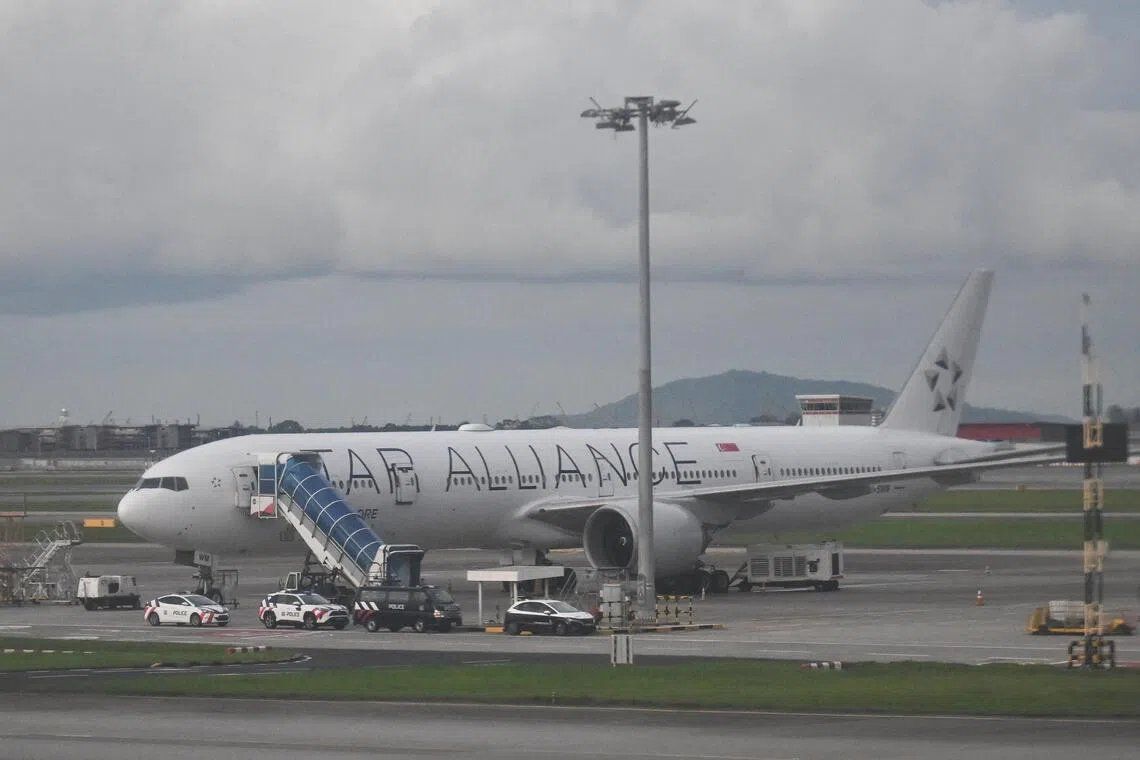
The widow of Geoffrey Kitchen, a British theatre director, has initiated legal action against Singapore Airlines at Britain's High Court following his death during a catastrophic turbulence incident aboard Flight SQ321 in May 2024. Linda Kitchen, 74, is pursuing damages to secure specialist medical care for injuries sustained during the same incident, which claimed her husband's life as the aircraft plunged over 54 metres in just five seconds while flying over Myanmar en route from London to Singapore.
The couple had been married for 52 years and were in the middle of a six-week holiday spanning Singapore, Indonesia and Australia when tragedy struck. Geoffrey Kitchen, according to witnesses, fell on top of his wife during the violent descent, crushing her against an armrest. While other passengers assisted in moving him and a physician aboard commenced emergency resuscitation efforts, these interventions could not save his life. The captain was taken by surprise by the storm clouds that triggered the severe turbulence, as they had evaded detection by the aircraft's weather radar system, according to a subsequent investigation by Singapore's Transport Safety Investigation Bureau.
The dramatic incident occurred on 21 May 2024 during routine breakfast service. Flight SQ321 carried 211 passengers and 18 crew members when it encountered the sudden downdraft. The unexpected manoeuvre threw objects and people throughout the cabin with devastating force. The aircraft was immediately diverted to Suvarnabhumi Airport in Bangkok, Thailand, where it made an emergency landing. Medical teams found that 79 people had sustained injuries ranging from minor to severe.
Lincoln Kitchen's recovery has been prolonged and difficult. She spent ten days in a Bangkok hospital before being airlifted to Bristol in the United Kingdom. Her condition was so grave that she could not comprehend the full journey home, remaining hospitalised for a week following her arrival. Upon discharge, she required extensive assistance at home as she dealt with a broken back and the emotional shock of losing her husband. She learned of Geoffrey's death two days after the incident, a delay that only compounded her trauma. "When I got separated from Geoff, I knew he was in a bad way, but nothing prepared me for hearing he had died. It was absolutely devastating," she recounted to British media outlets including The Independent.
Anthe Korelidou, the aviation specialist representing Kitchen's legal team, emphasised that the family seeks comprehensive answers about what occurred and whether preventive measures could have mitigated the injuries. "While it's more than two years since Geoff's death, Linda and the rest of her family continue to have a number of questions and concerns about what happened and if more could have been done to prevent their injuries," Korelidou stated. The barrister highlighted that the High Court proceedings represent a critical step toward obtaining the investigation results the family believes they deserve.
Court documents reveal that the Kitchen family has filed two separate claims: one on behalf of Linda Kitchen for her personal injuries, and a second also in her name but representing the estate of Geoffrey Kitchen. These filings reflect the complexity of pursuing such cases where both immediate victim injuries and broader wrongful death claims require separate legal pathways. The procedural formality underscores the formal nature of the compensation process, distinct from the informal settlements the airline had already offered.
Singapore Airlines has acknowledged responsibility through multiple channels. In 2024, the carrier extended compensation offers to affected passengers, providing US$10,000 to those with minor injuries and US$25,000 advance payments to passengers requiring long-term medical treatment and financial assistance. Additionally, the airline pledged full refunds of airfares for all passengers aboard the flight. The airline issued an official apology, stating: "We sincerely apologise to all passengers and crew members on board Flight SQ321 for their traumatic experience. The safety and well-being of SIA's passengers and staff are our top priority."
The Kitchen family is not alone in seeking legal redress. Court records indicate that at least seven other passengers and crew members have launched separate proceedings against Singapore Airlines, including Bradley Richards, Jack Jenkins, Hannah Fullerton, Andrew Dawood, Bryan Matthews, and Pauline and Michael Rainey. This pattern of multiple lawsuits suggests widespread dissatisfaction with the airline's compensation framework and indicates that many victims believe the offered settlements are inadequate given the severity of their experiences and losses.
When approached for comment by The Straits Times on 29 August, Singapore Airlines declined to discuss matters currently before the courts, a standard corporate legal practice designed to avoid statements that might prejudice ongoing litigation. This silence is likely to frustrate parties seeking further clarification about the airline's position on preventive measures and operational accountability.
The Transport Safety Investigation Bureau's report, while pinpointing undetected storm clouds as the likely cause, revealed an important caveat: it remains inconclusive whether technical failures in the weather radar system contributed to the detection failure. This ambiguity is particularly significant for the legal proceedings, as it leaves open the question of whether equipment malfunction, training deficiencies, or atmospheric factors beyond reasonable precaution were responsible. The distinction carries substantial implications for determining liability and the airline's duty of care toward passengers.
For the Malaysian region, the SQ321 case raises critical questions about aviation safety standards and passenger protection across Southeast Asia. Singapore Airlines operates extensively throughout the region, and the incident demonstrates that even well-established, safety-conscious carriers can face sudden operational challenges. The multiple lawsuits emerging from this single incident also highlight the importance of robust compensation frameworks and transparent investigation processes. As regional aviation continues to expand, particularly with increasing volumes of budget carriers and charter services, the standards established through cases like this become benchmarks for accountability and passenger rights across Malaysia and neighbouring countries.

