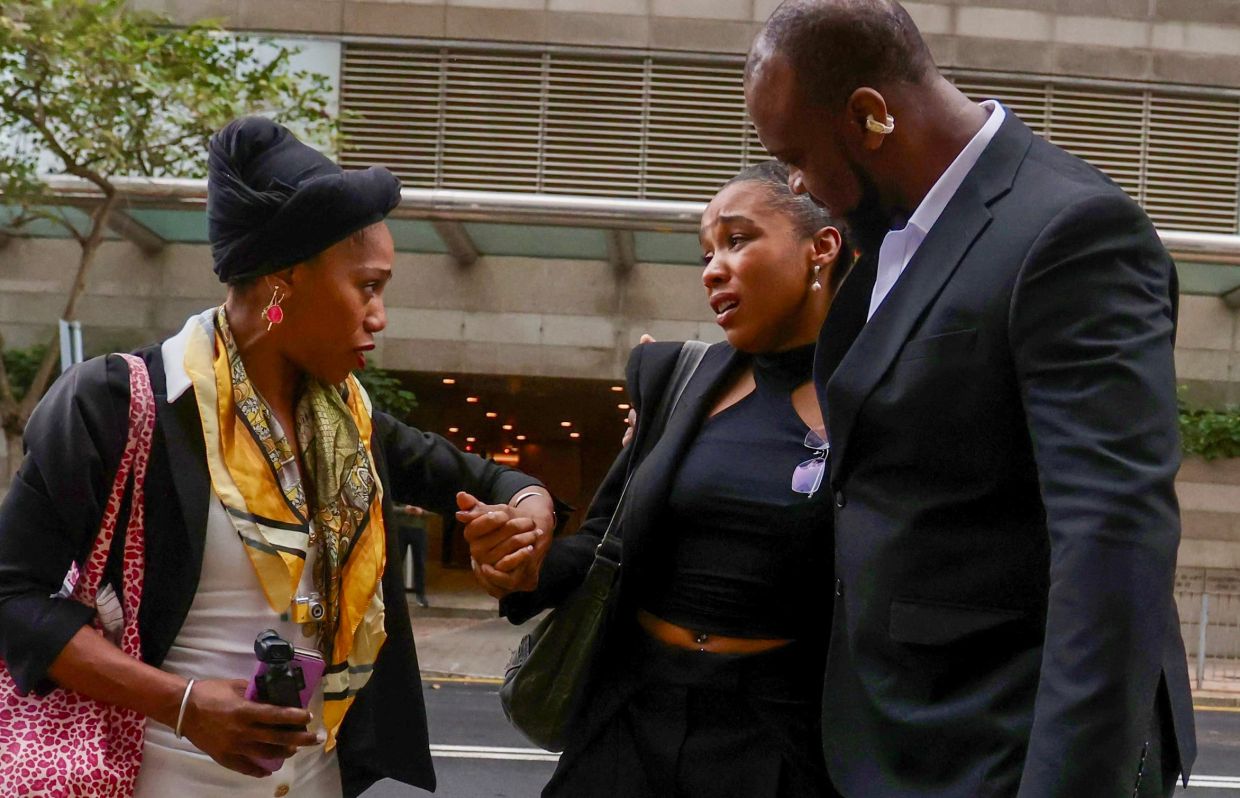
A Hong Kong District Court has handed down a six-year prison sentence to Isabel Anonia Barbra Eudora Rose, a 26-year-old British event management professional, following her conviction on blackmail and perverting the course of justice charges. Judge Adriana Noelle Tse Ching ruled on Wednesday that Rose had fabricated a rape allegation against a British man she met during a holiday in Southeast Asia and subsequently demanded substantial compensation under threat of a police report.
Rose travelled to Hong Kong on January 31, 2024, to visit the complainant, whom she had encountered during a trip to Thailand in December 2023. That evening at his Central district apartment, she alleged he had sexually assaulted her. However, the court found this account fundamentally unreliable when examined against contemporaneous communication records and other evidence.
The judge's assessment relied heavily on messages exchanged between the pair immediately after the alleged incident. In these communications, Rose stated "You basically raped me," prompting the man to respond with expressions of distress and denial. He subsequently explained that he had requested oral sex but accepted her refusal. He acknowledged feeling he had "misread her signals" and apologised for "rushing her." The man indicated he was frustrated but respected her decision to decline further intimacy.
These exchanges proved pivotal in Tse's determination that the rape claim lacked credibility. The judge noted that Rose's messages appeared fundamentally inconsistent with someone who had just experienced sexual assault. Additionally, a medical examination identified bruising around Rose's neck but found no genital injuries consistent with the alleged rape. The forensic findings, combined with the written record, led Tse to conclude the allegation had been deliberately constructed.
Following the alleged assault, a financial dimension emerged rapidly in the conversation. Initial discussions centred on reimbursement for Rose's accommodation and travel expenses incurred during the visit. The man initially agreed to provide £2,000 as compensation, but Rose escalated her demand to £5,000, then signalled expectations for substantially more. In one message she wrote: "You've given 10 per cent of what I'm owed, 100 per cent of my soul gone," a phrase the judge interpreted as suggesting a far larger entitlement.
The demand eventually reached £100,000, though this figure does not appear explicitly in the recoverable text messages. Judge Tse concluded that Rose had mentioned this sum through disappearing messages or voice notes that she subsequently deleted to avoid a paper trail. The court found that Rose had threatened to report the alleged rape to police unless the full amount was transferred by a specified deadline. This threatened disclosure constituted the blackmail element that formed the foundation of the conviction.
At the sentencing hearing, Judge Tse characterised the offence as "cruel and evil," noting that Rose had systematically exploited the man's emotional vulnerabilities. She observed that the defendant had leveraged his "kindness, naivety, friendship and romantic interest" to extract money through extortion. The judge further determined that Rose's primary motivation from the outset had been financial gain, with the relationship and allegations weaponised purely to facilitate the blackmail scheme.
The sentencing structure reflected the severity with which the court viewed the conduct. Tse established a five-year baseline for the blackmail offence itself, then added a consecutive one-year sentence for perverting the course of justice through the false police report. The judge described Rose as "an author of her own wrongdoing" and characterised the rape complaint as "vengeful and wicked behaviour" designed to punish the man for refusing her payment demands.
Rose's response to the verdict in March demonstrated emotional distress in the courtroom, where she wept before being taken into custody. When subsequently interviewed by the South China Morning Post from detention, she expressed bewilderment at the judicial outcome, stating "I reported the rape. But within 24 hours, there was no rape any more." She suggested that police had informed her they would prioritise the blackmail investigation over the sexual assault claim, effectively abandoning the latter.
The case raises significant questions about the intersection of false allegations and blackmail in jurisdictions with robust legal systems. For Malaysian and broader Southeast Asian observers, the Hong Kong court's approach demonstrates how digital communications can comprehensively document the sequence of events and reveal inconsistencies in accounts that might otherwise remain difficult to challenge. The verdict underscores judicial scepticism toward accusations lacking contemporaneous corroboration and shows courts' willingness to impose substantial sentences when sexual assault allegations are weaponised for financial extortion.
Rose's detention also highlights the precarious situation faced by those convicted of serious offences in foreign jurisdictions. As a British national serving time in Hong Kong, she faces the additional challenge of navigating the prison system while separated from her support network in the United Kingdom. The case serves as a cautionary reminder of how tourists and transient residents in major Asian financial centres can become embroiled in complex legal proceedings with far-reaching consequences.

