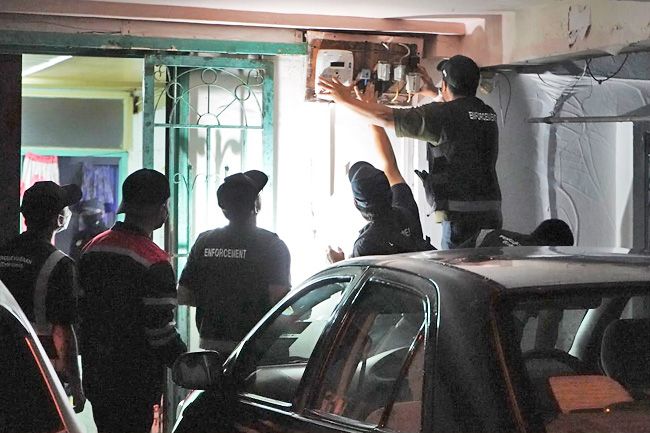
Authorities in Brunei have concluded a large-scale coordinated enforcement operation that has yielded multiple breaches of immigration, labour, and electrical safety regulations across two separate locations in the capital, Bandar Seri Begawan. The joint action, spanning multiple government departments and law enforcement divisions, demonstrates the region's intensifying focus on regulatory compliance and border management—issues increasingly important to Southeast Asian governments grappling with irregular migration and workplace violations.
The Immigration and National Registration Department apprehended two foreign individuals during the operation and placed them in investigative custody under provisions of the Immigration Act. While the source material does not specify the nature of their alleged offences, such detentions typically involve documentation irregularities, unauthorised residence, or visa violations. The arrests underscore growing regional concerns about undocumented migration and the enforcement challenges faced by even relatively well-resourced administrations in managing population flows across shared borders.
The Labour Department's investigations revealed five distinct regulatory failures across the sites visited. Three violations were documented under Section 81, which mandates that employers provide workers with adequate housing facilities and maintain environmental hygiene standards as prescribed by law. These provisions reflect international labour standards increasingly adopted throughout Southeast Asia, though enforcement remains inconsistent across the region. The additional two breaches involved the Foreign Worker Licence framework, specifically the failure to properly register worker accommodation details—a documentation requirement designed to improve workplace transparency and protect vulnerable migrant populations from exploitation.
The Department of Electrical Services identified two separate offences arising from non-compliance with Chapter 71 of Brunei's electricity legislation. Such violations typically relate to unsafe installations, inadequate safety measures, or unlicensed electrical work, all of which pose significant public safety risks in commercial or residential settings. The inclusion of electrical inspectorates in enforcement operations reflects a comprehensive approach to regulatory oversight that extends beyond traditional law enforcement concerns to encompass occupational health and environmental protection.
One notable dimension of the operation was the involvement of the Human Trafficking Investigation Unit, which conducted interviews with 19 individuals across both locations. The fact that no human trafficking offences emerged from these interviews may be reassuring, yet the proactive screening reflects heightened awareness of trafficking vulnerabilities associated with irregular labour practices and poor working conditions—conditions that enforcement operations frequently uncover in tandem. The unit's participation indicates that regional authorities view labour law enforcement and anti-trafficking work as complementary investigative endeavours.
The scale of the operation itself merits attention. Deploying more than 200 personnel across multiple agencies—including representatives from the Brunei-Muara Police District, Narcotics Control Bureau, Royal Customs and Excise Department, Internal Security Department, Religious Enforcement Division, and municipal authorities—reflects a substantial commitment of state resources. Such comprehensive mobilisations are typically reserved for high-priority enforcement actions and signal government determination to address systemic compliance failures. The operation's leadership, directed by Acting Superintendent Mohamad Noor Abd Rahman of the Brunei-Muara Police District, suggests that the Royal Brunei Police Force played a coordinating role alongside other regulatory bodies.
The involvement of the Narcotics Control Bureau and Internal Security Department, despite the absence of specific drug or security-related charges in the reported findings, indicates that enforcement personnel conducted comprehensive screenings across multiple regulatory domains. This multi-faceted approach has become standard practice in Southeast Asian jurisdictions, where single-agency inspections are increasingly viewed as insufficient to address the complex intersection of border control, labour exploitation, and informal economic activity.
For Malaysian observers and policymakers, the Brunei operation offers instructive lessons. Malaysia confronts comparable challenges regarding undocumented workers, inadequate employer compliance with accommodation standards, and informal sector labour arrangements. The coordination demonstrated by Brunei's approach—uniting immigration, labour, police, electrical safety, customs, and municipal authorities under unified command—contrasts with occasionally fragmented enforcement efforts across Malaysian states. The scale of personnel deployment also underscores the resource commitments required for effective regulatory oversight in an era of complex supply chains and globalised labour mobility.
The operation's focus on documentary compliance and physical workplace conditions reflects an increasingly sophisticated understanding that labour violations and trafficking vulnerabilities are often intertwined. Workers lacking proper documentation or housed in substandard facilities face heightened exploitation risks, making employment law enforcement and anti-trafficking efforts mutually reinforcing rather than separate concerns. This integrated perspective is gradually gaining traction across Southeast Asia, though implementation remains uneven.
Regional governance observers note that such operations, while yielding individual violations and detentions, often fail to address underlying structural incentives that drive non-compliance. Employers frequently calculate that the risk-adjusted cost of violation is manageable relative to the expenses of full regulatory compliance, particularly where penalties are modest or inconsistently enforced. The sustainability of Brunei's enforcement commitment and its long-term effect on workplace standards will largely depend on consistent follow-up action and credible penalties that reshape employer behaviour beyond the immediate operation.
The conclusion that no human trafficking offences were detected may reflect either effective prevention measures already in place or potentially limited detection capacity during field operations. Human trafficking investigations typically require sustained investigation rather than brief field interviews, and trafficking victims may not readily disclose exploitation during rapid compliance checks. Authorities elsewhere in Southeast Asia have found that comprehensive anti-trafficking efforts require longer-term community engagement and worker outreach beyond formal enforcement sweeps.

