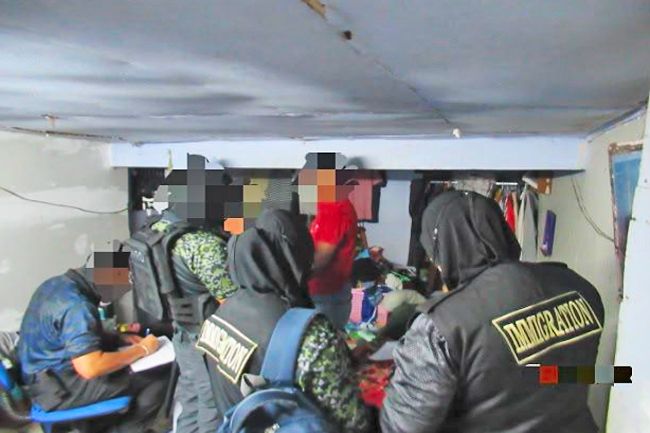
Brunei's immigration authorities have intensified their crackdown on violations of the nation's immigration laws, launching a series of coordinated enforcement operations that have resulted in the detention of multiple foreign nationals across different districts. The Immigration and National Registration Department, operating under the Ministry of Home Affairs, has rolled out a comprehensive strategy called 'Operasi Kakas 2026' designed to identify and prosecute those who breach the country's strict immigration regulations. The sweeping campaign reflects growing concern among regional governments about undocumented employment and visa irregularities, issues that have become increasingly prevalent across Southeast Asia as labour migration patterns shift and enforcement resources face mounting pressure.
The first major operation, 'Operasi Kakas 86/2026', focused on a market area in Mukim Sengkurong where enforcement teams discovered significant violations among a group of foreign workers. Seven individuals out of thirteen inspected were taken into custody for further questioning by the Law Enforcement Division after preliminary checks suggested they had been engaged in paid employment while holding only a visit pass. This category of violation, falling under Regulation 9(4) of the Immigration Regulations, Chapter 17, represents one of the most common immigration infractions in Brunei and across the region, where individuals on temporary visitor status attempt to supplement their income through informal work arrangements that circumvent formal employment authorisation processes.
A second operation targeting rented accommodation in Mukim Berakas 'A' produced similar findings, with enforcement officers identifying three foreign nationals during 'Operasi Kakas 87/2026'. Two of these individuals were detained and transferred to investigators after evidence suggested they too had violated the same regulation by working without proper employment authorisation. The focus on residential areas reflects a deliberate shift in enforcement strategy, recognising that many immigration violations occur away from formal business premises and in the informal economy where monitoring and compliance are considerably more difficult to maintain.
The most significant enforcement action occurred during 'Operasi Kakas 88/2026', when officers descended on a rented house in Mukim Berakas 'A' and discovered eight foreign nationals residing there. Six were detained after failing to produce original documentation to verify their legal status and immigration permissions. Subsequent investigation revealed that five of these six individuals had committed more serious violations than mere unlicensed work—they had been residing in Brunei long after their immigration passes had expired, constituting an overstaying offence under Section 15(1) of the Immigration Act, Chapter 17. Additionally, investigators determined that these individuals had not been working for their designated original employers, violating Regulation 15(2) of the Immigration Regulations, Chapter 17. Such multi-layered violations suggest a pattern of deliberate circumvention of immigration controls rather than inadvertent technical breaches.
For Malaysian observers, these enforcement operations hold particular relevance given the substantial cross-border movement between Malaysia and Brunei. The issues identified—undocumented employment, visa violations, and document falsification—mirror challenges faced by Malaysian authorities along their own borders. The scale and coordination of Brunei's operations demonstrate a commitment to comprehensive rather than reactive enforcement, a model that regional neighbours including Malaysia continue to develop and refine. The regularity of these operations, numbered sequentially up to at least 89, suggests sustained governmental dedication to immigration control rather than sporadic or seasonal crackdowns.
One operation, 'Operasi Kakas 89/2026', yielded different results, demonstrating that not all enforcement sweeps uncover violations. At a rented house in Mukim Berakas 'B', all four foreign nationals inspected produced valid documentation and immigration passes in proper order, resulting in no detentions. This outcome, while less dramatic than operations resulting in arrests, serves an important function within the broader enforcement strategy by providing assurance to compliant migrants and reinforcing the message that lawful immigration status will not be disrupted by routine checks.
The categories of violations uncovered through these operations highlight persistent vulnerabilities in immigration systems across Southeast Asia. The prevalence of visit pass holders engaging in employment demonstrates how visitor visas, designed primarily for tourism and short-term social purposes, are being repurposed as low-cost entry mechanisms for temporary workers seeking to avoid formal employment procedures. This practice undermines bilateral labour agreements and creates unfair competition for workers who comply with proper sponsorship and licensing requirements. For Malaysia, which hosts one of the world's largest immigrant populations, these dynamics carry obvious implications for labour market integrity and worker protection standards.
Brunei's enforcement apparatus has continued to prioritise document verification as a central element of its compliance strategy. The repeated emphasis in enforcement reports on the failure of detained individuals to produce original documentation suggests that insufficient documentation control represents a significant vulnerability in border and internal security procedures. This mirrors concerns raised by Malaysian authorities regarding document authenticity and the prevalence of forged or fraudulent travel and work permits in circulation among migrant communities. Enhanced regional cooperation on document verification standards and information sharing could strengthen immigration control across Southeast Asia, a point increasingly recognised by policymakers as migration pressures continue to intensify.
The systematic nature of these operations, with multiple teams conducting simultaneous or sequential raids across different mukims (administrative districts), suggests the deployment of substantial law enforcement resources. The resource intensity of immigration enforcement has become an increasingly salient policy issue across the region, with Malaysian and Singaporean authorities also reporting significant budgetary commitments to maintain compliance operations. For smaller nations like Brunei with more limited populations and administrative capacity, such enforcement efforts represent a proportionally greater investment in immigration control infrastructure compared to larger neighbours.
The implications of these enforcement successes extend beyond immediate apprehension and prosecution. When foreign nationals understand that violations will be detected and prosecuted through consistent enforcement operations, compliance incentives strengthen across the migrant population. This deterrent effect contributes to broader immigration system integrity and reduces the attractiveness of irregular work arrangements that frequently involve exploitation and labour violations. Regional governments increasingly recognise that effective immigration enforcement, properly executed, protects vulnerable migrants by reducing the market for illegal employment.
Moving forward, Brunei's continued prosecution of these enforcement operations reflects a calculated approach to managing immigration challenges within its borders. The sequentially numbered operations suggest this represents an ongoing, planned initiative rather than ad hoc responses to specific intelligence. For Malaysia and other Southeast Asian nations grappling with similar enforcement challenges, Brunei's experience provides both a practical model and a cautionary lesson about the sustained commitment required to maintain immigration system integrity in an era of substantial cross-border mobility and economic interdependence.

