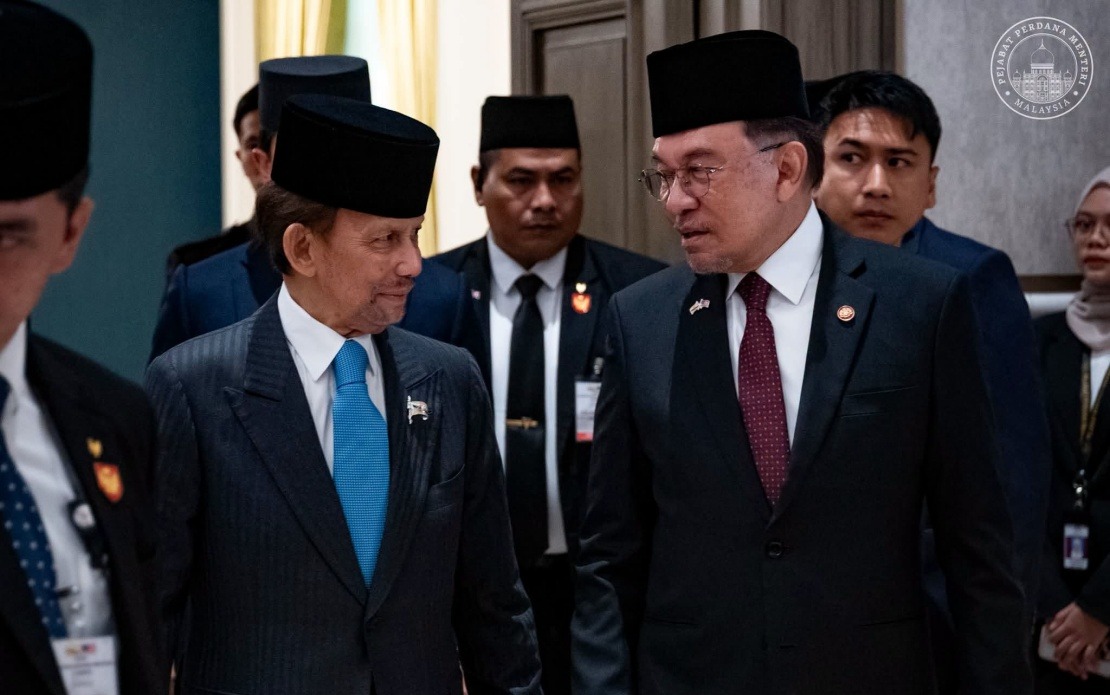
Sultan Hassanal Bolkiah of Brunei Darussalam reached out to Malaysian Prime Minister Datuk Seri Anwar Ibrahim via telephone to inquire about his wellbeing and offer prayers for his swift recovery. The neighbourly gesture highlights the close diplomatic ties between the two Southeast Asian nations, which have long maintained cordial relations across multiple sectors including defence, trade, and cultural exchange. Anwar publicly acknowledged the call through a Facebook statement, underscoring the significance he places on bilateral goodwill and the personal concern shown by Brunei's long-serving monarch.
Anwar took the opportunity in his social media response to reciprocate the sentiments, expressing his own prayers for Sultan Hassanal Bolkiah's continued good health and divine protection. Such exchanges of courtesies between leaders, while seemingly ceremonial, carry symbolic weight in regional diplomacy and reinforce the diplomatic protocols that govern Southeast Asian statecraft. The willingness of both leaders to engage in these personal interactions demonstrates a commitment to maintaining the strength of Malaysia-Brunei relations at the highest level.
The Malaysian Prime Minister underwent an elective laparoscopic surgical intervention the previous week to address a para-umbilical hernia, a condition requiring operative treatment to prevent potential complications. Following the procedure, Anwar has remained under the watchful eye of a specialist medical team that continues to monitor his condition closely. The decision to proceed with surgery while serving as the nation's chief executive reflects both the medical necessity of addressing the condition and the confidence of his medical advisors that the recovery period would not significantly impair his ability to discharge his duties.
Despite his recent surgery, Anwar has maintained his diplomatic schedule with determination. He confirmed his intention to meet with Sultan Hassanal Bolkiah in person during a visit to Bandar Seri Begawan scheduled for the following week. This planned audience will coincide with the 27th iteration of the Annual Leaders' Consultation, a biennial institutional framework through which Malaysia and Brunei coordinate on matters of mutual interest and regional significance. The continuation of this engagement despite health considerations underscores Anwar's commitment to honouring international obligations and maintaining the momentum of bilateral cooperation.
The Malaysia-Brunei relationship occupies a distinctive position within the broader framework of ASEAN architecture. The two nations share maritime boundaries, cultural affinities rooted in Islam and Malay heritage, and complementary economic interests ranging from energy trade to tourism. The Annual Leaders' Consultation mechanism serves as a cornerstone institutional arrangement that allows for frank dialogue between senior officials and provides a structured platform for addressing issues that might otherwise lack formal channels of communication. Such forums have historically proven valuable for resolving potential friction points before they escalate into broader disputes.
Brunei, under the steady leadership of Sultan Hassanal Bolkiah since 1967, has positioned itself as a consensus-builder within ASEAN despite its modest population and economic size. The Sultanate's demonstrated concern for the health of a neighbouring head of government reflects this diplomatic posture and the importance it places on stable, predictable relationships with its regional partners. For Malaysia, such gestures from smaller neighbours carry particular significance, as they validate the cooperative approach that underpins the nation's regional foreign policy.
The timing of Anwar's surgical intervention and his subsequent recovery trajectory come at a relatively stable moment in Malaysian domestic politics, allowing the government machinery to function smoothly during any necessary temporary reallocation of responsibilities. The broader significance of his surgical procedure and the supportive responses from regional counterparts, including Brunei's Sultan, suggest that there is no apprehension about continuity in Malaysian governance or any instability in the country's leadership structure. This continuity is important for Malaysia's standing in international forums and its ability to navigate complex regional challenges.
The surgical procedure Anwar underwent, while requiring operative intervention, is a relatively straightforward intervention with high success rates and low morbidity when performed by experienced specialists. The laparoscopic approach, which utilises minimally invasive techniques, permits faster recovery compared to traditional open surgical methods. Anwar's decision to undertake the procedure demonstrates a practical approach to maintaining his health and fitness for office, rather than deferring necessary medical treatment until it became more urgent or complicated.
Looking ahead, the scheduled bilateral consultation between Malaysia and Brunei during Anwar's visit to the capital will likely touch upon several substantive matters. Trade and investment flows between the nations, energy cooperation particularly in the context of Brunei's oil and gas sector, maritime delimitation issues, and broader ASEAN matters will presumably feature in discussions. The personal rapport that Anwar and Sultan Hassanal Bolkiah appear to maintain, as evidenced by the Sultan's solicitous phone call, creates a foundation of trust that can facilitate candid discussion of more sensitive topics when necessary.

