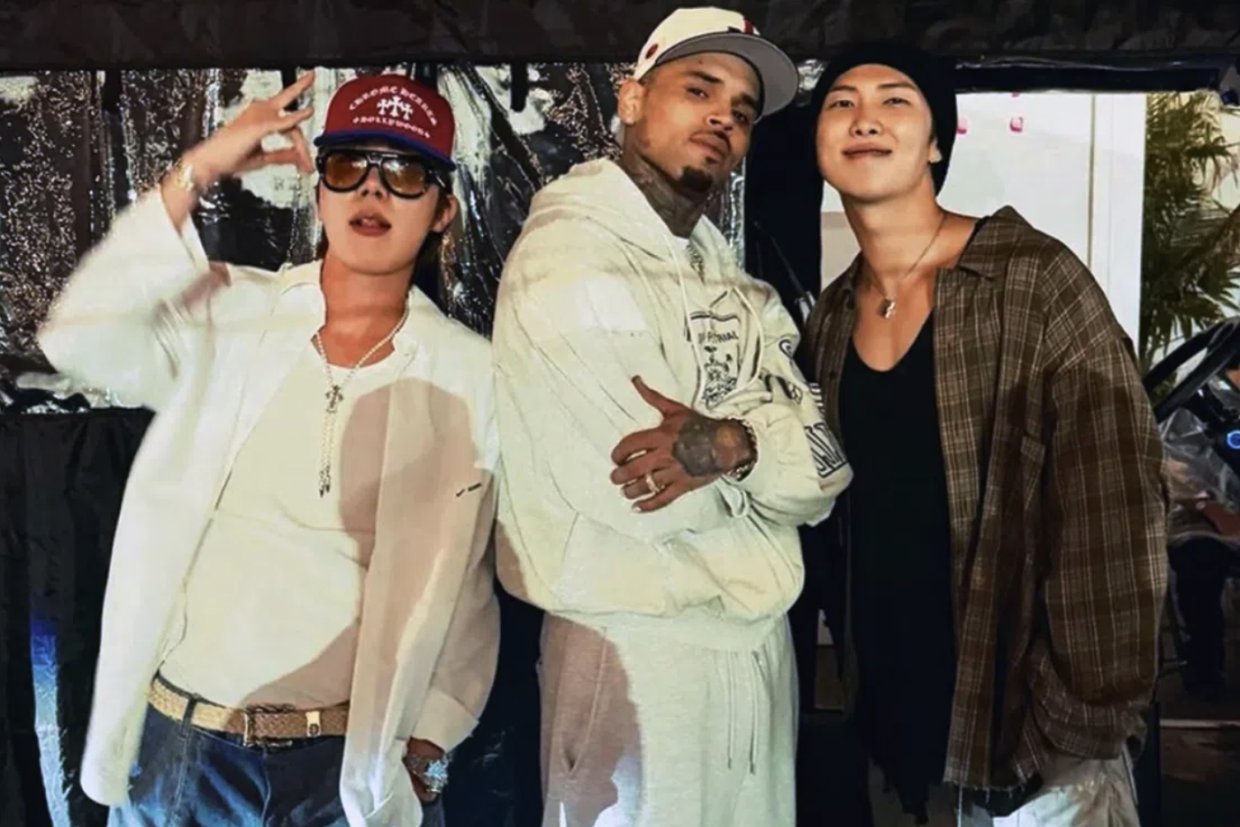
Two members of the globally dominant K-pop ensemble BTS triggered significant controversy among their fanbase after being photographed at a Chris Brown concert in Canada. The American artist, whose public image has been shadowed by numerous allegations and convictions related to violence, posted the photograph alongside BTS leader Kim Namjoon, professionally known as RM, and rapper Jung Hoseok, known as J-Hope, on August 13. The image's release set off a firestorm of discussion across social media platforms, highlighting the complex intersection of celebrity influence, moral accountability, and fan culture in the digital age.
Chris Brown's legal history provides significant context for understanding the intensity of fan reactions. In 2009, he was convicted of assaulting his then-girlfriend Rihanna, a conviction that marked a defining moment in public discourse surrounding domestic violence in the entertainment industry. Beyond that landmark case, Brown has accumulated additional serious allegations over the subsequent years. A 2016 arrest for threatening a woman with a firearm at his Los Angeles residence led to his release on bail. Two years later, he faced accusations of conspiring with associates at his home in a sexual assault incident, though the matter was ultimately resolved through settlement. In 2019, authorities in Paris detained him following rape allegations, which were subsequently dismissed. More recently, in 2022, a woman identified in court documents as Jane Doe alleged that Brown had drugged and assaulted her aboard a yacht in Miami, claiming she feared for her safety during the incident.
The pattern of allegations continued into the present year when a Los Angeles jury determined that Brown bore financial responsibility for injuries sustained when his dog attacked the sister of his housekeeper, ordering him to pay US$12.9 million in damages. This accumulated record of legal troubles and allegations has made Brown a polarizing figure, particularly among younger audiences and communities focused on issues of gender-based violence and accountability.
The response from BTS's fanbase, known collectively as ARMY, proved remarkably swift and vocal. A substantial segment of the community expressed dismay at what they perceived as tacit endorsement of a person with credible accusations of violence against women. One fan articulated the conflict between fandom identity and personal values, stating that her identity as a woman took precedence over her status as an ARMY supporter. Other fans, particularly those with personal experiences of sexual assault or domestic violence, communicated deep hurt at discovering that artists they had long admired appeared to be socializing with individuals accused of perpetrating the very harms they themselves had endured.
However, BTS's support system within fandom demonstrated its characteristic resilience and vocal advocacy. Defenders of the group's members argued that celebrities retained the right to attend concerts and associate with performers they appreciated, much like any other individual. They emphasized the distinction between enjoying an artist's music and endorsing their behavior, suggesting that personal entertainment choices should not be subject to moral scrutiny. This defensive posture represented a familiar dynamic within fan communities where loyalty to beloved figures often supersedes other considerations.
The discourse that emerged transcended simple disagreement about concert attendance and delved into fundamental questions about cultural complicity and platform responsibility. Social media users pointed out that defending individuals with histories of violence against women—particularly when those defenders possessed enormous platforms and devoted global audiences—carried consequences extending far beyond personal entertainment preference. One analysis highlighted how public displays of support, whether intentionally or not, potentially enabled and normalized behavior that caused measurable harm to vulnerable populations.
Particularly incisive were arguments regarding what some termed performative morality. Several commentators noted that silence from prominent male figures in the face of misogyny often escaped public criticism despite representing genuine complicity. However, the same individuals noted that celebrities with massive platforms bore heightened responsibility precisely because their choices reached millions of impressionable followers who might interpret such associations as implicit approval or acceptance of previously condemned behavior.
The example of Swedish artist Zara Larsson, who had previously collaborated with BTS, proved particularly relevant to the discussion. In a widely circulated clip, Larsson described maintaining a comprehensive list of abusers whom she had blocked across streaming platforms, specifically mentioning Brown as an example of an artist she deliberately avoided. This contrast seemed to underscore that alternatives to attendance and association existed, raising questions about whether the BTS members' choice to attend represented preference for entertainment over principle.
The controversy also extended into broader conversations about celebrity accountability within fan spaces. Observers noted that fandoms frequently mobilized around political and social causes, demanding that entertainment figures make explicit public commitments to progressive values. This pattern created particular tension when those same figures appeared to navigate issues of violence and accountability according to personal preference rather than stated principles. The dissonance generated significant discussion about whether parasocial relationships between fans and celebrities imposed moral obligations, and if so, how those obligations should be measured and enforced.
Timing proved significant in shaping the controversy's intensity. The BTS incident arrived on the heels of criticism directed at the group for a collaborative advertisement with Google's artificial intelligence system Gemini. That project, which appeared on the Las Vegas Sphere and aimed to showcase technological possibilities, had itself drawn substantial criticism from environmentally conscious fans concerned about the carbon footprint and sustainability implications of artificial intelligence development. The accumulated controversies suggested potential fracturing within BTS's previously unified fanbase.
The incident highlighted persistent tensions within global K-pop fandom regarding how to reconcile genuine affection for artists with critical evaluation of their public choices and associations. For Malaysian readers and broader Southeast Asian audiences, the controversy offered insights into how fan communities navigate complex questions of moral accountability in an era when celebrity movements and associations are instantly documented and distributed globally. The debate suggested that entertainment choices, particularly for figures with international influence, increasingly carried implications that extended beyond personal preference into territory affecting broader cultural conversations about acceptable behavior and appropriate standards for public figures.

