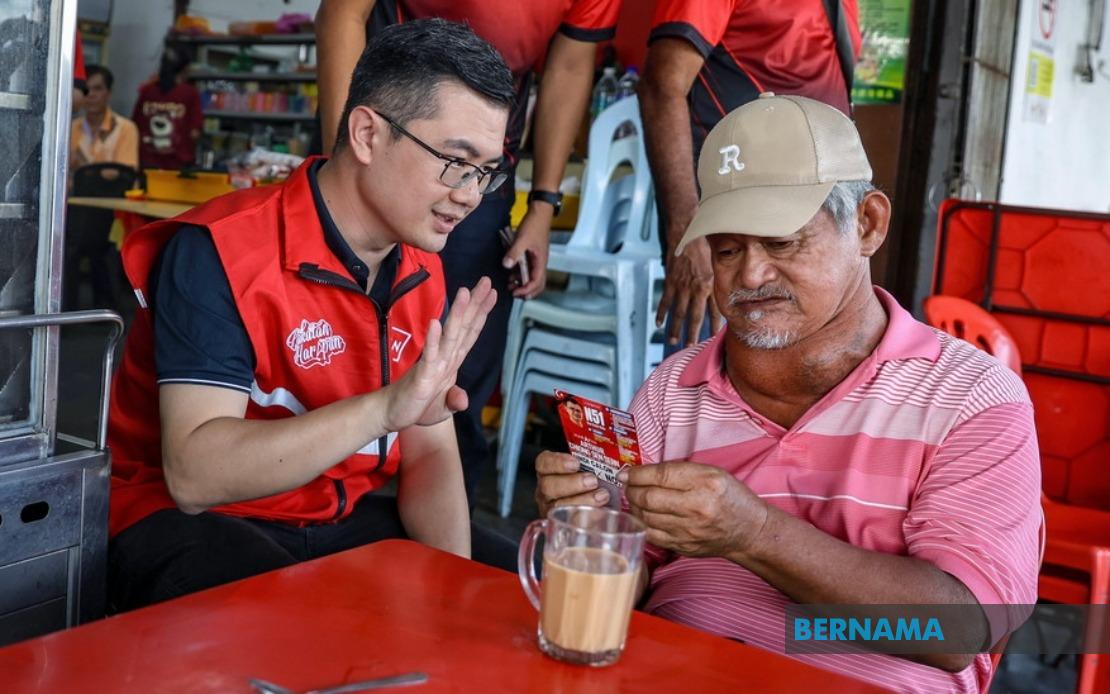
Arthur Chiong Sen Sern, representing Pakatan Harapan in the Bukit Batu state constituency, has lodged a police complaint following what he describes as deliberate acts of sabotage targeting his campaign infrastructure. The incidents, which occurred in residential areas of Kulai, reflect growing tensions as the Johor state election approaches its polling day on July 11.
In the first incident reported in Kampung Sri Paya, party flags bearing PH colours were discovered dumped in a drainage system, while multiple campaign billboards were torn down or defaced. A separate but similar episode unfolded in the Taman Putri area, where advertising materials promoting the PH campaign suffered comparable damage. The breadth of these incidents across different neighbourhoods suggests a pattern rather than isolated vandalism, raising questions about coordination and intent behind the sabotage.
Chiong has since escalated the matter by filing an official report with the Air Bemban police station, seeking a formal investigation into the identity and motivations of those responsible. Speaking at the Main Operations Room for Bukit Batu, he expressed frustration at what he characterised as irresponsible behaviour that undermines the integrity of the democratic process. However, he acknowledged that despite police involvement, the investigation remains in its early stages with no suspects or perpetrators yet identified.
The destruction of campaign materials carries particular significance in Malaysian electoral contests, where visual presence and grassroots messaging play crucial roles in voter engagement, particularly in state-level races where media coverage may be less saturated than federal campaigns. For smaller parties and individual candidates operating with limited resources, such vandalism can impose disproportionate costs in terms of both finances and campaign momentum.
Notably, Chiong refused to allow the incidents to derail his broader campaign strategy. He publicly stated that the sabotage has not weakened his resolve to contest the seat or discourage his campaign activities. This response reflects a calculated political stance: acknowledging the wrongdoing while projecting confidence and resilience to voters and party supporters. By framing the vandalism as the work of unidentified troublemakers rather than attributing it to specific opponents, he maintains the moral high ground without escalating inter-party tensions or inviting retaliation accusations.
Chiong used the occasion to advocate for what he termed mature politics, explicitly calling on all contesting parties to conduct their campaigns without resorting to hostile tactics or deceitful practices. This appeal carries weight in Malaysian political discourse, where campaign civility remains a valued norm despite frequently being breached. His framing suggests an attempt to set ethical standards that could resonate with voters fatigued by negative campaigning or concerned about democratic deterioration.
The Bukit Batu contest itself features a crowded field that will test voter preferences across a broad ideological spectrum. Alongside Chiong's PH-PKR ticket, the race includes R. Kumaran representing the Barisan Nasional-MIC coalition, M. Premanand of the reform-oriented MUDA party, G. Tamili standing for Bersama, and independent candidate Kamaruzaman Ali. This five-way split complicates traditional two-coalition dynamics and may explain why some actors resort to extra-electoral tactics to influence outcomes.
The Johor state election represents a significant political event for Malaysia's second-largest state by population and economic output. The contest involves 172 candidates pursuing 56 state assembly seats, with early voting scheduled for July 7 preceding the main polling day on July 11. These elections carry implications beyond Johor itself, serving as a barometer for national political sentiment and testing ground for different parties' organisational capacities and messaging strategies.
Campaign sabotage incidents in Malaysian elections have periodically surfaced in previous contests, though their frequency and severity vary. When such events occur, they typically generate immediate public attention and often trigger calls for tighter enforcement of election offences and protection of campaign infrastructure. The police investigation into the Bukit Batu vandalism will likely be monitored closely by election observers and parties competing in surrounding constituencies.
The incident also highlights vulnerabilities in how campaign materials are protected in public spaces. Unlike indoor campaign offices or private premises, billboards and flags remain exposed to potential interference throughout the campaign period. Depending on investigation findings, future elections may see enhanced security measures or clearer demarcation of campaign material locations, though such measures present their own logistical and cost challenges.
As the campaign intensifies toward July 11, the Bukit Batu constituency will serve as a microcosm of broader Johor electoral dynamics. The vandalism incident may influence voter perceptions of which parties or candidates operate with greater integrity, or conversely, it might be largely overshadowed by substantive policy debates and local concerns affecting the constituency. For Chiong and his PH-PKR campaign team, converting the incident's political fallout into renewed momentum will depend on sustained engagement with voters and effective messaging in the remaining campaign period.

