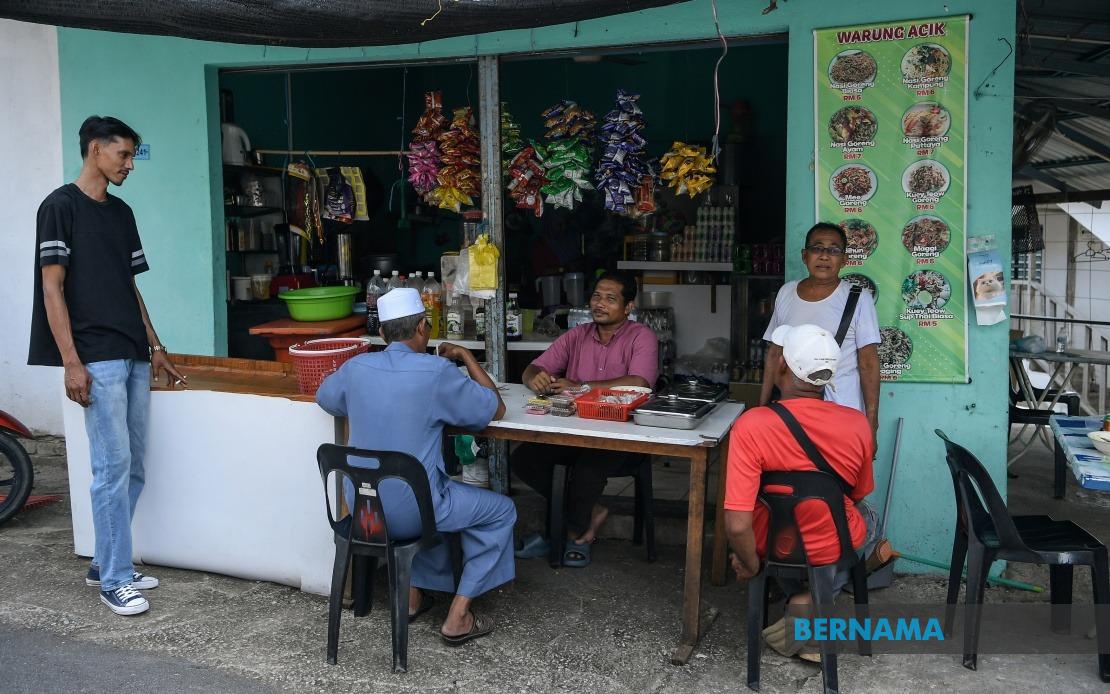
The fishing village of Bukit Malut in Langkawi is waging a determined campaign to dispel what residents characterise as baseless accusations that have plagued their community for years—namely, that the settlement serves as a haven for illegal immigrants fleeing Myanmar. Speaking on behalf of frustrated locals, Bukit Malut Neighbourhood Watch chairman Mohamad Fadzli Abdullah articulated the collective frustration of a community exhausted by unfounded rumours and damaging stereotypes that have become entrenched in public perception despite lacking substantive evidence.
The persistent narrative linking Bukit Malut to refugee landings has created a vicious cycle of reputational damage, with residents regularly finding their neighbourhood implicated whenever irregular maritime arrivals occur anywhere across Langkawi. Mohamad Fadzli emphasised that residents have repeatedly endured such accusations without factual foundation, a burden that extends beyond mere gossip to affect real economic and social consequences for families who call the area home. The stigmatisation represents a broader challenge facing many coastal communities in Malaysia where geographic proximity to maritime routes creates assumptions of involvement in human trafficking or irregular immigration, regardless of actual circumstances.
Central to the community's rebuttal is a geographical argument that, on its surface, seems almost paradoxical: Bukit Malut's location immediately adjacent to multiple security installations—including bases operated by the Malaysian Maritime Enforcement Agency, the Royal Malaysian Customs Department, and the Royal Malaysian Navy—would make clandestine refugee operations virtually impossible to conduct undetected. The presence of these enforcement agencies, with their surveillance capabilities and regular patrols, renders the area an implausible venue for organised illegal immigration activities. This proximity to security infrastructure effectively serves as the strongest counter-argument to allegations of smuggling or refugee harbouring, yet the reputational damage persists regardless of this inconvenient geographical reality.
Residents forcefully reject secondary claims that suggest the community is somehow isolated or restricted from public access, characterising such assertions as part of the broader misinformation campaign that has corroded trust in their settlement. Mohamad Fadzli clarified that Bukit Malut remains an open community with no entry barriers, and that security monitoring by authorities—rather than creating an atmosphere of constraint—actually demonstrates the legitimacy of activities within the area. The lack of restrictions stands in sharp contrast to the narrative circulated through social media channels, which frequently portray the village as a closed-off, dangerous enclave deliberately shielded from public scrutiny.
The actual demographic composition of Bukit Malut further undermines the refugee settlement narrative. Approximately 85 percent of residents derive their livelihoods from fishing, a profession intrinsically tied to Malaysian maritime culture and requiring proper licensing and registration. The remaining residents include traders, car rental operators, civil servants, uniformed personnel, and university-educated professionals employed across various sectors—a cross-section of Malaysian society rather than a marginalised migrant population. This occupational diversity reflects a functioning Malaysian community with deep institutional integration, not the shadowy enclave described in social media allegations.
Hasanah Zakaria, a 42-year-old resident with two decades of residence in Bukit Malut, challenges the public to move beyond digital rumours and experience the community directly. Her invitation carries particular weight because it addresses how social media amplifies unverified claims without demanding substantiation, allowing harmful narratives to proliferate unchecked. Hasanah notes that the settlement exhibits characteristics common to any Malaysian village—normal daily routines, low serious crime incidence, and a functioning social fabric—yet these normalcy indicators seemingly carry no weight against the sensationalised allegations circulating online. She specifically highlights how reputational damage extends to the younger generation, affecting children's psychological wellbeing and social integration even as she encourages her own son attending a Langkawi boarding school to disregard the baseless accusations.
The identity dimension of this dispute carries particular resonance. Abas Salam, a 62-year-old early settler of the adjacent Kampung Tanjung Lembung area, directly refutes suggestions that Bukit Malut residents might be Rohingya or other refugee populations, asserting instead his and his neighbours' status as indigenous Kedah Malay-Muslims holding legitimate Malaysian citizenship. This statement addresses what appears to be a particularly hurtful aspect of the stigmatisation—an implicit questioning of residents' Malaysian identity and belonging. Such identity challenges cut deeper than mere reputational concerns, touching on fundamental questions of citizenship, legitimacy, and national belonging that resonate with broader Malaysian discussions about inclusion and discrimination.
Abas's personal narrative of community building carries historical significance. As one of Bukit Malut's pioneers with more than thirty years of continuous residence, he witnessed and participated in the settlement's organic development—locals constructing homes, establishing mosques, and founding religious schools with minimal external assistance. This narrative of self-reliance and community resilience contradicts the narrative of a settlement somehow dependent on questionable populations or illicit activities. The transformation from pioneers building basic structures to a contemporary community where children and grandchildren access proper educational opportunities represents a trajectory of legitimate social development mirroring processes across Malaysian villages.
The broader implications of Bukit Malut's experience merit consideration within the Malaysian context. Coastal communities throughout the country face similar suspicions given Malaysia's significance as a maritime passage and the genuine reality of irregular immigration challenges in regional waters. However, the conflation of geographic vulnerability with actual culpability, and the persistence of unproven allegations despite geographic and institutional factors making them implausible, suggests how quickly coastal communities can be stereotyped and marginalised. The spread of such narratives through social media mechanisms that operate largely outside traditional accountability structures creates particular challenges for ordinary residents seeking to defend their community's reputation.
The Bukit Malut residents' pushback against these allegations represents not merely a local dispute but a statement about the burden of proof, the power of rumour, and the vulnerability of peripheral communities to reputational destruction without substantive evidence. Their emphasis on direct experience and community observation as counter-narratives to social media allegations points toward the challenge of combating misinformation in an era when falsehoods can achieve widespread circulation before corrections gain traction. The community's measured response—focusing on facts, institutional proximity, demographic composition, and historical trajectory—provides a template for other Malaysian communities confronting similar accusations to systematically deconstruct unfounded allegations through credible counter-evidence rather than mere denial.

