The Malaysian Cabinet has instructed the Ministry of Home Affairs (KDN) and Ministry of Transport (MOT) to deliver a comprehensive security enhancement strategy for the nation's airports within the next fortnight, signalling growing governmental concern over a series of incidents that have undermined confidence in the country's aviation security framework. Home Minister Datuk Seri Saifuddin Nasution Ismail disclosed this directive during a press conference in Sandakan, underscoring the seriousness with which senior leadership now views breaches in airport security protocols.
The Cabinet's intervention comes amid mounting scrutiny following several high-profile cases involving Malaysians, most notably the apprehension of a Malaysian pilot following the discovery of approximately 25 kiogrammes of MDMA narcotics at Indonesia's Soekarno-Hatta Airport the previous week. These incidents have collectively created a narrative of vulnerability within Malaysia's security architecture, generating international perception that established safeguards at key aviation hubs are insufficient or inadequately enforced. For a country heavily dependent on tourism and aviation commerce, such perceptions carry tangible economic and reputational consequences across regional and global markets.
Saifuddin articulated the Cabinet's perspective bluntly, emphasizing that recent occurrences have fundamentally undermined public and international confidence by suggesting that critical security checkpoints have been compromised. The government has commenced mobilising multiple agencies to formulate a detailed corrective framework that addresses systemic vulnerabilities. This multi-agency approach indicates recognition that airport security encompasses numerous overlapping jurisdictions and operational domains—from immigration procedures to customs enforcement to air cargo management—requiring coordinated institutional reform rather than isolated ministerial responses.
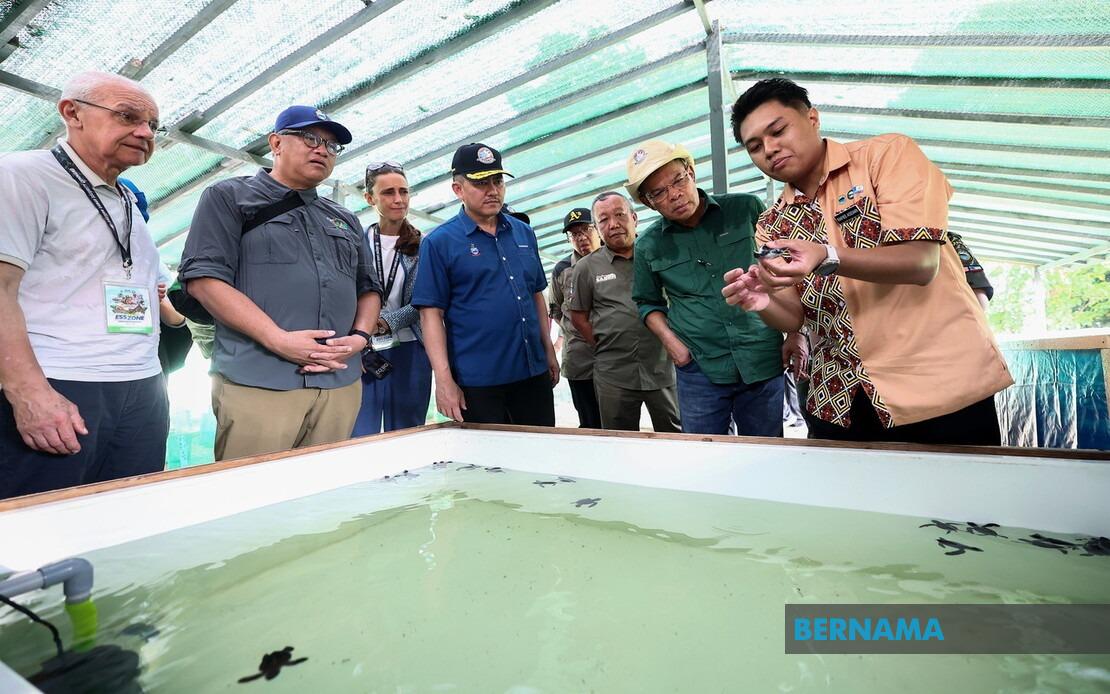
Beyond the immediate security crisis, the Home Minister has launched a parallel diplomatic initiative aimed at persuading foreign governments to reconsider restrictive travel advisories affecting Sabah's east coast. This dimension reveals how security perceptions directly translate into economic impact, as cautious travel warnings deter both leisure tourists and business visitors from the region. The government's strategy involves bringing diplomatic representatives directly into the Eastern Sabah Security Zone (ESS Zone) to witness firsthand the improvements in the local security environment, providing tangible evidence to counter negative narratives.
Progress on this front has already materialised, with several nations including Japan and Switzerland revising their travel guidance following government briefings and security demonstrations. The diplomatic familiarisation programme, which involved 14 foreign representatives visiting strategic installations and tourism destinations throughout the ESS Zone, represents a calculated effort to transform abstract security statistics into visible reassurance. By enabling diplomats to observe conditions directly, Malaysia seeks to generate authoritative reports that carry weight within foreign ministries and international travel safety networks.
The performance metrics from the ESS Zone underscore substantial enforcement activity over the first half of 2024. Between January and June, ESSCOM conducted nearly 900,000 inspections and executed 307 arrests, demonstrating intensive operational tempo. Enforcement operations during this six-month window also yielded 38 seizures valued at RM23.37 million, reflecting the volume of contraband interdicted through rigorous controls across land borders and territorial waters. These figures suggest a security apparatus substantially engaged with threat mitigation, though the recent high-profile cases indicate that detection and enforcement mechanisms may have critical gaps requiring attention.
Governmental commitment to the ESS Zone extends well beyond immediate operational measures. Since the security zone's establishment thirteen years ago, the federal government has allocated RM723 million toward asset procurement, operational expenses, and logistical support under ESSCOM's operational mandate. This substantial financial commitment reflects the strategic importance assigned to safeguarding Malaysia's eastern maritime corridor and demonstrates sustained governmental investment in security infrastructure. Yet the continued existence of loopholes that allowed the Malaysian pilot incident to occur suggests that funding alone cannot resolve security challenges without complementary improvements to procedural oversight and inter-agency coordination.
The Cabinet's directive to KDN and MOT carries implicit accountability for concrete deliverables rather than aspirational policy statements. The two-week timeline imposes meaningful urgency, suggesting the Cabinet expects demonstrable progress within a defined window rather than extended consultative processes. For regional observers, this development reinforces Malaysia's positioning as a nation actively confronting security challenges through government intervention and resource allocation, though sceptics may question whether fourteen days allows sufficient depth for comprehensive planning or whether the timeline reflects political pressure to demonstrate visible responsiveness to media coverage.
The confluence of airport security vulnerabilities, diplomatic travel advisory dynamics, and enforcement activity along the eastern maritime frontier illustrates how national security concerns increasingly intersect with economic competitiveness and international standing. Malaysia's experience demonstrates that even modest security incidents, when they involve narcotics or foreign nationals, generate disproportionate international attention and travel advisory revisions that damage regional tourism and investment flows. The Cabinet's mobilisation of institutional resources reflects recognition that security is not merely a law enforcement matter but a critical component of Malaysia's broader regional and economic positioning.

