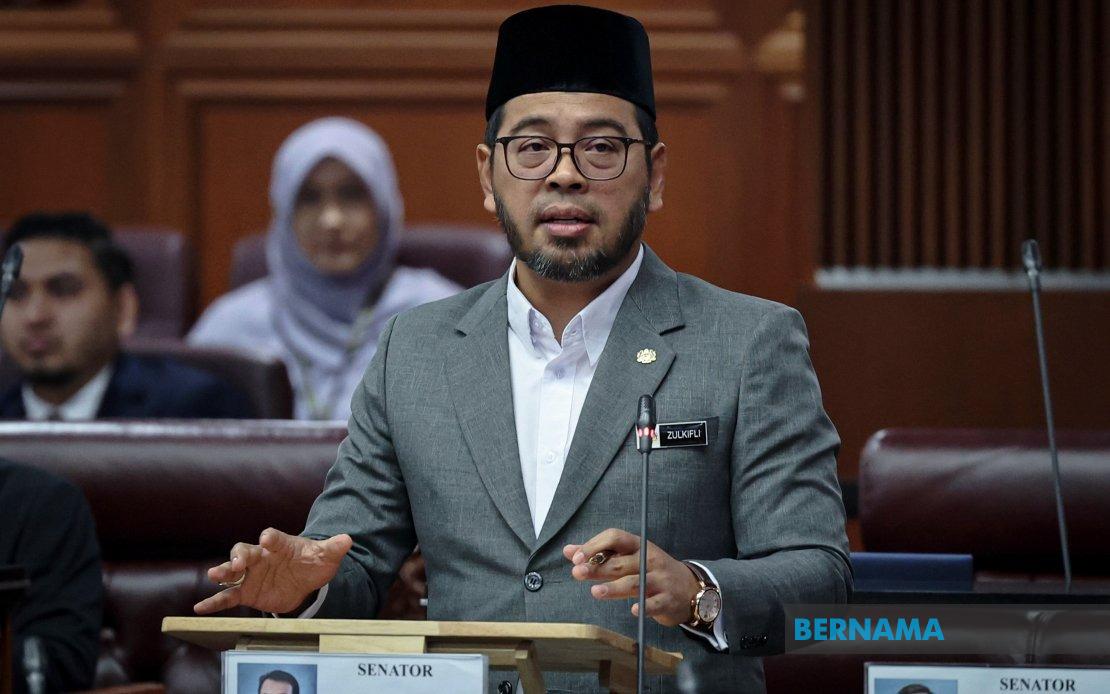
The Malaysian government's Cabinet will soon examine whether to declassify the final Royal Commission of Inquiry report on Tabung Haji, according to Dr Zulkifli Hasan, the Minister in the Prime Minister's Department (Religious Affairs). The decision comes as public discourse surrounding the pilgrim fund's financial turnaround continues to generate scrutiny and demand for transparency, particularly regarding how assets were handled during the institution's near-collapse in 2018.
The push for disclosure appears driven by lingering confusion and accusations levelled against a former Treasury secretary-general, who faced allegations of selling Tabung Haji's valuable strategic holdings. Dr Zulkifli categorically rejected these characterisations, insisting the narrative fundamentally misrepresents what occurred. Rather than unauthorised asset dispositions, he characterised the transactions as a carefully orchestrated financial rescue designed to preserve an institution of profound significance to Malaysia's Muslim majority population.
At the time the restructuring occurred, the financial picture was dire. Auditors and Bank Negara Malaysia had uncovered deeply troubling asset-liability imbalances, with Tabung Haji facing a deficit position of RM10.9 billion in 2018. This deterioration stemmed from systemic misappropriation of depositors' funds that preceded that year, creating a credibility crisis that triggered rapid capital withdrawal. Within months, approximately RM6 billion flowed out of the institution as confidence evaporated, while parallel attempts to secure emergency standby financing proved unsuccessful.
The scale of potential contagion risk justified Cabinet intervention. Had Tabung Haji collapsed, the government faced exposure to approximately RM74.5 billion in liability absorption, given the constitutional guarantee protecting all depositor funds. This figure represented an intolerable fiscal burden for the federal budget. The Cabinet's 2018 decision to transfer underperforming and problematic assets held by Tabung Haji to Urusharta Jamaah Sdn Bhd, a government-owned special purpose vehicle, constituted a collective policy choice aimed at surgical financial restructuring rather than asset liquidation.
The intervention's success has become quantifiable across multiple indicators. Deposits have expanded significantly from RM69.4 billion in 2019 to more than RM95.1 billion by mid-2024, representing a recovery trajectory that restored stakeholder confidence. This expansion reflects renewed trust in the institution and the viability of the rescue framework. Beyond deposit stabilisation, returns to pilgrims have improved materially, with profit distribution rates climbing from 1.25 per cent in 2018 to 3.5 per cent designated for 2025, marking the strongest return in almost a decade.
Tangible benefits have extended to operational dimensions affecting Malaysia's hajj pilgrimage programme. Despite persistent inflationary pressures affecting global travel costs, Tabung Haji has maintained consistent hajj pilgrimage fees across three consecutive years spanning 2024 through 2026. This stability matters considerably for Malaysian Muslims planning this essential religious obligation, as fixed costs provide budgeting certainty for working families and middle-income households who constitute the majority of pilgrims.
The Cabinet's prospective consideration of releasing the RCI report reflects broader governance considerations about public accountability and institutional transparency. As Malaysia continues navigating post-pandemic recovery and rebuilding public confidence in financial stewardship, demonstrating the reasoning behind major financial interventions becomes increasingly important. The RCI investigation presumably offers detailed forensic analysis of the underlying problems, remedial actions implemented, and outcomes achieved.
For Malaysian readers and the broader Southeast Asian context, the Tabung Haji case study illuminates how Islamic financial institutions face distinct vulnerabilities and require specialised regulatory oversight. The institution serves approximately 9 million Malaysian Muslims and manages resources fundamental to one of Islam's five pillars. Any institutional failure carries implications beyond conventional financial contagion, affecting religious practice, social cohesion, and public trust in government stewardship of faith-based assets.
The anticipated Cabinet discussion also reflects ongoing political scrutiny of the previous administration's financial management. The asset restructuring decisions occurred under the Mahathir-led government following the 2018 general election. Opposition figures and media commentators have questioned whether adequate disclosure accompanied these transactions and whether alternative approaches might have achieved similar outcomes with less controversy. Releasing the RCI findings could settle these disputed narratives through authoritative documentation.
Public disclosure of the RCI report would also serve institutional learning purposes. Malaysian banks and development institutions managing large depositor bases might benefit from studying how authorities addressed governance failures, detected misappropriation, and implemented recovery mechanisms. The detailed analysis could inform regulatory frameworks and internal audit practices across the financial sector.
Governance advocates have increasingly pressed Malaysian authorities toward greater transparency regarding major policy decisions affecting public resources and citizen interests. The forthcoming Cabinet deliberation on the RCI report's status represents a test case for whether government institutions will voluntarily disclose findings from official investigations, even when such disclosure might invite criticism of predecessor administrations. International observers monitoring Malaysia's governance trajectory view these transparency decisions as indicators of institutional independence and democratic maturation.

