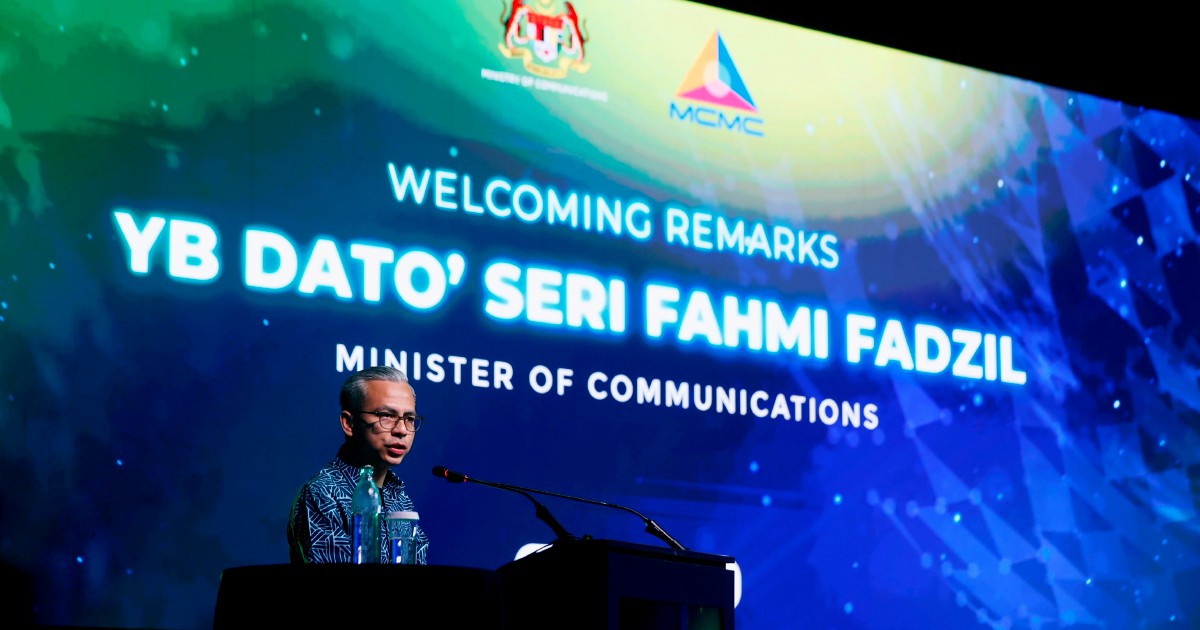
Communications Minister Datuk Seri Fahmi Fadzil moved swiftly on Thursday to quash mounting speculation about fractures within Malaysia's federal Cabinet, characterizing recent public exchanges over ministerial conduct as routine deliberation rather than a sign of deeper institutional strain. Speaking in Kuala Pilah, Fahmi stressed that the government's leadership structure remains fundamentally intact and focused on its collective agenda, pushing back against media narratives suggesting discord among senior officials.
The minister's remarks came after a series of tense public statements involving Cabinet members regarding discipline and protocol during the Negri Sembilan state election campaign. Such exchanges, typically managed behind closed doors in most governments, had spilled into public view and prompted questions about whether differences of opinion signalled a broader loss of cohesion within the administration. Fahmi's intervention sought to reframe the situation as isolated communication rather than systemic dysfunction.
The timing of these comments reflects a broader pattern seen across Southeast Asian governments, where maintaining a unified public face remains crucial for political stability and investor confidence. In Malaysia's case, where coalition politics and competing party interests shape governance, demonstrating Cabinet solidarity carries particular significance for policy implementation and legislative effectiveness. Any perception of internal division can undermine the government's authority to pursue its legislative agenda and manage public administration.
Fahmi's characterization of recent events as casual and inconsequential—he cited a simple lunch meeting as evidence of normal working relationships—attempts to normalize what could be interpreted as unusual escalation of disagreements into the public domain. This approach reflects a communications strategy aimed at preventing minor disputes from metastasizing into larger political narratives that opposition parties might exploit. In the Malaysian political context, where media scrutiny of government operations has intensified, controlling the narrative around internal processes remains essential.
The Negri Sembilan election campaign had placed particular pressure on federal Cabinet ministers, many of whom were expected to campaign actively in the state. Such campaign activities sometimes create friction between adherence to official ministerial protocols and the demands of partisan political engagement. When Cabinet members publicly address discipline issues stemming from campaign conduct, it can inadvertently highlight the tensions inherent in dual roles as both government officials and political actors.
Understanding the Malaysian Cabinet's operational reality requires recognizing that modern governments routinely encounter disagreements among senior officials over implementation details, resource allocation, and strategic priorities. What distinguishes functional administrations from those experiencing genuine dysfunction is whether such disagreements remain resolved through established channels or escalate into public confrontations that undermine governmental authority. Fahmi's emphasis on normal interaction patterns suggests the administration views recent exchanges within acceptable bounds.
The minister's assertion carries implications for how Malaysia's government manages internal communication going forward. If Cabinet members conclude that public airing of differences generates disproportionate media attention and political scrutiny, they may retreat further into closed-door deliberation. Alternatively, the administration might establish clearer protocols for handling discipline matters that prevent public statements from creating perceptions of conflict. Either approach would represent an adjustment in how the government conducts its internal affairs.
For Malaysian voters and international observers monitoring governmental stability, Fahmi's statement provides reassurance that no fundamental breakdown has occurred in Cabinet operations. However, the need for such reassurance itself indicates that the recent exchanges had raised concerns significant enough to warrant ministerial clarification. The fact that a Cabinet member felt compelled to address rumours of division publicly suggests the administration recognizes the potential damage from allowing such narratives to develop unchecked.
The communications minister's remarks also position the federal government as focused on substantive work rather than internal politics. By emphasizing that Cabinet members continue engaging normally—sharing meals and conducting routine business—Fahmi seeks to redirect public attention toward policy outcomes rather than governance process concerns. This reflects a calculation that voters and stakeholders care more about results than internal structures, provided the government appears functional and purposeful.
Going forward, the administration will likely face continued scrutiny regarding Cabinet cohesion, particularly if ministerial disagreements surface again in public. Each such incident provides opposition parties with opportunities to question whether the government can effectively execute its mandate. For Malaysia's coalition government, maintaining at least the appearance of unified leadership remains strategically important for managing parliamentary mathematics and sustaining public confidence in the administration's capacity to govern.
The broader lesson from this episode underscores how closely Southeast Asian publics and media monitor their governments' internal dynamics. In Malaysia specifically, where political competition remains intense and coalition stability represents a constant concern, any hint of Cabinet division receives immediate amplification. Fahmi's intervention represents a standard but necessary effort to prevent routine disagreements from acquiring political significance they might not warrant.

