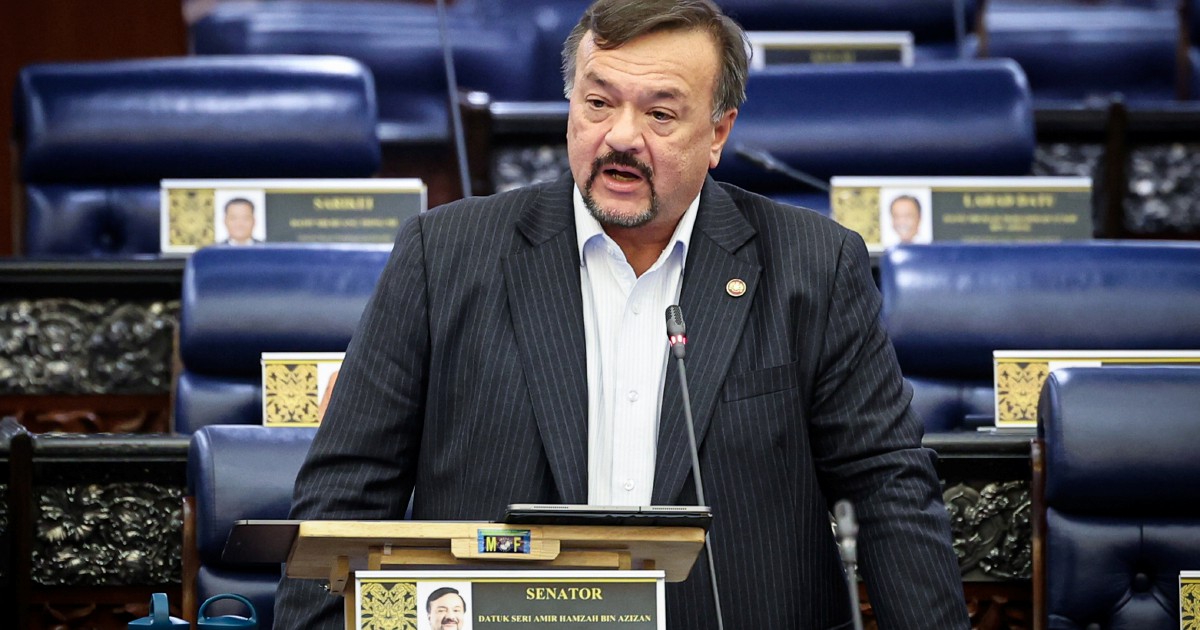
The Malaysian government is actively exploring the establishment of a coordinated investigative task force spanning multiple agencies to examine allegations of misconduct at Tabung Haji, according to statements from Finance Minister II Datuk Seri Amir Hamzah Azizan. The proposed structure would consolidate separate investigations currently underway, creating a unified command centre to handle the growing portfolio of alleged wrongdoing at the institution.
Tabung Haji, formally known as the Pilgrimage Fund Board, remains a cornerstone institution for Malaysian Muslims seeking to save systematically towards performing the Hajj pilgrimage. With millions of depositors and billions of ringgit in accumulated funds, any governance lapses or financial irregularities carry profound implications not just for individual savers but for public confidence in Islamic financial institutions across Southeast Asia. The scope and severity of allegations have prompted heightened government scrutiny in recent months.
Establishing a multi-agency task force represents a tactical shift in how authorities are approaching these investigations. Rather than allowing separate government bodies—potentially including the Malaysian Anti-Corruption Commission, the Securities Commission, Bank Negara Malaysia, or police commercial crime units—to conduct parallel probes that might overlap or suffer from coordination gaps, a consolidated team could streamline information sharing and prevent investigative bottlenecks. Such arrangements have proven effective in previous complex financial inquiries involving multiple regulatory jurisdictions.
The decision to explore this institutional response underscores official recognition that alleged irregularities at Tabung Haji likely cross several regulatory domains simultaneously. Financial misconduct, potential embezzlement, conflicts of interest, corporate governance failures, and possible investment impropriety may each fall within different agencies' mandates. A task force structure would establish clear reporting lines and unified investigative protocols, reducing the risk of competing bureaucratic approaches that could undermine prosecutorial outcomes.
For Malaysian depositors and their families—numbering in the millions—this development signals that the government is treating the situation with appropriate gravity. Many Malaysians view contributions to Tabung Haji not merely as financial transactions but as sacred savings for a pillar of Islamic faith. Any breach of trust strikes at the heart of institutional legitimacy. The transparency afforded by a dedicated, multi-agency investigation likely reassures the deposit base that allegations are being thoroughly examined rather than compartmentalised.
The proposal also reflects broader policy conversations within government about strengthening oversight mechanisms for large, state-linked financial institutions. Malaysia has substantial experience managing sovereign wealth funds and Islamic finance vehicles, yet governance scandals periodically emerge across these entities. Each such incident prompts recalibration of supervisory frameworks. A task force model could serve as a template for handling future cases involving complex, cross-jurisdictional financial institutions.
From a regional perspective, Malaysia's handling of the Tabung Haji matter carries wider implications. As one of the world's leading Islamic finance centres, Malaysia's reputation for institutional integrity influences investor confidence and depositor behaviour across Southeast Asia. How decisively the government investigates and addresses wrongdoing at a high-profile, trust-dependent institution like Tabung Haji sends signals about the maturity and reliability of the entire Malaysian Islamic financial ecosystem.
The task force approach also suggests authorities anticipate the investigations may require extended timelines and sustained institutional commitment. Complex financial crime cases frequently demand deep forensic audits, cross-border asset tracing, witness interviews spanning multiple organisations, and document review involving thousands of transactions. A permanent inter-agency body can maintain continuity and momentum better than ad hoc coordination arrangements.
Ongoing communication between Finance Minister II Datuk Seri Amir Hamzah Azizan and relevant agencies will likely precede formal task force establishment. Questions remain regarding the operational structure, leadership appointments, investigative priorities, and reporting mechanisms. Whether the task force would operate under police authority, regulatory oversight, or a hybrid arrangement will shape its investigative reach and prosecutorial effectiveness.
The cabinet's consideration of this proposal also acknowledges that Tabung Haji's challenges demand more than passive regulatory oversight. Active investigation, evidence preservation, and potential enforcement action require proactive institutional choreography. As allegations accumulate and public scrutiny intensifies, administrative inaction becomes increasingly untenable.
For depositors awaiting clarity, the investigation's pace and thoroughness will prove crucial. Meanwhile, Tabung Haji's management must navigate the parallel demands of maintaining fund operations, preserving investor confidence, and cooperating fully with investigative authorities. The task force model enables government agencies to pursue accountability while supporting institutional stabilisation.
Ultimately, the government's willingness to marshal multiple agencies reflects understanding that institutional misconduct at Tabung Haji extends beyond individual culpability to systemic questions about governance, oversight, and accountability. How Malaysia addresses these questions will influence not only the fund's future direction but also perceptions of governance standards across the broader Islamic finance sector in the region.

