Twelve American states, spearheaded by California, have launched a legal challenge against Paramount's proposed $110 billion takeover of Warner Bros Discovery. The lawsuit, filed in Oakland federal court, represents a serious obstacle to CEO David Ellison's strategic vision of transforming Paramount into a streaming and entertainment powerhouse comparable to Netflix and Disney. The coalition argues that combining these two major media conglomerates would concentrate too much market control in a single entity, ultimately harming consumers, workers, and local economies across the nation.
The legal action directly contradicts the Trump administration's previous approval of the transaction through the Department of Justice just weeks earlier. This apparent contradiction has fuelled speculation about potential political influence, particularly given the connection between Paramount's controlling shareholder, billionaire Larry Ellison, and the Republican president. All 12 states involved in the lawsuit are governed by Democratic attorneys general, which has prompted observers to view the challenge partly through a partisan lens, as Democrats seek to contest corporate consolidation they perceive as being rubber-stamped by a sympathetic federal administration.
The plaintiffs contend that the merged entity would control approximately 27 percent of film distribution across American theaters, 30 percent of blockbuster film distribution specifically, and 27 percent of the basic cable channel market. This concentration would effectively eliminate competitive tension between Paramount and Warner Bros Discovery in crucial negotiating relationships with theater operators, cable distributors, and streaming platforms. For Malaysian and Southeast Asian observers watching American entertainment markets, this case illustrates how concentrated media ownership can influence what content reaches consumers and at what cost, a concern that resonates across the region's own media landscape.
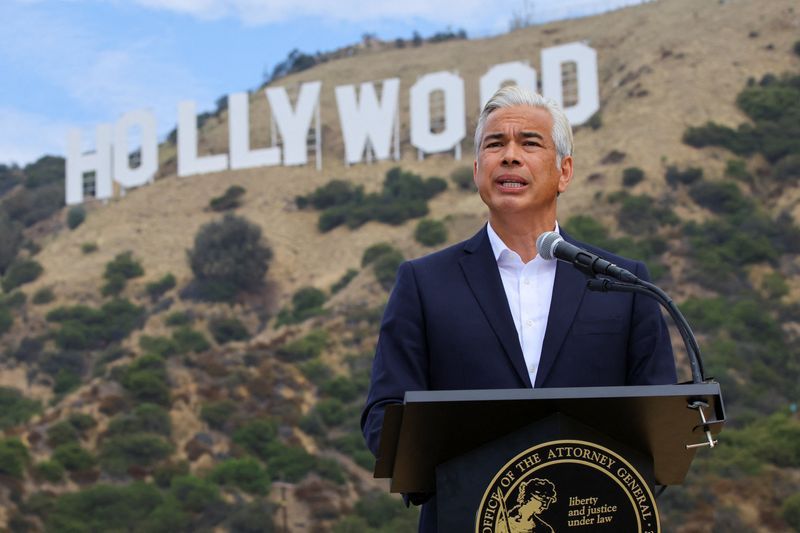
California Attorney General Rob Bonta emphasized at Monday's press conference that after the merger, the combined company would retain more than a quarter of every dollar spent by consumers on theatrical films and basic cable channels nationally. This striking statistic underscores the states' central argument: that such dominance would grant the merged entity pricing power unchecked by competitive forces. The lawsuit specifically identifies harm to theatrical moviegoers, cable subscribers, and entertainment industry workers, painting a picture of cascading economic damage flowing from boardroom decisions to individual households and small businesses dependent on the entertainment ecosystem.
Theater owners have voiced strong opposition to the merger, fearing a consolidated studio would produce fewer films and exert more leverage over screen availability and rental terms. Hollywood's workforce, including writers, actors, and production crew members, similarly expressed concern that job cuts would accelerate under unified management. These constituency groups represent tens of thousands of workers across California and other states, giving the litigation a tangible economic dimension beyond abstract antitrust theory. The fear that consolidation would reduce employment in creative industries carries particular weight in states with thriving film and television production hubs.
Paramount has disputed the states' characterization, arguing that the merger actually enables greater production output rather than less. The company pledges that after cutting $6 billion in redundant overhead—infrastructure, marketing, and corporate positions—the combined studios would release 30 theatrical films annually. However, the states contend this commitment lacks legal enforceability and that even if honored, the merged entity would retain sufficient market power to raise prices and diminish content quality. This fundamental disagreement over whether consolidation drives efficiency or stifles competition represents the crux of the case and will likely dominate courtroom arguments for months.
The litigation carries substantial financial implications for all parties involved. Paramount faces quarterly penalties of approximately $650 million to Warner Bros Discovery shareholders if closing is delayed beyond October. The states have explicitly requested that Paramount postpone the transaction's completion until legal proceedings conclude, and they warn of seeking judicial injunctions to block the deal entirely if voluntary delay is refused. Historical precedent suggests such merger challenges consume between six and eight months for judicial determination, potentially extending the financial exposure and uncertainty well into 2025.
This case reflects a broader phenomenon in American antitrust enforcement, wherein what was once a technical legal discipline has become increasingly politicized. Democratic state attorneys general have weaponized merger challenges to address public frustration with concentrated corporate power and rising consumer costs. Republican-led states have remained notably absent from this particular coalition, despite several GOP attorneys general having joined Democratic counterparts in separate antitrust actions against LiveNation and Nexstar's acquisition of Tegna. Bonta pointedly noted at the press conference that Republican involvement remained possible, signaling that the case's partisan dimensions remain fluid and negotiable.
For international observers, particularly in Southeast Asia where media regulation often reflects different competitive philosophies, this American legal drama exposes tensions within Western capitalism itself. Malaysia's regulatory framework for media mergers emphasizes different concerns and employs different enforcement mechanisms than American antitrust law, yet the underlying principle—whether consolidated media ownership serves or harms the public interest—remains universally pertinent. The Paramount case demonstrates how entertainment conglomeration raises questions about pricing, employment, content diversity, and cultural influence that transcend borders.
The merger's ultimate fate remains uncertain, but the lawsuit has already succeeded in imposing significant costs and uncertainty. Market observers acknowledge that delays alone, regardless of eventual outcome, could force renegotiation of financing arrangements, destabilize Paramount's stock valuation, or fundamentally alter deal economics. Paolo Pescatore of PP Foresight characterized the state action as "arguably the most credible threat yet" to the transaction's completion. The coming months will test whether Democratic-led states can deploy antitrust law to constrain corporate consolidation when the federal administration appears disinclined to do so, establishing precedent for similar challenges in other industries where market concentration has become pronounced.
Beyond the immediate commercial stakes, this litigation will shape American antitrust enforcement for years. A successful state challenge would embolden future antitrust actions against major mergers and acquisitions, while defeat would suggest that federal regulatory approval carries near-conclusive weight. For Paramount shareholders and entertainment industry participants, the lawsuit creates a new variable in long-term strategic planning. And for consumers, workers, and competitors in film and television, the outcome will determine whether consolidation proceeds unchecked or faces renewed scrutiny as a matter of public economic policy.

