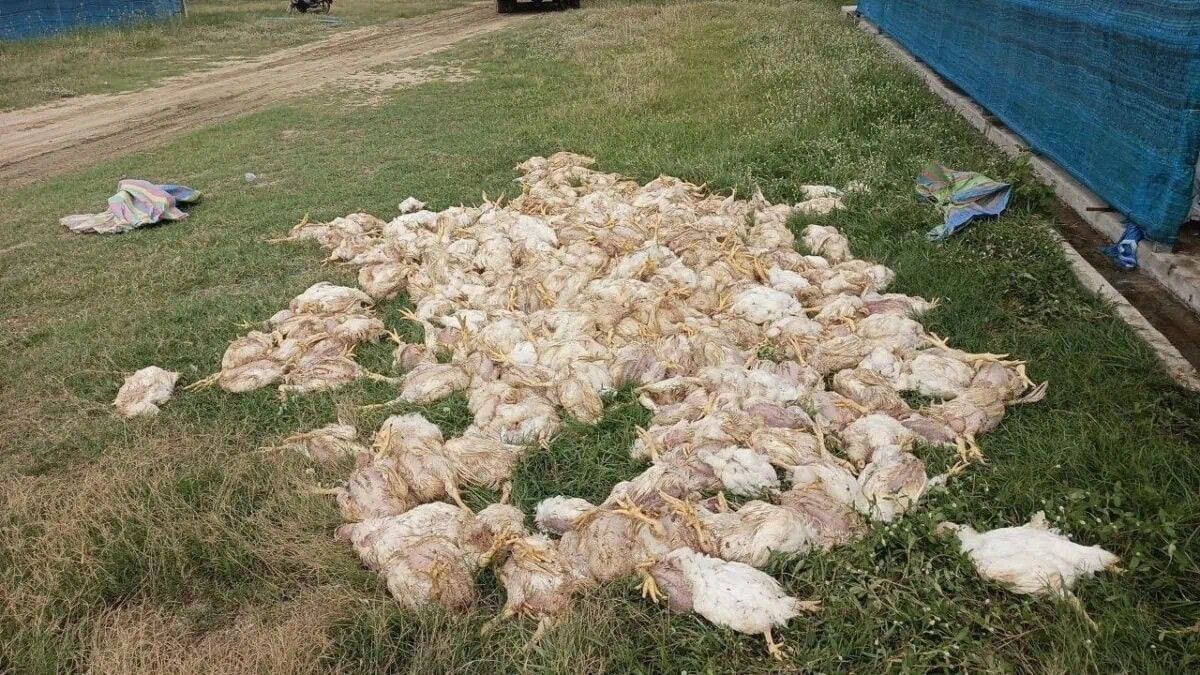
Cambodia's Ministry of Environment has cracked down on a battery and metal recycling operation in Kampong Speu province following a July 29 fire that killed around 2,000 chickens and released toxic smoke into surrounding neighbourhoods. The incident, which unfolded in Tuol Sambour village within Samaki Mony Chey district, has prompted financial penalties against the facility's owners and a mandatory relocation order, underscoring weak enforcement of environmental regulations across Southeast Asia's industrial sector.
The fire itself appears to have stemmed from negligent storage practices, with improper handling of lithium batteries triggering explosions and uncontrolled combustion that persisted well into the following day. Ministry inspectors who arrived at the site on July 30 found the facility still emitting thick plumes of smoke, with discarded batteries continuing to explode sporadically and preventing officials from safely accessing storage areas where tonnes of used battery waste had been accumulated. The volatile nature of the fire demonstrated how rapidly industrial incidents can escalate when hazardous materials are managed without adequate safety protocols.
What elevated this incident from an industrial accident to a significant public health crisis was the proximity of residential areas and livestock operations to the recycling facility. Approximately 50 metres away stood housing units occupied by families, while immediately adjacent to the plant sat a poultry farm containing as many as 20,000 chickens. The death toll of 2,000 birds provided tangible evidence of the toxic nature of smoke and airborne pollutants released by the blaze, raising serious questions about the health risks to the human population in the vicinity.
Environmental monitoring teams detected elevated air pollution levels around the site and collected samples for laboratory analysis to determine the specific hazardous substances released into the atmosphere. Authorities responded by issuing urgent public health guidance advising residents to wear protective respiratory masks when travelling through affected areas and to secure food and water supplies against smoke contamination. Particular concern was directed toward vulnerable populations including children, elderly citizens, and individuals with pre-existing respiratory conditions, with health officials encouraging anyone experiencing exposure symptoms to seek immediate medical care.
Investigations revealed a troubling pattern of regulatory non-compliance that speaks to broader challenges in environmental governance across the region. The facility had been approved by the Ministry of Industry, Science, Technology and Innovation only in December of the previous year and had begun a trial operational phase, yet it had commenced processing used batteries and extracting valuable metals without completing an Environmental Impact Assessment. More alarmingly, the company lacked the necessary permits to collect, store, and recycle hazardous battery waste, indicating that operations had begun in direct violation of multiple environmental regulations.
The Ministry of Environment identified violations of four separate articles within the Environment and Natural Resources Code, covering the absence of required environmental impact assessments, unauthorised collection and storage of hazardous battery waste, recycling activities conducted without proper authorisation, and environmental pollution caused by industrial operations. These violations represent fundamental breaches of Cambodia's environmental framework, yet the fact that the facility had obtained initial governmental approval highlights inconsistencies in how different agencies apply regulatory standards.
Beyond financial penalties and compensation for environmental damage, authorities have ordered the company to relocate its operations entirely, a measure that suggests recognition that the site's location among residential and agricultural areas makes it unsuitable for hazardous waste processing regardless of operational improvements. This directive, however, raises questions about where such facilities will be relocated and what safeguards will be implemented at new locations to prevent similar incidents.
For Malaysian and broader Southeast Asian readers, this incident illustrates the risks associated with rapid industrialisation and recycling sector expansion without corresponding regulatory capacity. As demand for battery recycling grows alongside the region's increasing consumption of electric vehicles and electronic devices, countries throughout Southeast Asia face similar pressures to establish processing facilities quickly. Cambodia's experience underscores the importance of enforcing comprehensive environmental assessments, maintaining adequate separation between industrial operations and populated areas, and ensuring that hazardous waste facilities meet international safety standards before commencing operations.
The incident also demonstrates how industrial accidents in one country can serve as cautionary examples for others in the region. Malaysia's own battery recycling and electronic waste management sector must ensure that facilities are properly sited, adequately regulated, and equipped with safety systems that prevent the kind of uncontrolled combustion witnessed in Kampong Speu. As the region continues to grapple with the environmental costs of rapid technological adoption and consumption, stronger coordination between industrial approval authorities and environmental regulators will prove essential to protecting both public health and ecological integrity.

