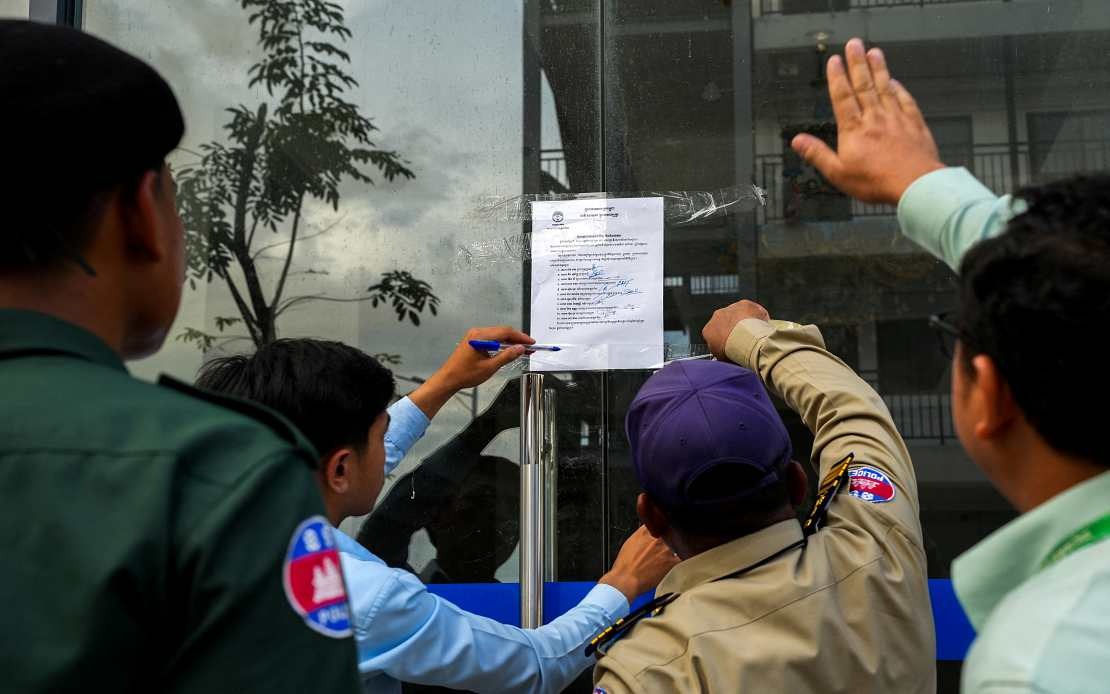
Cambodia has stepped up enforcement against international cyber-scam operations by expelling over 16,000 foreign nationals suspected of running online fraud schemes during the first six months of 2026. The deportations form part of a broader governmental push to dismantle criminal networks that have tarnished the Southeast Asian nation's standing globally and posed threats to public safety. Police Lieutenant General Sok Veasna, who heads the General Department of Immigration, disclosed the figures during a mid-year review meeting on Tuesday, revealing that these deportees represent a significant portion of the 45,000 foreign nationals removed from Cambodia in the same period.
The scale of Cambodia's immigration enforcement has expanded markedly since January, reflecting intensified crackdowns on online fraud operations that have operated within its borders. The deported individuals, regardless of their specific charges, face permanent exclusion from re-entering Cambodia, signalling the government's determination to prevent recidivism and protect its communities. This hardline approach represents a significant shift in how Cambodia addresses the cybercrime challenge that has plagued the region for years. The nation has become increasingly vocal about dismantling infrastructure that enables international scammers to operate with relative impunity, casting a shadow over Cambodia's reputation among neighbouring countries and international observers.
In April 2026, Cambodia enacted the Law on Combating Online Scams, establishing a comprehensive legal framework designed to punish high-level operatives and ringleaders with severity. The legislation signals the government's commitment to targeting not merely foot soldiers in these criminal organisations but the architects and coordinators who orchestrate sophisticated fraud schemes. The law represents a watershed moment in Cambodia's legal approach to cybercrime, providing authorities with formal instruments to pursue more serious sanctions against those directing operations. Implementation of this statute has clearly energised enforcement activities, creating momentum across government departments to pursue cases and execute removals with greater urgency.
However, according to analysts familiar with Cambodia's challenges, the expulsion strategy alone cannot resolve the deeper structural problems enabling scam networks to flourish. Thong Mengdavid, a researcher at the China-ASEAN Studies Centre of the Cambodia University of Technology and Science, acknowledged that mass deportations constitute a necessary and overdue measure to rehabilitate Cambodia's international image and disrupt criminal networks. Yet he cautioned that the approach remains incomplete without simultaneously targeting the upper echelons of these organisations. The kingpins orchestrating cross-border schemes, often operating from secure locations or leveraging sophisticated digital infrastructure, frequently escape the nets cast by immigration authorities focused on lower-level operatives.
Equally concerning, Mengdavid emphasised, is the question of local protection networks that sustain these criminal ecosystems. Unless Cambodia addresses corruption within governmental and law enforcement institutions that knowingly or unknowingly shield scam operators, the fundamental conditions enabling these networks will persist. The underlying issues of human trafficking intertwined with forced labour in scam operations remain largely unresolved despite the deportations. These individuals are frequently victims themselves, coerced into participation through debt bondage, false employment promises, or direct coercion by criminal syndicates operating across Southeast Asia.
The cyber-scam phenomenon affecting Cambodia reflects broader regional vulnerabilities that have become increasingly apparent to Malaysian and other Southeast Asian authorities. Criminal networks exploit porous borders, inadequate digital infrastructure regulation, and varying levels of law enforcement capacity across the region. Cambodia's struggle mirrors challenges faced throughout ASEAN, where sophisticated international organised crime groups operate with technological sophistication that often outpaces governmental response capabilities. The scale of the problem—tens of thousands of suspected operatives across multiple countries—suggests these are not isolated criminal enterprises but rather interconnected global networks leveraging Asia's economic development and technological advancement.
For Malaysia, Cambodia's experience offers instructive lessons about the limitations of enforcement-only strategies. While deportations remove foreign nationals engaged in scam operations, neighbouring countries often find these individuals attempting to reestablish operations across borders or moving to jurisdictions with weaker enforcement. Regional cooperation through mechanisms like ASEAN has become increasingly vital, yet enforcement coordination remains inconsistent. Information sharing protocols, extradition frameworks, and harmonised legal standards across member states remain areas requiring substantial development. Cambodia's unilateral approach, while commendable, highlights the necessity for multilateral solutions that prevent criminal displacement rather than merely geographical relocation.
The restoration of Cambodia's international reputation, which has suffered due to association with cyber-scam networks, requires sustained commitment beyond the initial enforcement surge. International investors, tourists, and legitimate businesses have grown wary of operating in or engaging with Cambodia due to reputational damage caused by these criminal enterprises. The government recognises that economic recovery and foreign confidence depend partly on demonstrating control over organised cybercrime. This economic dimension adds urgency to the crackdown, transforming it from merely a law-and-order issue into a matter of national economic interest and development prospects.
Moving forward, Cambodia's strategy must evolve from expelling individual suspects to systematically dismantling the organisational structures and institutional arrangements that enable scams to operate. This requires parallel efforts targeting financial flows, digital infrastructure abuse, and corrupted officials facilitating operations. International cooperation with financial intelligence units, cybersecurity experts, and law enforcement agencies from other nations sharing common interests in combating these networks becomes indispensable. The scale of Cambodia's expulsions in 2026 demonstrates political will, yet sustainability and effectiveness will ultimately depend on addressing the corruption and institutional weaknesses that analysts identify as root causes.
For Southeast Asian nations confronting similar challenges, Cambodia's experience underscores both the necessity and insufficiency of enforcement measures alone. The region must simultaneously address demand-side factors driving recruitment into scam operations—primarily poverty, limited economic opportunities, and vulnerability to trafficking networks. Education initiatives, livelihood programmes, and community-level interventions complement enforcement but require long-term commitment and resources. Cambodia's mid-year review meeting demonstrates awareness of the problem's scale, yet transforming awareness into comprehensive solutions spanning law enforcement, judicial reform, anti-corruption efforts, and economic development remains the formidable challenge ahead.

