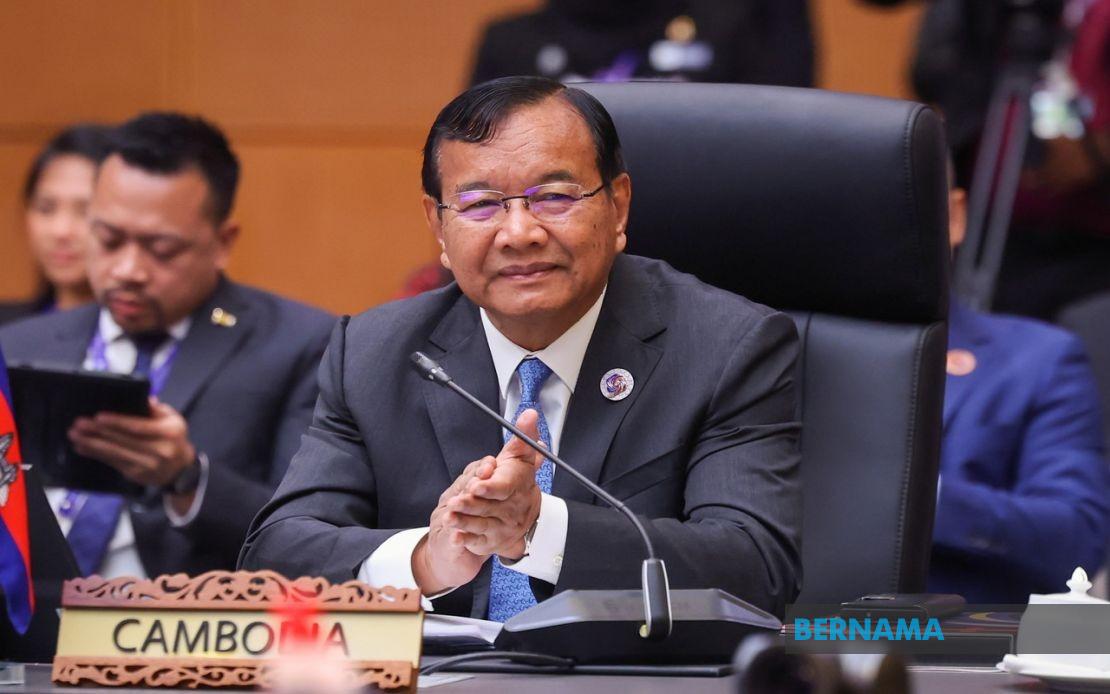
Cambodian Deputy Prime Minister and Minister of Foreign Affairs and International Cooperation Prak Sokhonn touched down at Kuala Lumpur International Airport's Terminal 1 on August 3, marking the beginning of a strategically significant two-day visit to Malaysia. The arrival, timed in the afternoon at 1.48 pm, was met with formal protocol including Cambodian Ambassador to Malaysia Ouk Chandara and Malaysian Government chief ceremony officer Datuk Rozainor Ramli, underscoring the diplomatic weight both nations attach to the engagement.
The visit arrives at a moment when Malaysia and Cambodia are consolidating an increasingly dynamic relationship. The timing reflects a deliberate effort by both governments to deepen institutional frameworks that have supported growing economic ties and political coordination. For Malaysia, hosting such high-level visits reinforces its role as a central economic and diplomatic hub in Southeast Asia, particularly in maintaining stable relations with its eastern neighbours.
Prak Sokhonn's itinerary begins with a courtesy call on Prime Minister Datuk Seri Anwar Ibrahim, a customary but essential element of bilateral diplomacy that signals respect and sets the tone for substantive discussions. This meeting will likely address broader regional challenges, bilateral cooperation frameworks, and potential areas for expanded partnership. Following this, the Cambodian delegation will engage in other official programme elements designed to facilitate dialogue at multiple levels.
The centrepiece of Sokhonn's visit is the third meeting of the Cambodia-Malaysia Joint Commission for Bilateral Cooperation, scheduled for August 4 in Kuala Lumpur. This trilateral forum serves as a comprehensive mechanism for reviewing implementation progress from the second JCBC meeting and evaluating previously concluded bilateral agreements. Such structured dialogue ensures that commitments made at the highest levels translate into concrete outcomes across various sectors, from trade to security to cultural exchanges.
Parallel bilateral talks between Sokhonn and Malaysian Foreign Minister Datuk Seri Mohamad Hasan will provide an opportunity for deeper discussion on specific policy matters. These ministerial-level conversations typically address contemporary regional issues, including maritime security, ASEAN unity, and responses to global developments. The foreign ministry engagement also allows both sides to identify potential new areas of collaboration and troubleshoot any outstanding concerns.
The economic backdrop to this visit is particularly compelling. Malaysia and Cambodia reported robust trade growth in 2025, with bilateral commerce expanding by 27.4 per cent year-on-year to reach RM5 billion, equivalent to USD1.17 billion. This surge reflects strengthening commercial ties and increasing investor confidence in both markets. The figures demonstrate that the bilateral relationship extends well beyond political dialogue into substantive economic engagement.
Malaysia's investment presence in Cambodia further illustrates the depth of the partnership. As of 2024, Malaysian cumulative investments in Cambodia totalled USD3.20 billion, spanning 162 registered projects across various sectors. This positions Malaysia as Cambodia's third-largest foreign investor, a significant distinction that reflects both the trust Cambodian authorities place in Malaysian enterprises and the strategic importance Kuala Lumpur assigns to the Cambodian market. For Malaysian companies, Cambodia represents both a manufacturing hub and a growing consumer market, while for Cambodia, Malaysian investment brings capital, technology, and employment opportunities.
These economic metrics carry implications for broader Southeast Asian integration. Strong Malaysia-Cambodia bilateral ties contribute to ASEAN cohesion and demonstrate the bloc's capacity to manage internal relationships constructively. When major regional economies deepen mutual engagement, it creates positive spillover effects for the entire association, supporting collective efforts on regional security, climate change, and economic resilience.
The visit also reflects deeper strategic calculations. Cambodia's position as a bridge between ASEAN's continental and maritime zones, combined with its geographic proximity to Vietnam, Thailand, and Laos, makes it geopolitically consequential for Malaysia's regional strategy. By maintaining high-level engagement and expanding institutional frameworks like the JCBC, Malaysia reinforces its presence and influence in mainland Southeast Asia—an area that has sometimes received less attention than maritime and island economies.
For Malaysian readers and policymakers, Sokhonn's visit underscores the government's commitment to sustaining regional partnerships that predate the current administration but require continuous renewal and attention. The visit demonstrates that despite varying domestic political circumstances in different ASEAN nations, institutional frameworks and economic interdependencies create natural incentives for sustained cooperation.
The timing of this visit also coincides with a period of consolidation in Malaysian foreign policy under Prime Minister Anwar Ibrahim's administration. By hosting high-level visits and pursuing structured bilateral cooperation mechanisms, Malaysia signals stability and predictability to regional partners—qualities that are fundamental to attracting investment and supporting diplomatic objectives.
Moving forward, the outcomes of the third JCBC meeting will likely focus on deepening ties in priority sectors such as digital economy, renewable energy, and tourism, areas where both nations possess complementary strengths. Enhanced cooperation in these domains could generate additional trade growth and create new opportunities for Malaysian and Cambodian enterprises to collaborate on regional and international projects.

