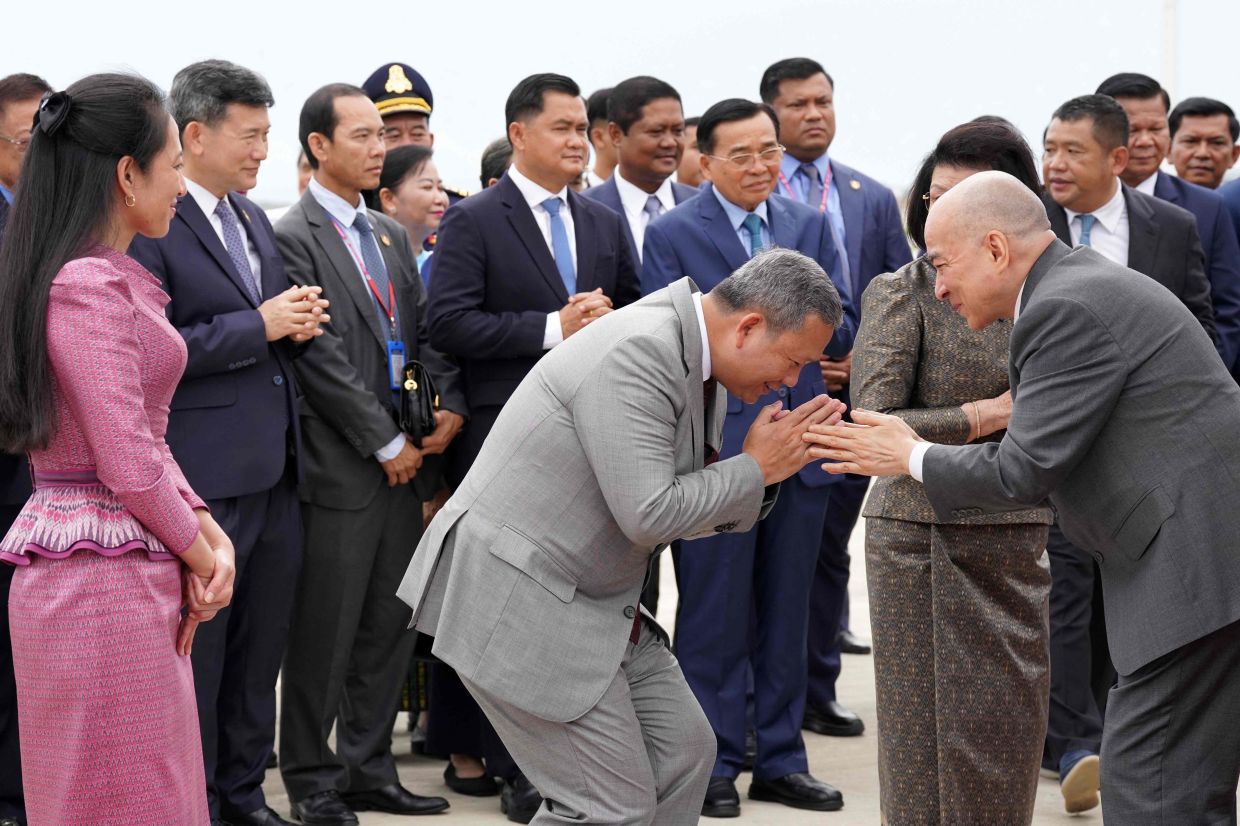
King Norodom Sihamoni of Cambodia touched down in Phnom Penh on Friday afternoon, concluding a medical sojourn in China that has dominated public discourse in the Southeast Asian nation since his initial departure earlier in the year. The 73-year-old monarch, who disclosed his prostate cancer diagnosis in April, had been receiving treatment from Chinese medical specialists in Beijing following what palace officials described as successful surgical intervention. His homecoming marks a significant moment for Cambodia's political establishment, with the return of the figurehead who holds considerable cultural and constitutional importance in the kingdom's governance structure.
The Royal Palace in Phnom Penh confirmed through official channels on Tuesday that the king's condition had shown marked improvement after spending more than three months under medical care. The announcement came as part of deliberate communications strategy designed to reassure both the Cambodian public and regional observers about the stability of the monarchy during an extended period of royal absence. Palace statements emphasised the efficacy of the treatment regimen undertaken in the Chinese capital, suggesting that the medical intervention had achieved its intended therapeutic objectives. The carefully timed disclosure reflected the delicate balance Cambodia maintains in managing both domestic confidence and international perceptions regarding royal health and institutional continuity.
Sihamoni's arrival at Phnom Penh airport was attended by an array of Cambodia's most senior political figures, underscoring the symbolic weight of the monarch's return. Former leader Hun Sen, who wielded extraordinary influence over Cambodian politics for decades before formally stepping aside, participated in the welcoming ceremony alongside his son Hun Manet, who currently serves as prime minister. The presence of this political hierarchy at the airport demonstrated the regime's commitment to projecting stability and normal functioning of state institutions. State-run media outlet TVK broadcast footage of the homecoming, ensuring widespread domestic coverage of the event and reinforcing narratives of orderly succession and institutional robustness during what could otherwise be perceived as a period of vulnerability.
The king's medical trajectory carries particular resonance within Cambodia's modern political history, as it mirrors the experience of his father, King Norodom Sihanouk, who underwent similar cancer treatment in Beijing before abdicating in 2004. Sihanouk's decision to relinquish the throne created the opening through which Sihamoni ascended to the monarchy, bringing with him a distinctly different biographical profile from his predecessor. The parallel between father and son—both travelling to China for cancer treatment—underscores the long-standing relationship between the Cambodian royal family and Chinese medical institutions, a connection that reflects broader geopolitical alignment between Phnom Penh and Beijing. That Sihanouk ultimately died in 2012 adds poignancy to current discussions surrounding Sihamoni's prognosis and recovery trajectory.
Sihamoni's path to the throne was unconventional compared to typical monarchical succession patterns in the region. Throughout most of his adult life prior to 2004, he resided outside Cambodia, pursuing an extensive career in the arts rather than preparing for royal duties in the traditional sense. His fluency in multiple languages—Khmer, French, Czech, and English—reflects this cosmopolitan upbringing and international exposure. He spent considerable years in Prague during the Cold War era, during which time he developed cultural and artistic interests that distinguished him from his father's more overtly political engagement with Cambodian governance. This background has shaped his approach to kingship, emphasising cultural patronage and symbolic representation over direct political intervention, though Cambodia's constitutional framework reserves substantial formal powers for the monarch.
The announcement of his prostate cancer diagnosis in April represented a rare moment of direct royal health disclosure in contemporary Cambodia. While the palace typically operates with considerable opacity regarding matters of royal health and personal circumstances, the decision to publicly acknowledge the condition suggested either genuine concern about managing rumours and speculation or deliberate strategic communication designed to maintain confidence in institutions. The subsequent disclosure of treatment commencement and the eventual announcement of improved health outcomes followed a measured cadence that allowed time for medical intervention while maintaining regular public reassurance. This communication pattern contrasts sharply with Cambodia's broader governance approach, where opacity frequently characterises official announcements regarding sensitive matters.
Cambodia's reliance on Chinese medical expertise for treating its most senior political figures extends beyond the royal family and reflects deep institutional ties between the two nations. China has emerged as Cambodia's primary security guarantor and largest economic partner, relationships that encompass virtually every significant dimension of the kingdom's external engagement. The choice to treat the king in Beijing rather than utilising medical facilities elsewhere in Southeast Asia or internationally underscores the primacy of the Cambodia-China relationship in contemporary regional geopolitics. For Malaysian observers and Southeast Asian analysts, Cambodia's institutional dependence on Chinese medical and technical expertise offers insight into the depth and breadth of Chinese influence throughout the region, particularly among states that lack substantial independent institutional capacity.
The king's recovery and return home carries implications for Cambodia's political stability extending well beyond matters of immediate succession. Institutional continuity in the monarchy represents one of the few genuine constants in Cambodian politics, which has otherwise been marked by military coups, civil conflict, and the concentration of executive authority in the prime minister's office. Should Sihamoni's health prove uncertain in coming months, questions about the constitutional processes governing succession and the role of the monarchy in validating political arrangements would become unavoidable. Currently, such discussions remain largely dormant in Cambodian public discourse, but the king's medical circumstances have brought them closer to the surface of regional consideration.
Looking forward, Sihamoni's return to active engagement with royal duties will require calibration of his public schedule and activities to accommodate any residual health considerations resulting from his treatment. The palace has not disclosed specific details regarding ongoing medical management or restrictions on the king's activities, leaving open questions about the extent to which he will resume his customary ceremonial and symbolic functions. Prostate cancer, particularly at his age, typically requires ongoing monitoring and management protocols that may affect energy levels and availability for extended public appearances. The degree to which such practical considerations influence his engagement will likely remain a matter of speculation unless the palace chooses to provide further transparency regarding his ongoing medical condition.

