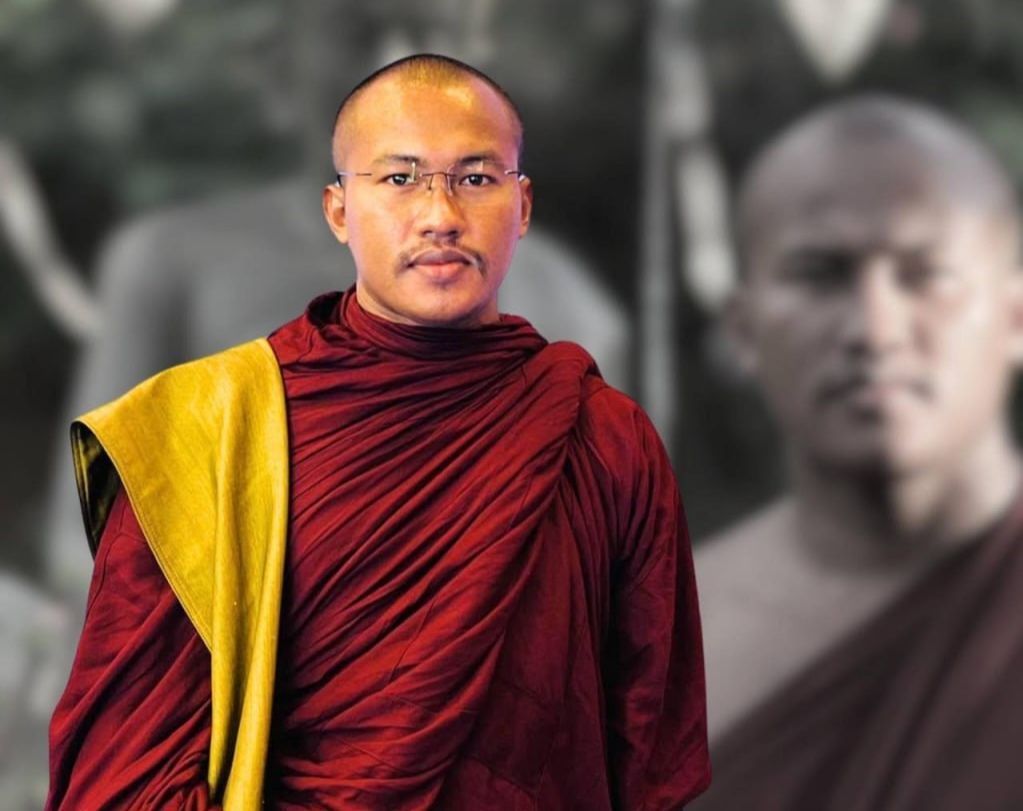
The conviction of 27-year-old Chea Vuthy on charges of incitement has triggered an unprecedented coalition response from Cambodia's civil society sector, with 50 organisations, unions and community groups demanding his immediate release and challenging what they view as a chilling precedent for private online speech. The Phnom Penh Municipal Court sentenced Vuthy to 18 months imprisonment and a fine of two million riel—approximately $500—on August 19, based solely on comments he made in an August 2025 private Facebook Messenger group chat involving roughly 20 participants. The case exemplifies growing anxieties about the scope and application of Cambodia's incitement laws in the digital age, particularly when applied to private communications rather than public statements intended to reach a mass audience.
Vuthy, a former Buddhist monk who worked as a citizen journalist covering environmental degradation and human rights issues, was arrested in April at his monastery, Wat Por Veal in Battambang province, by plainclothes police officers. He was subsequently defrocked and held in pretrial detention before conviction. The Phnom Penh Appeal Court rejected his bail request in June, keeping him confined at the Police Judicial Prison pending trial. His legal team, led by defence counsel Em Chantha, has already signalled intent to appeal the judgment, arguing that the evidence insufficient to meet the legal threshold for incitement and questioning whether private messages can constitute the offence charged.
The substance of Vuthy's allegedly criminal statement concerned the treatment of people displaced by armed clashes along the Cambodia-Thailand border—a sensitive geopolitical issue that has prompted several prosecutions in recent months. Notably, Vuthy acknowledged authoring the comment within the private group but explicitly denied publishing it publicly, a distinction his defenders argue should be legally and morally significant. The prosecution presented no evidence beyond the private Messenger message itself, raising questions about the evidentiary foundation for such a severe penalty. The brevity and limited distribution of the communication form the backbone of the civil society challenge: a remark circulated among 20 trusted individuals in a closed digital space bears fundamentally different implications for public order than statements broadcast across open social media platforms or traditional media outlets.
The joint statement, coordinated through the Cambodian League for the Promotion and Defense of Human Rights (LICADHO) on August 20, explicitly frames the conviction as incompatible with international human rights standards to which Cambodia has subscribed. Signatories, including the Cambodian Center for Human Rights, Cambodian Journalists Alliance Association, Committee for Free and Fair Elections in Cambodia and numerous labour and community organisations, invoke Cambodia's obligations under Article 19 of the International Covenant on Civil and Political Rights. That article permits restrictions on expression only when provided by law, pursued for legitimate purposes such as national security or public order protection, and when demonstrably necessary and proportionate to the stated objective. The groups contend Vuthy's 18-month sentence fails this proportionality test by any reasonable measure.
This prosecution arrives amid a discernible pattern of border-related speech cases that has alarmed international observers and domestic advocates. LICADHO documented multiple convictions and charges stemming from social media commentary on the Cambodia-Thailand territorial dispute, including a chef sentenced to 18 months in May and a deputy school principal condemned to two years in June for similar alleged incitement. The clustering of these cases suggests either heightened official sensitivity to border-related discourse or a systematic attempt to constrain public discussion of geopolitical tensions through prosecutorial means. For Southeast Asian media freedom advocates and democratic practitioners across the region, the Vuthy case signals potential convergence with troubling enforcement patterns witnessed in neighbouring jurisdictions where laws originally designed to protect genuine national security interests have progressively broadened to encompass private criticism and dissent.
Vuthy's professional trajectory as a citizen journalist adds institutional weight to the advocacy campaign surrounding his case. Before his detention, he maintained an active public profile documenting environmental destruction and human rights abuses—reportage that frequently implicated state actors or powerful economic interests. His transition from monastic life to journalistic work positioned him within Cambodia's increasingly embattled independent media ecosystem, where practitioners face mounting legal exposure and financial pressure. The timing of his arrest and prosecution, occurring during heightened border tensions, invites scrutiny regarding whether the incitement charge functioned as pretext for silencing an established critic rather than serving legitimate prosecutorial objectives based on the private comment itself.
The defence counsel's procedural challenge targets the legal foundations underlying the conviction with specificity. Em Chantha disputes whether remarks confined to a closed Messenger group satisfy the definitional and evidential requirements for incitement under Articles 494 and 495 of the Criminal Code. This argument reflects comparative legal principle: most democracies distinguish between public incitement—expression aimed at prompting imminent lawless action among a receptive audience—and private grumbling or critical observation within intimate social circles. The absence of any demonstrated link between Vuthy's comment and actual public unrest or disorder further undermines the necessity rationale for prosecution. His appeal, should it proceed, may establish precedent regarding the minimum threshold of audience reach and demonstrable harm required to justify criminal incitement liability in Cambodia's digital communications environment.
Cambodia's Ministry of Information responded defensively through spokesperson Tep Asnarith, asserting that executive officials maintain institutional distance from judicial proceedings and that courts exercise autonomous authority. This position, formally sound in principle, obscures persistent concerns among rights advocates regarding the practical independence of Cambodian courts when politically sensitive matters reach adjudication. Asnarith simultaneously reminded that Vuthy retains appellate rights and requested that civil society organisations approach such cases with factual accuracy and balance—language that some interpret as discouraging sustained advocacy and public scrutiny of judicial decisions. For regional observers monitoring rule-of-law trajectories across Southeast Asia, Cambodia's response exemplifies defensive institutional rhetoric that sidesteps substantive engagement with proportionality critiques and freedom of expression standards.
The breadth of organisational signatories to the joint statement—encompassing human rights groups, media associations, election monitors and labour unions—demonstrates that the Vuthy case resonates beyond narrow advocacy constituencies and touches fundamental concerns about civic space and democratic participation. Labour federations joined the call because workers organising face analogous legal exposure through speech restrictions applied with political discretion. Election monitors participated because electoral legitimacy requires unfettered public discourse about governance. Media organisations signed because press freedom depends on protecting journalists from prosecution for reporting and commentary, especially on politically contentious subjects like borders and territorial disputes. This convergence suggests mobilisation around a genuinely shared interest in constraining the prosecutorial reach of incitement statutes.
For Malaysia and broader Southeast Asian contexts, the Vuthy prosecution illuminates regional vulnerabilities in digital rights protection and the convergence of ostensibly technical criminal law enforcement with political communication control. Many Southeast Asian jurisdictions maintain broadly constructed incitement provisions inherited from colonial codes and supplemented by modern national security legislation, creating layered legal jeopardy for public expression. The tendency to prosecute private digital communications—messages, WhatsApp exchanges, closed group discussions—represents an evolution in enforcement strategy that challenges traditional distinctions between public speech protected by democratic norms and private speech entitled to different protections. Malaysian readers particularly should note Cambodia's treatment of private Messenger remarks, given Malaysia's own network of speech restrictions and the precedential implications for how regional courts might interpret digital communication offences.
Vuthy's case ultimately encapsulates the tension between state security imperatives and individual liberties in post-conflict Southeast Asian societies still navigating democratic consolidation. Cambodia's government frames border security and national unity as paramount concerns justifying speech restrictions that Western-aligned democracies might treat as incompatible with fundamental rights. Yet the application of criminal incitement law to private remarks among 20 people stretched the rationale beyond any conventional understanding of speech posing concrete danger to public order. The civil society response, refusing to accept this expansion, represents a critical assertion that technical legal compliance with international human rights instruments must translate into genuine protection for ordinary citizens engaging in private criticism without intention or reasonable likelihood of inciting public violence.

