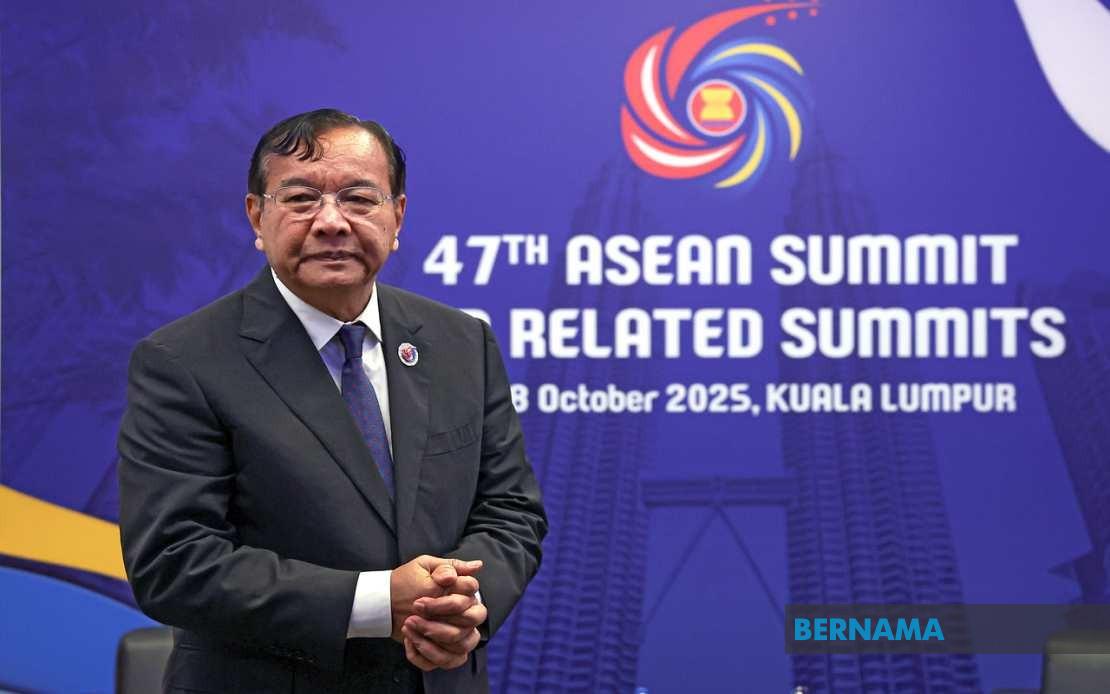
Cambodian Deputy Prime Minister and Foreign Minister Prak Sokhonn has arrived in Malaysia for a high-level two-day official visit that marks a watershed moment in bilateral relations. The centrepiece of his trip is the resumption of the Malaysia-Cambodia Joint Commission for Bilateral Cooperation (JCBC), a formal diplomatic mechanism that has remained inactive for two decades. The third JCBC meeting, to be held in Kuala Lumpur on Tuesday, will be co-chaired by Prak Sokhonn and Malaysian Foreign Minister Datuk Seri Mohamad Hasan, representing a significant reactivation of structured institutional dialogue between the two Southeast Asian neighbours.
The timing of this diplomatic engagement carries particular symbolic weight. Malaysia's Foreign Ministry emphasised that the visit comes as both nations prepare to commemorate the 70th anniversary of formal diplomatic relations in 2027, a milestone that underscores nearly seven decades of sustained engagement. By reviving the JCBC now, both governments are deliberately positioning themselves to deepen cooperation well ahead of that anniversary, demonstrating forward momentum rather than mere ceremonial retrospection. This proactive approach signals that the relationship has matured beyond the diplomatic dormancy that characterised the past twenty years.
The previous JCBC meeting, held in Siem Reap in 2006, took place during a very different geopolitical and economic landscape in Southeast Asia. The two-decade hiatus raises questions about what stalled the bilateral mechanism and why it has been revived at this particular juncture. Regional experts observe that the renewed engagement likely reflects shifting economic priorities and the increasing realisation among ASEAN members that deepening intra-regional ties serves mutual strategic interests, particularly amid growing competition from major powers in the Indo-Pacific.
As a preliminary gesture, Prak Sokhonn is scheduled to pay a courtesy call on Prime Minister Datuk Seri Anwar Ibrahim on Monday. These opening engagements between heads of government serve as crucial confidence-building measures, allowing leaders to exchange views on regional security, trade dynamics, and issues of mutual concern. Such direct dialogue at the highest levels often paves the way for more substantive outcomes in the formal bilateral meetings that follow, setting a collaborative tone for technical discussions.
The forthcoming JCBC meeting is expected to produce a substantive outcome in the form of Agreed Minutes signed by both foreign ministers. These minutes will formally document the key discussions and decisions reached during the commission, serving as a binding reference point for bilateral cooperation going forward. The document will reaffirm both nations' commitment to strengthening ties across multiple sectors, from trade and investment to cultural exchange and security cooperation. Such formal instruments provide clarity and accountability, ensuring that agreed initiatives receive institutional follow-through from both governments.
Economically, the relationship between Malaysia and Cambodia demonstrates vigorous growth that provides compelling rationale for institutional deepening. In 2025 alone, bilateral trade expanded by 27.4 per cent year-on-year to reach RM5 billion (US$1.17 billion), a robust figure that reflects rising commercial integration. Malaysia's exports to Cambodia totalled RM4.13 billion (US$970 million), while imports amounted to RM880 million (US$200 million). These figures underscore Cambodia's significance as both a market for Malaysian goods and a source of Cambodian products, creating mutual economic interests that transcend purely diplomatic considerations.
Beyond trade flows, Malaysia's investment footprint in Cambodia is substantial and strategically important. As of 2024, Malaysian cumulative foreign direct investment in Cambodia stood at US$3.20 billion (RM13.07 billion) spread across 162 registered projects. This positions Malaysia as the third-largest foreign investor in Cambodia, a ranking that reflects deep business confidence and long-term commitment to the Cambodian economy. Such investment levels indicate that Malaysian corporations view Cambodia as a viable destination for manufacturing, agricultural operations, and service sector expansion, creating employment and economic spillovers in Cambodia whilst generating returns for Malaysian investors.
The revival of the JCBC occurs within the broader context of ASEAN's efforts to strengthen internal cohesion and establish effective mechanisms for managing bilateral disputes and advancing shared development agendas. By reactivating formal bilateral commissions, member states demonstrate commitment to multilateralism and to resolving issues through structured dialogue rather than ad-hoc engagement. This institutional approach builds trust and predictability, essential elements for managing the complex interdependencies that characterise modern Southeast Asia.
For Malaysian readers and businesses, the resumption of the JCBC carries practical implications. A revitalised bilateral framework facilitates smoother trade negotiations, streamlined investment procedures, and more coordinated responses to shared challenges such as transnational crime, environmental degradation, and pandemic preparedness. Malaysian exporters and investors operating in Cambodia benefit from government-to-government mechanisms that can rapidly address regulatory obstacles, dispute resolution, and policy harmonisation. Similarly, Cambodian stakeholders gain access to Malaysian expertise and capital markets through formalised channels.
The geopolitical dimension merits consideration as well. Within Southeast Asia, stable and deepening bilateral relationships between ASEAN members enhance regional resilience and reduce space for external powers to exploit divisions. By strengthening Malaysia-Cambodia ties through institutional mechanisms, both nations contribute to a more cohesive and self-confident ASEAN capable of pursuing independent foreign policies and maintaining strategic autonomy. This becomes increasingly important as major powers compete for influence throughout the region.
Looking ahead, the trajectory of Malaysia-Cambodia relations will depend on the implementation of commitments made during this JCBC cycle. Both governments must ensure that agreed initiatives receive adequate resources and attention from relevant agencies, preventing the mechanism from lapsing again into dormancy. Regular follow-up meetings, technical working groups, and people-to-people exchanges will be essential to maintaining momentum. The fact that a 20-year gap occurred between the second and third meetings suggests that deliberate effort and institutional discipline are required to keep bilateral engagement on track.
The visit also reflects changing dynamics within ASEAN, where traditional bilateral relationships are being reassessed and recalibrated in light of evolving economic opportunities and regional challenges. Cambodia's increasing importance as a manufacturing hub and its strategic location make it an attractive partner for Malaysian firms seeking to diversify operations and access new markets. Conversely, Malaysia's advanced economy, technological capabilities, and financial services sector offer valuable resources for Cambodia's development agenda. The JCBC provides the institutional framework through which these complementarities can be systematically exploited for mutual benefit.
Ultimately, Prak Sokhonn's visit and the JCBC's resurrection represent more than ceremonial diplomacy. They signal a genuine recommitment by both Malaysia and Cambodia to building a partnership grounded in regular dialogue, economic cooperation, and strategic alignment. As Southeast Asia navigates a complex geopolitical landscape marked by great power competition and transnational challenges, the strengthening of intra-regional relationships becomes ever more valuable. The Malaysia-Cambodia partnership, renewed through institutional mechanisms like the JCBC, contributes to the broader stability and prosperity of the region whilst creating tangible benefits for businesses and citizens on both sides of the border.

