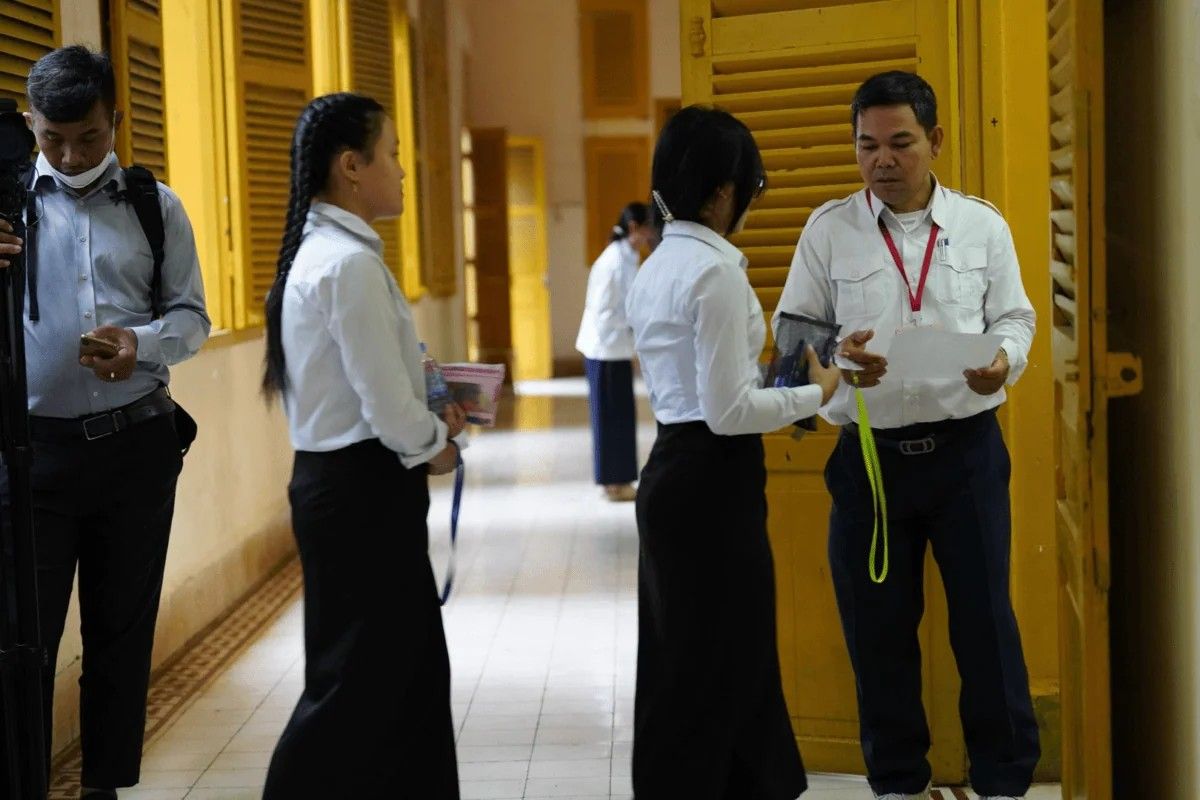
Cambodia's high school graduation examinations began on August 10 amid an atmosphere markedly more settled than the previous year, though the nation continues to reckon with the educational disruption caused by military clashes along its northern frontier with Thailand. The opening ceremony, addressed by Education Minister Hang Chuon Naron in Phnom Penh, underscored both the progress made in restoring normalcy to the education system and the unresolved complications stemming from last year's armed conflict that erupted on the Cambodia-Thailand border.
The 2024 examination cycle welcomes more than 150,000 candidates nationwide, distributed across science and social science streams. Roughly 37,000 students are enrolled in science-track examinations, whilst the social science track accommodates approximately 130,000 candidates. This represents a comprehensive assessment of the Kingdom's secondary school cohort and signals the capacity of educational authorities to maintain testing infrastructure despite regional instability.
The contrast with last year's examination period is stark and deliberate. In 2025, the Grade 12 exams were scheduled for August 28, precisely one month after the initial armed exchanges materialised along the border. The timing created a perfect storm: students were simultaneously processing the trauma and displacement caused by cross-border hostilities whilst preparing for the most consequential examination of their secondary education. The Education Minister drew attention to the extraordinary resilience demonstrated during that period, highlighting specific cases of students who persevered despite extraordinary hardship. One pupil he encountered had studied from tractors as families evacuated their homes fleeing attacks, yet managed to achieve top grades and secure admission to a prestigious tertiary institution.
The Thai military presence in Cambodian territory remains a crucial factor shaping educational possibilities for border communities. Twenty-five schools across frontier provinces continue to remain closed and inaccessible to students because Thai forces occupy the premises and surrounding areas. This situation represents far more than an inconvenience; it constitutes a sustained denial of education rights to an entire cohort of young Cambodians whose regular schooling environments remain beyond national control. The Royal Government has publicly demanded Thai authorities permit these students to resume their studies in their proper facilities, signalling both the diplomatic severity assigned to the matter and the domestic political imperative to address educational access.
Partial accommodation measures have been implemented for some affected students. Hang Chuon Naron noted that pupils from Banteay Mean Rith Lower Secondary School in Oddar Meanchey province, one of the most severely impacted areas, are currently receiving instruction in temporary camps established as substitute venues. This arrangement, whilst functional, underscores the inadequacy of stopgap solutions and the necessity for a complete restoration of territorial control and educational normalcy. The Education Minister's acknowledgment of these temporary arrangements represents implicit recognition that the occupation persists as an unresolved problem rather than a matter in transition toward resolution.
Oddar Meanchey province bore particularly acute impacts during the 2024 conflict. The Education Minister's references to students studying from tractors were not metaphorical; they reflected genuine displacement of families and wholesale disruption of village life across agricultural communities. The province's border location made it especially vulnerable to spillover effects from the armed clashes, transforming educational facilities into secondary concerns compared to immediate physical safety. That some students nonetheless achieved academic distinction despite such circumstances speaks to extraordinary personal resilience but also highlights the human cost of unresolved territorial disputes.
Anticipating concerns about examination integrity, authorities have mobilised robust oversight mechanisms. Last year's examination cycle was marred by reports of leaked mathematics papers, a significant breach that undermined confidence in the fairness and security of the testing process. To prevent repetition of such compromises, the Anti-Corruption Unit has deployed more than 4,000 observers across examination centres nationwide. This observer complement matches the number deployed in 2025 and reflects deliberate continuity in anti-fraud protocols. The Education Minister emphasised that rigorous organisational standards, strict enforcement procedures, and multistakeholder participation would collectively ensure the integrity of this year's examinations.
The international dimension of Cambodia's education disruption merits regional attention. For Southeast Asian observers, the situation illustrates how unresolved territorial disputes between neighbouring nations create cascading consequences extending far beyond the diplomatic sphere into fundamental social sectors such as education. The closure of 25 schools by foreign military forces is unusual in contemporary Southeast Asia and raises questions about international law and humanitarian obligations regarding civilian access to essential services. The precedent established here could influence how other border communities navigate similar crises across the region.
For Malaysian and broader Southeast Asian readers, Cambodia's experience carries cautionary significance regarding educational resilience and cross-border stability. The region contains multiple zones of territorial ambiguity and competing maritime or terrestrial claims. The manner in which educational systems absorb the shock of military conflict and sustain institutional functionality despite displacement offers insights relevant to contingency planning and protection of essential civilian services during geopolitical tensions. Cambodia's approach of maintaining examination schedules whilst simultaneously demanding restoration of seized territory demonstrates political commitment to educational continuity even amid unresolved disputes.
The examination schedule itself represents a deliberate assertion of national continuity and recovery. By proceeding with comprehensive testing of over 150,000 students during a period when 25 schools remain inaccessible, the Cambodian government signals that educational progress cannot await complete resolution of political disputes. This pragmatic approach balances acknowledgment of problems with refusal to allow them to arrest the entire education system. The success of this examination cycle will substantially influence whether Cambodia can consolidate gains toward educational normalcy or whether the occupation's impacts continue to cascade through successive cohorts.

