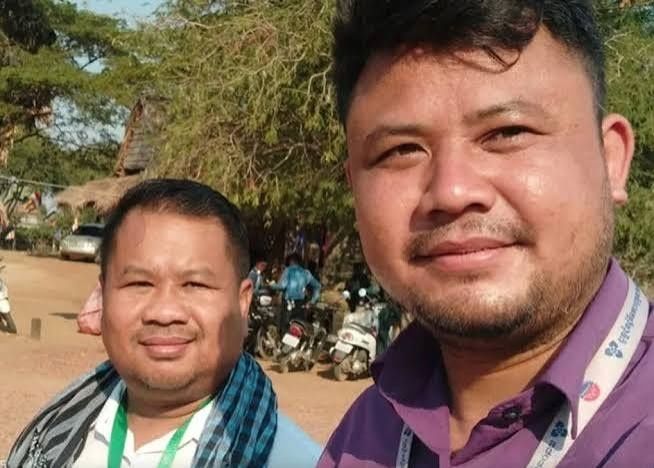
Cambodia's highest court is set to deliver a verdict on Thursday in a closely watched appeal that will test both the country's judicial independence and its commitment to press freedom. Two journalists, Phorn Sopheap of Battambang Post TV Online and Pheap Pheara of TSP 68 TV Online, are challenging 14-year prison sentences imposed after their conviction on treason charges related to photographs taken in a restricted border zone.
The core allegation centres on images the journalists posted to Facebook depicting the Cambodia-Thailand frontier region where military clashes erupted in July and December of last year. The men contend they possessed proper authorization to access the area where they captured the photographs, and they maintain their innocence of the charges brought against them. What began as a straightforward reporting assignment has evolved into a significant test case for media freedoms in the kingdom.
One particularly sensitive image documented land mines in the contested zone, and Thai media outlets gave the photograph widespread circulation. Thailand subsequently utilized the image to substantiate claims that Cambodia had deployed new mines along the shared border, with authorities in Bangkok asserting that these newly placed mines had injured soldiers on patrol. Cambodia's government flatly rejected such assertions, insisting it complied with international treaties prohibiting landmine use and suggesting that any mines present were remnants from the decades-long conflict that concluded in the late 1990s.
The border disputes between the two nations proved devastating in human and material terms. The violence between July and December displaced hundreds of thousands of civilians on both sides of the frontier and resulted in approximately 100 military and civilian casualties. A ceasefire established in December has held, though underlying tensions remain unresolved and volatile, making any fresh disclosure about the disputed territory a politically charged matter.
In December, a provincial court in Siem Reap found both men guilty of treason, specifically charging them with "supplying a foreign state with information prejudicial to national defense." That conviction was upheld in March when a lower appellate court rejected their initial challenge. The Supreme Court appeal represents their final avenue within Cambodia's judicial system. International and domestic press organizations have mounted an unusual coordinated response to the case, with more than a dozen journalism associations and groups issuing a joint statement urging the government to abandon its prosecution.
The timing of Thursday's ruling carries additional weight because it arrives just days after the same Supreme Court upheld the conviction of Rong Chhun, a 56-year-old opposition politician and vocal government critic. Rong Chhun was found guilty last year of inciting social unrest following meetings with villagers displaced by state-sponsored development projects. The back-to-back judicial actions have intensified scrutiny of the court's impartiality and raised fresh concerns about whether the Cambodian legal system functions as an independent arbiter or as a tool for suppressing dissent.
Human Rights Watch has characterized the Rong Chhun decision as evidence of the "lack of independence from the ruling party" within Cambodia's judiciary, a charge the government strongly contests, insisting that the Supreme Court maintains complete autonomy from political interference. The government's defensive posture reflects broader international criticism of Cambodia's judicial system and its alignment with executive power.
These developments occur within a context of minimal political change despite a symbolic transition in leadership. Hun Sen, who wielded authoritarian control over Cambodia for nearly four decades and oversaw documented human rights violations including systematic suppression of speech and assembly rights, stepped down in August 2023 in favor of his American-educated son, Hun Manet. However, observers have detected scant evidence of meaningful liberalization or reform in the months since the succession.
The Committee to Protect Journalists, headquartered in New York, has directly accused the Cambodian authorities of weaponizing vague national security statutes to criminalize legitimate journalistic work in the cases of Pheap Pheara and Phorn Sopheap. This characterization aligns with broader international assessments of Cambodia's media environment. The Paris-based Reporters Without Borders organization ranked Cambodia 161st among 180 countries in its 2025 World Press Freedom Index, categorizing it among nations where press freedom conditions are regarded as "very serious."
For Malaysia and other Southeast Asian democracies, the Cambodia case illustrates the vulnerability of journalistic practice when national security rhetoric becomes untethered from judicial restraint. The charges against these journalists rest on photographs taken from a location they claim they were authorized to access, yet the conviction proceeded regardless. This prosecutorial approach echoes patterns observed elsewhere in the region where reporters face legal jeopardy for coverage deemed politically inconvenient.
The Supreme Court's decision will provide clarity on whether Cambodia's highest judicial body views its role as adjudicating law impartially or as reinforcing state security interests as defined by political leadership. For the journalists themselves, the appeal represents a final hope of overturning sentences that would consume their working lives. For Cambodia's media community and civil society observers, the ruling will signal whether the new administration intends to continue the restrictive practices of its predecessor or chart a different course.

