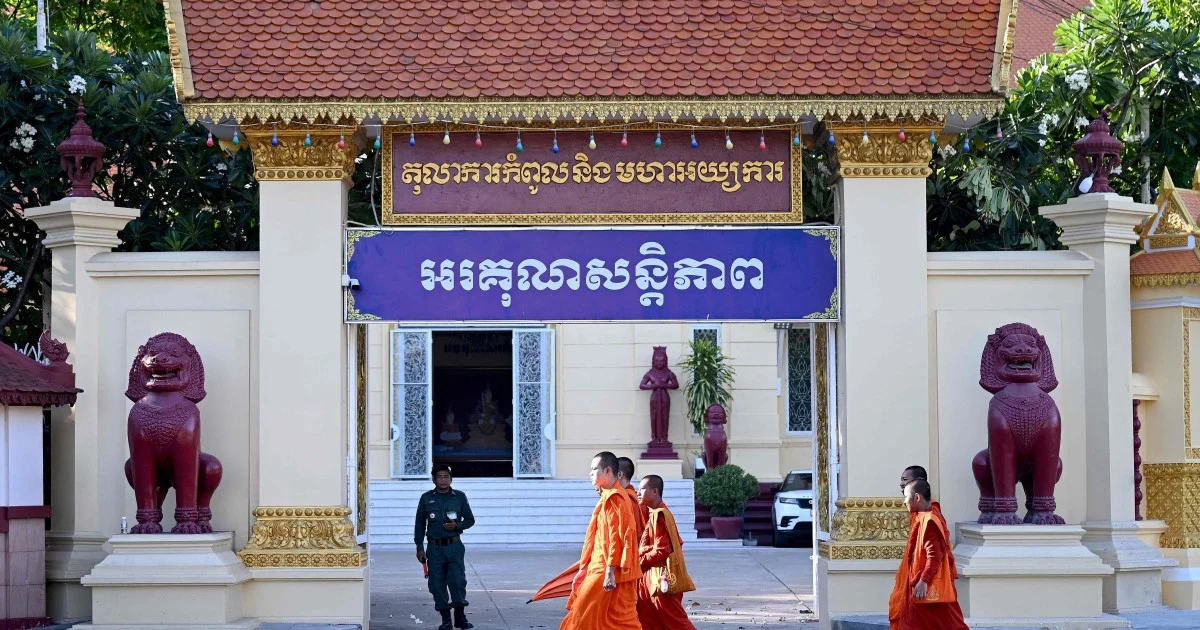
Cambodia's highest judicial authority has declined to overturn severe treason convictions against two journalists, effectively ending their legal appeal process. The Supreme Court's decision to uphold the 14-year prison sentences on Thursday represents a definitive ruling that the reporters committed a serious breach of national security law by disseminating a photograph taken within a restricted military zone during a period of heightened tensions along the Thai border.
The case centres on a single image captured in an area designated as off-limits to civilians and media personnel due to active military operations and security concerns. Following cross-border clashes between Cambodian and Thai forces, the two journalists obtained and subsequently published the photograph, apparently without recognising the legal implications of distributing material from a classified military sector. Their conviction on treason charges marked an exceptionally harsh application of Cambodia's national security legislation, with the 14-year sentence substantially exceeding typical journalistic violations.
The Supreme Court's confirmation of the lower court ruling signals judicial alignment with the government's interpretation of national security threats. Cambodia has experienced periodic border disputes with Thailand along their shared frontier, with military confrontations occasionally flaring into open conflict. The incident involving these journalists occurred during one such escalation, when authorities considered sensitive military information to be a matter of paramount national concern. The timing of the publication, coinciding with active security operations, appears to have significantly influenced the severity of the legal response.
This case has immediate relevance for Malaysian media professionals and newsrooms operating across Southeast Asia, where military-sensitive zones and national security legislation vary considerably by jurisdiction. Malaysia's own Official Secrets Act and restricted military areas operate under comparable frameworks, meaning Malaysian journalists covering defence and security matters must navigate similarly complex boundaries. The Cambodian precedent demonstrates how aggressively neighbouring governments can pursue treason charges when journalists venture into sensitive territories, whether physically or through publication of restricted materials.
Regional press freedom observers have grown increasingly concerned about the trajectory of journalistic restrictions across Southeast Asia. Cambodia's approach reflects a broader pattern wherein governments justify extensive media limitations as necessary safeguards against security threats. However, international journalism organisations have questioned whether such severe sentences truly serve legitimate national defence purposes or instead function as deterrents against critical reporting on military affairs. The absence of a successful appeal in Cambodia's Supreme Court suggests limited scope for judicial review of such national security determinations.
The implications extend beyond Cambodia's borders to consider how regional courts are increasingly willing to impose substantial prison terms on media personnel. Thailand has similarly pursued lèse-majesté and national security charges against journalists and publishers, while other Southeast Asian nations maintain various restrictions on defence-related reporting. The Cambodian Supreme Court's decision effectively endorses an aggressive prosecutorial approach to military-zone photography, potentially influencing how other governments in the region approach similar cases.
For international news organisations and wire services operating across Southeast Asia, the judgment creates practical challenges in covering military activities and border disputes. Journalists must now factor in significantly enhanced risk when accessing or publishing materials from restricted areas, even when such information might serve genuine public interest purposes. The 14-year sentence essentially removes investigative journalism from military zones as a viable reporting option, leaving audiences dependent on official military statements and government-sanctioned information.
Cambodia's judicial system has faced sustained international criticism regarding its independence and vulnerability to political pressure. The treason conviction itself raised eyebrows among press freedom advocates, who argued that posting a photograph—regardless of its sensitive location—should not constitute grounds for such severe criminal penalties. The Supreme Court's unwillingness to reconsider this position despite international concern suggests either institutional limitations or deliberate reinforcement of security-focused jurisprudence within Cambodian courts.
The case also reflects broader tensions within Southeast Asia regarding the balance between legitimate state security requirements and press freedom obligations. While governments throughout the region argue that certain military information must remain classified, journalists contend that such restrictions frequently extend far beyond genuine security concerns into areas of political sensitivity. Cambodia's handling of this case demonstrates how difficult it remains for courts in the region to meaningfully adjudicate between these competing interests, often deferring substantially to government security assessments.
Looking ahead, the Supreme Court's confirmation of these convictions will likely have a chilling effect on Cambodian journalism, particularly regarding any coverage involving military operations, defence procurement, or border security matters. International news agencies operating in Cambodia will need to reassess risk protocols for their local staff and contributors, potentially reducing their ability to report on significant security-related developments. The precedent set by maintaining such harsh sentences sends a clear message that Cambodia's government views unauthorised military-zone photography as a grave national concern warranving imprisonment for over a decade.

