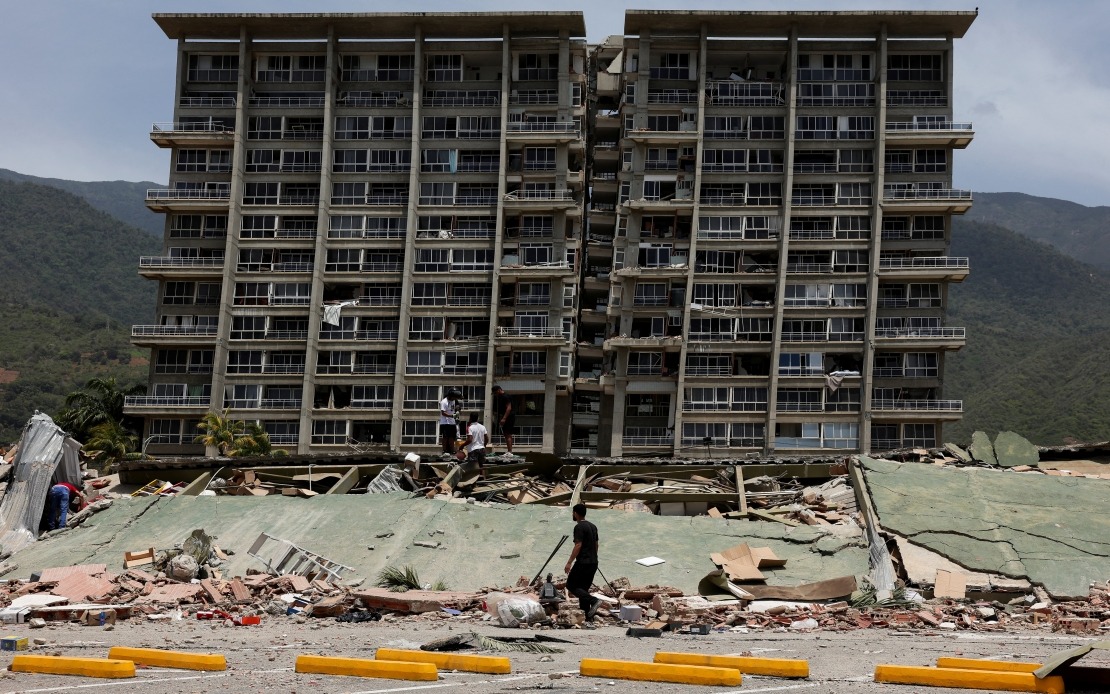
Canada is mobilising US$5 million in immediate humanitarian assistance to help Venezuela respond to the aftermath of devastating earthquakes that have left widespread destruction and an uncertain toll of casualties. The commitment, announced by Canada's Foreign Ministry on Thursday, represents the international community's growing recognition that the affected nation faces a prolonged recovery challenge requiring coordinated global support.
The earthquakes have inflicted substantial harm across Venezuelan territory, though officials warn that comprehensive damage assessments remain incomplete. The Canadian government's assessment suggests that the true human cost extends far beyond current reports, with preliminary estimates indicating that hundreds of thousands of people may require immediate assistance. This scale of potential displacement and suffering has prompted urgent calls from Ottawa for a rapid expansion of humanitarian operations across the region.
Canadian Foreign Minister Anita Anand characterised the situation as a profound humanitarian crisis, emphasising that families have experienced devastating losses and that entire communities face rupture and displacement. Her statement reflects Canada's position that the earthquake represents not merely an isolated disaster but rather a critical juncture requiring sustained international engagement. By framing the response in terms of solidarity with Venezuelan citizens, Canada signals its commitment to viewing earthquake relief through a lens of shared human responsibility rather than narrow political calculation.
The newly pledged funding will channel resources through established humanitarian organisations with proven operational capacity in Venezuela, reflecting a strategic approach that prioritises effectiveness and reach. These partner organisations will deploy assistance across multiple critical domains: the provision of emergency food supplies to populations facing acute food insecurity, clean water systems and sanitation facilities to prevent disease outbreaks, medical care and health services for the injured and vulnerable, as well as logistics infrastructure and protection mechanisms for displaced populations. This multi-sector approach recognises that earthquake response encompasses far more than immediate rescue operations; it requires sustained attention to preventing secondary humanitarian crises from compounds the initial disaster.
The announcement builds upon Canada's earlier humanitarian investments in Venezuela, which totalled nearly US$4.5 million allocated at the beginning of the year. This cumulative commitment now approaches US$9.5 million, demonstrating Canada's intention to sustain engagement beyond the initial crisis phase. For Venezuela, which has faced compounding economic and political challenges in recent years, international humanitarian support becomes increasingly critical in filling gaps that domestic resources cannot adequately address.
For Malaysian policymakers and development professionals, Canada's response offers instructive lessons in humanitarian coordination. Southeast Asian nations, positioned in seismically active zones and facing their own disaster preparedness challenges, can observe how developed countries mobilise rapid assistance while simultaneously building longer-term capacity. The Canadian approach—combining immediate emergency funding with engagement through experienced partner organisations—demonstrates a model that balances urgency with operational effectiveness.
Canada's Foreign Ministry indicated that officials are maintaining active engagement with regional partners throughout the Americas and with international humanitarian organisations tracking the evolving situation. This emphasis on continuous monitoring and adaptive response reflects recognition that earthquake disasters generate cascading needs that unfold over days and weeks, requiring flexibility in funding allocation and programme design. The stated commitment to provide further allocation details in subsequent days suggests a phased approach to aid deployment rather than a single disbursement.
The geopolitical context surrounding Venezuelan humanitarian crises adds complexity to international assistance efforts. Despite Venezuela's political tensions, the earthquake response represents a sphere where humanitarian principles can transcend political divisions, allowing countries like Canada to contribute based on need rather than ideological alignment. This demonstrates how natural disasters can create opportunities for depoliticised international cooperation, even in contexts marked by significant disagreement on other matters.
For Southeast Asian nations monitoring international humanitarian trends, the Canadian response underscores the importance of maintaining operational partnerships with experienced aid organisations and preserving capacity for rapid mobilisation when disasters strike. Malaysia and its regional neighbours benefit from observing how countries operationalise commitments through trusted implementing partners, a model particularly valuable for nations seeking to strengthen their own humanitarian response mechanisms.
The Venezuelan earthquakes serve as a broader reminder of the vulnerability that affects countries across the Pacific and Atlantic, connected through shared exposure to natural hazards and mutual humanitarian interdependence. Canada's intervention demonstrates that this interdependence translates into concrete resource flows when catastrophe strikes, reinforcing the principle that earthquake response transcends national boundaries.

