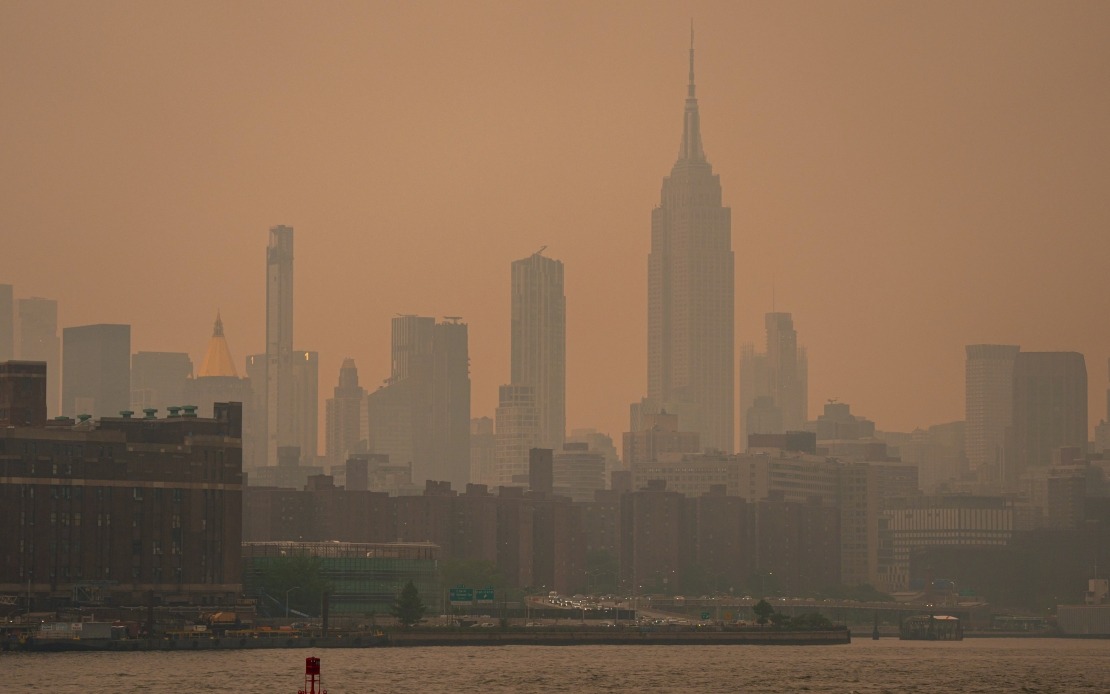
Mexican President Claudia Sheinbaum encountered significant travel disruptions en route to the Argentina-Spain World Cup final in New Jersey on Sunday, with smoke blanketing New York from raging Canadian wildfires forcing authorities to cancel her initial flight from Cancún. The environmental crisis in North America, stemming from uncontrolled wildfires burning across Canada in recent days, created hazardous air quality conditions that grounded her scheduled departure on Saturday, initially delayed by two hours before being scrapped entirely.
Despite the logistical complications, Sheinbaum managed to reach New York by chartering a military aircraft. Mexico's Defence Ministry operated the alternative flight that transported the president overnight into Sunday, enabling her to make the high-profile sporting event. The last-minute substitution underscored the severity of air quality concerns over New York, where smoke from the Canadian fires had created visibility issues and unsafe conditions for conventional commercial aviation.
Sheinbaum's attendance at the World Cup final carries particular diplomatic significance given the current state of Mexico-United States relations. The bilateral relationship faces considerable strain centred on trade disputes and persistent security concerns, with these issues dominating discussions between the two neighbouring nations. The Mexican president received an unexpected invitation from US President Donald Trump to witness the match in East Rutherford, a gesture that, despite the strained political context, demonstrates the continuing role of major sporting events in diplomatic engagement.
The World Cup final itself represents a trilateral affair, with representatives from all three host nations present at the stadium. Canadian Prime Minister Mark Carney was also expected to attend the match, reflecting Canada's status as a co-host alongside Mexico and the United States. This shared hosting arrangement meant that North American leadership would converge at the event, despite the very real environmental challenges affecting the region.
Prior interactions between Sheinbaum and Trump have been limited in scope. Their only previous engagement in connection with the World Cup occurred during the tournament draw held in Washington last December, suggesting that the invitation to the final represented a relatively rare opportunity for direct engagement between the two leaders. Such moments take on added weight given the complexities surrounding Mexico-US relations, where high-level dialogue channels remain important for addressing bilateral concerns.
The Canadian wildfire crisis affecting air quality across northeastern North America highlighted the transnational nature of environmental challenges facing the region. Smoke drifting southward from Canadian territories created hazardous conditions affecting major population centres and transportation hubs in the United States, with New York serving as a stark example of how regional environmental disasters can disrupt normal operations across borders.
From a diplomatic perspective, Sheinbaum's determination to attend the final despite the travel complications signalled Mexico's commitment to maintaining engagement with the United States on important occasions. The World Cup, as a marquee global sporting event, provides neutral ground for leadership to interact informally and strengthen relationships, even when formal bilateral relations face challenges.
For Malaysian observers, the incident illustrates how environmental crises can have cascading effects on international mobility and planning. As Southeast Asia faces increasingly complex air quality challenges during haze seasons, the disruptions experienced by high-level officials in North America serve as a cautionary example of broader climate and environmental vulnerabilities affecting the region.
The ability of Mexico's Defence Ministry to mobilize alternative transportation on short notice demonstrated the operational resources available to government leaders when standard channels become unavailable. Such contingency measures remain essential in an era of increasingly unpredictable environmental conditions affecting commercial aviation.
Ultimately, Sheinbaum's successful arrival in New Jersey for the World Cup final, despite significant obstacles, underscored the importance that both Mexico and the United States assign to the tournament as a platform for engagement. The event's trilateral co-hosting arrangement creates opportunities for dialogue that transcend the routine diplomatic structures and offer space for relationship-building among leaders of neighbouring nations.
The incident also reflected broader climate concerns facing North America, with Canadian wildfires extending their environmental impact far beyond national borders. Regional cooperation on environmental management and crisis response may increasingly become an essential component of diplomatic relations in North America, mirroring challenges already evident in Southeast Asia.

