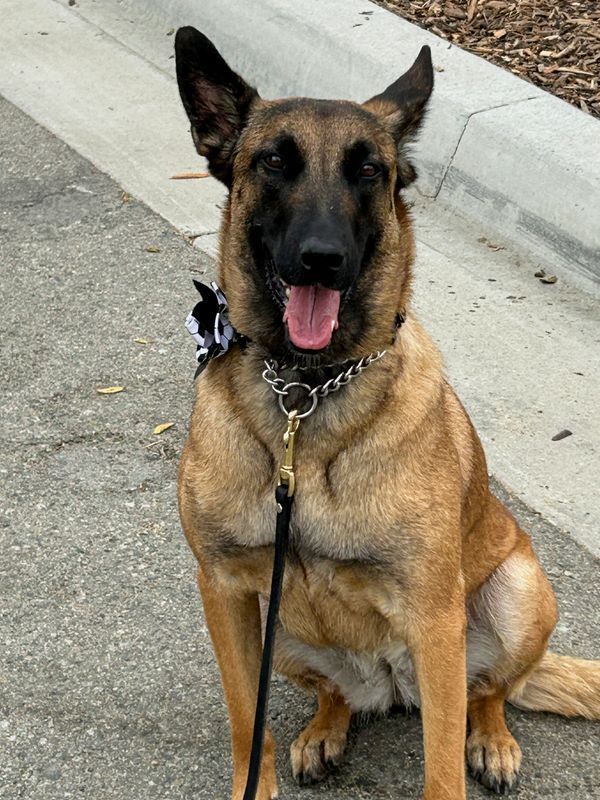
When Kali, a five-year-old Labrador Retriever, took up her position near one of the Los Angeles Stadium entrances during the 2026 FIFA World Cup, she became part of an unprecedented deployment of canine security resources across North America. Despite her gentle temperament and friendly demeanour, this unassuming dog served as a critical first line of defence against explosives, firearms, fireworks and other potential threats that could endanger the tournament. The sheer scope of the World Cup, co-hosted by the United States, Canada and Mexico, meant that security planners had to marshal hundreds of dog teams simultaneously across 16 cities spanning three nations—a challenge that tested the limits of North American security infrastructure.
The threat environment facing World Cup organisers extended far beyond typical sporting event concerns. The geopolitical landscape was heavily charged with tension: the United States and Iran were actively at war, and Iran's national team was required to play their group stage matches on American soil. The Trump administration had simultaneously strained diplomatic relations with numerous nations participating in the tournament. These circumstances created a uniquely volatile security calculus that went beyond traditional crowd management. Additionally, inter-team rivalries and historical tensions between competing nations added another layer of complexity to the threat assessment. The situation was further complicated by regional instability in Mexico itself, where government military operations against organised crime cartels had sparked significant violence just months before the tournament commenced.
Los Angeles experienced particularly intense political demonstrations during Iran's matches at the stadium, underscoring the reality that a major international soccer tournament could become a flashpoint for broader geopolitical grievances and activist movements. Glen Kucera, President of Allied Universal Enhanced Protection Services—the largest private canine security provider in the United States—described the dynamic plainly: when such high-profile political tensions intersect with major public events, the assessed threat level increases substantially. His company alone deployed approximately 300 of its 1,000 available dog teams to World Cup security operations, representing a significant commitment of private sector resources to what many viewed as a critical national security endeavour.
The logistics of securing a three-nation tournament proved extraordinarily demanding. Beyond the 16 stadiums hosting matches, security personnel and their canine partners had to monitor training facilities, accommodation zones for teams and officials, and the various transportation corridors connecting these locations. The dispersed geographic footprint meant that dog-security resources across the United States were stretched thin, necessitating coordination among federal agencies, local law enforcement, and private security contractors. Kali herself represented the Federal Bureau of Alcohol, Tobacco, Firearms and Explosives, bringing specialist expertise in explosive detection. Alongside her worked dogs from the Los Angeles County Sheriff's Department, including Buck and his handler Anthony Meyers, as well as numerous private security teams positioned around stadium perimeters.
The security strategy deployed around venues operated on multiple levels simultaneously. The most visible component was the presence of trained dogs at all entry points—a fact that virtually every attendee would encounter upon arrival. According to Kucera, this omnipresent canine security presence served a crucial deterrent function, with the visual recognition of detection dogs accounting for approximately ninety-five percent of their psychological impact. The message conveyed to would-be troublemakers was unmistakable: suspicious individuals and contraband would be detected. Beyond this psychological dimension, the dogs provided genuine detection capability, screening both people and vehicles for prohibited items.
Security planners faced an unexpected challenge beyond terrorism concerns: the widespread cultural practice in many countries of fans celebrating goals or victories with fireworks. Officials recognised that many supporters would bring such items into stadiums with innocent celebratory intentions, unaware of local prohibitions. The canine detection teams thus served the dual purpose of interdicting genuine security threats while preventing well-meaning supporters from inadvertently violating safety regulations. This distinction proved important in maintaining public goodwill during what was already a security-intensive event.
Balancing visible security measures with visitor comfort presented an ongoing tension throughout the tournament. Dogs are not universally perceived as friendly across all cultural contexts; in many regions, they remain associated with oppressive state security apparatus and are not commonly kept as household pets. To navigate this sensitivity, Allied Universal and other security providers made deliberate choices about which dog breeds to deploy. Labrador Retrievers—friendly, approachable dogs that generate minimal anxiety—became the preferred choice over more imposing German Shepherds or other intimidating breeds. This selection reflected a conscious effort to communicate that the tournament environment, while secured, was not intended to feel oppressive or threatening to the international audience.
Different jurisdictions within the three-nation host territory developed locally adapted security strategies. In Guadalajara, Mexico, security planners incorporated robot dogs into their explosive detection protocols, combining traditional canine resources with emerging technological alternatives. Vancouver's Canadian authorities designed a comprehensive multi-layered security approach that integrated dogs as a core component within a broader detection and interdiction framework. These regional variations demonstrated how security professionals adapted general principles to local conditions and available resources.
The Iran team's presence created distinctive security management challenges that extended throughout the tournament. Due to diplomatic restrictions, Iranian players were required to remain based in Mexico rather than staying in American host cities. This constraint forced an unusual operational schedule: the team would fly into the United States shortly before each match and depart immediately afterwards, creating a compressed and dynamic security footprint that security planners had to manage with precision. The political dimensions intensified at specific venues—notably Los Angeles for Iran's matches against New Zealand and Belgium, and Seattle for the final group stage match against Egypt—where large-scale protests occurred outside stadium grounds, necessitating heightened vigilance and additional security resources.
The scale of the World Cup deployment represented an operational milestone for North American security organisations. While major event security was not new to these professionals, simultaneously coordinating hundreds of dog teams across three countries at 16 different venues operating on different schedules represented an unprecedented undertaking. The complex logistics required seamless coordination between federal agencies, state and local law enforcement, municipal authorities, and private security contractors. Information sharing protocols had to function flawlessly to ensure that threat intelligence identified at one venue could inform operations at others.
Throughout the tournament, the security operation proceeded without major incidents, suggesting that the layered canine-based detection strategy, combined with broader security measures, effectively deterred or prevented potential threats. The visible presence of alert, trained dogs appeared to achieve its intended effect: creating sufficient uncertainty in the minds of any would-be troublemakers that the risks of attempting to bring prohibited items or conduct dangerous activities into venues outweighed any potential benefit. The deployment also demonstrated American and North American security capabilities to a global audience, with the incident-free tournament serving as a validation of the comprehensive planning and resource commitment that had preceded it.

