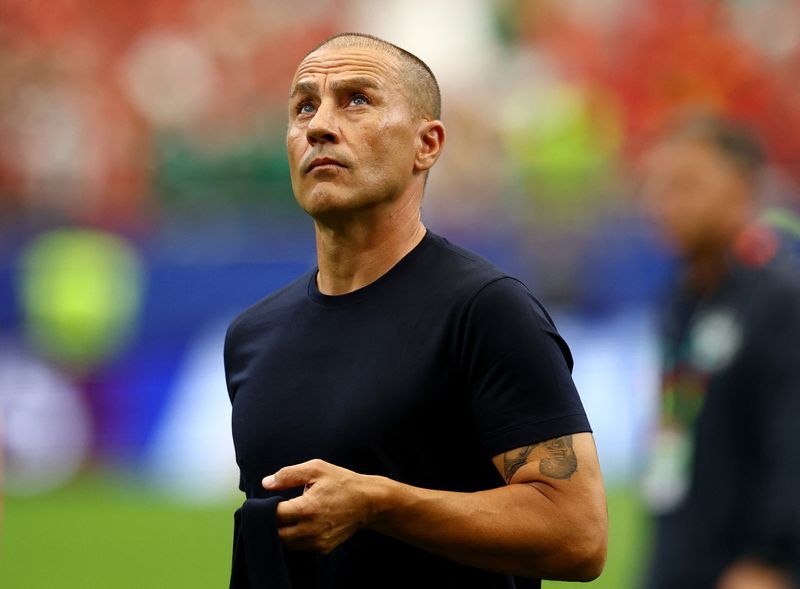
Uzbekistan's maiden World Cup campaign suffered a devastating blow on Tuesday when Portugal demolished them 5-0 in Houston, leaving the Central Asian nation teetering on the precipice of early elimination from the tournament. Following the one-sided Group K encounter, coach Fabio Cannavaro immediately stepped forward to shoulder the burden of the result, seeking to shield his players from criticism while maintaining that the team could still harbour hopes of advancing further in the competition.
With this second consecutive loss following their 3-1 defeat at the hands of Colombia, Uzbekistan's prospects of progressing to the round of 32 have become increasingly remote. Their mathematics are now brutally simple: they must defeat the Democratic Republic of Congo in their final group match on Saturday, though even that victory may not guarantee them a knockout-stage berth depending on other results. The situation encapsulates the harsh reality faced by World Cup debutants, where the margin between competitive football and crushing defeats can be measured in fine margins and tactical execution.
Cannavaro, a World Cup-winning captain with Italy in 2006 and a player accustomed to operating at football's highest level, brought to the press conference the perspective of someone who has experienced both triumph and setback at this stage. His remarks reflected a deliberate coaching philosophy aimed at insulating his players from despair. He stated plainly that responsibility for the performance lay with him alone, refusing to allow blame to fall upon the shoulders of his squad members despite the scale of the defeat. This approach speaks to his understanding that a team's first World Cup appearance is fundamentally a developmental opportunity rather than a singular make-or-break moment.
The Uzbek coach acknowledged that his tactical instructions had produced mistakes on the pitch, but he framed this within a broader narrative of intentional risk-taking. He encouraged his players to attempt ambitious passes, to take calculated chances, and to embrace a style of play that prioritised growth over defensive caution. This philosophy runs counter to the instinctive conservatism many underdogs adopt against stronger opposition, yet Cannavaro argued that genuine team development only occurs when players have the confidence to stretch themselves within matches.
A critical turning point in the match came when Azizjon Ganiev had what would have been a significant goal disallowed following a review for a foul committed during the build-up phase. Cannavaro identified this moment as instrumental in his team's psychological collapse during the encounter. He recognised that the decision fundamentally altered the trajectory of the match, deflating momentum that Uzbekistan had briefly generated against one of Europe's strongest sides. The psychological weight of having a goal stripped away while trailing 2-0 against an opponent of Portugal's calibre clearly made a material difference to his team's capacity to remain competitive.
Despite acknowledging the disallowed goal's impact, Cannavaro pointed to Uzbekistan's approach in the opening exchanges as evidence that they possessed the tactical framework to compete. He noted that their early phase of play mirrored their performance against Colombia, suggesting a consistent identity and willingness to impose themselves on matches rather than merely absorb pressure. This indicates that the coaching staff had developed a coherent strategic vision, even if execution and execution failed to measure up against elite opposition.
Cannavaro's communication to his players between matches and at the training ground has centred on resilience and the permission to make errors. By explicitly telling them that misplaced passes and tactical mistakes were acceptable within their developmental framework, he has attempted to maintain the psychological equilibrium necessary for them to approach their final group fixture with conviction rather than fear. This approach distinguishes between accountability and blame, a subtle but crucial distinction for teams operating outside the top tier of world football.
The coach emphasised that Uzbekistan's presence at the World Cup itself represents a significant achievement for the nation's football programme, and the team's first encounter with global competition should be measured against a longer timeframe than single matches. His insistence that "we are here to gain experience even if we are to lose" reflects a mature perspective on what World Cup participation means for a developing football nation. It acknowledges that while winning matches represents the immediate objective, the institutional knowledge and global exposure gathered at this tournament will benefit Uzbekistan's football infrastructure for years to come.
For Malaysian readers and Southeast Asian football enthusiasts, Uzbekistan's experience resonates as both cautionary tale and source of hope. The region's own World Cup aspirations—whether for established participants or nations still working toward qualification—require confronting the reality that early group-stage exits are probable against elite opposition. Yet Cannavaro's framing suggests that first World Cup campaigns need not be viewed as failures if they generate learning opportunities and instil professional standards into developing programmes. How Uzbekistan responds against Congo will determine whether they can salvage something from this tournament, but their trajectory over the coming World Cup cycles may ultimately prove more significant than their immediate results.
Cannavaro's measured response to catastrophic defeat, combined with his refusal to panic despite near-certain elimination, demonstrates the temperament required to develop emerging football nations. Whether Uzbekistan can materialise the resilience and growth mindset he has promoted will become evident in their remaining fixture, but the foundations he has attempted to establish suggest that this World Cup appearance, despite its painful moments, may contribute meaningfully to the nation's longer-term football development.