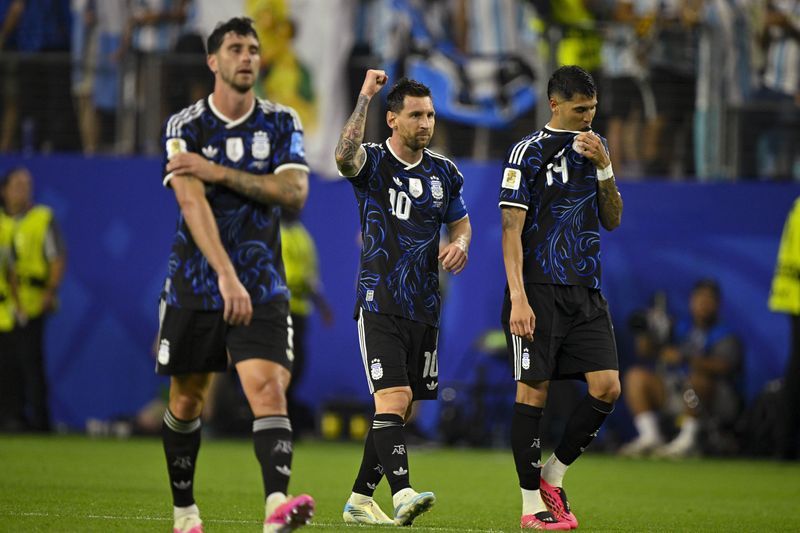
Cape Verde's football programme stands at a pivotal juncture as the African nation prepares to confront Argentina, the reigning world champions, in a knockout fixture this Friday at Miami Stadium. Coach Bubista has made clear that his team's approach to the tournament will remain unchanged, with the islanders determined to achieve qualification to the round of 16 rather than be intimidated by their illustrious opponents or adjust their tactical principles to compensate for perceived quality gaps.
Bubista's consistency in messaging throughout the campaign has been vindicated by a sequence of results that many observers considered remarkable given Cape Verde's status as a relatively new entrant to elite football competition. The team earned draws against Spain, Uruguay, and Saudi Arabia during the group stage—outcomes that established them as genuinely competitive performers rather than ceremonial participants. This track record provides the coaching staff and players with tangible evidence that their methodology can produce results against established football powers, a psychological advantage that cannot be underestimated in high-stakes international matches where confidence often proves decisive.
The coach articulated his team's singular objective with clarity during his pre-match remarks at Miami Stadium on Thursday, framing the upcoming encounter as an opportunity to demonstrate that Cape Verde's earlier performances were no accident. Bubista emphasised that his squad earned their place in the tournament through qualification campaigns and subsequently proved their credentials in the group stage, suggesting that their advancement to the knockout round reflected genuine merit rather than fortunate circumstances. This framing is significant for regional audiences who may be unfamiliar with Cape Verde's football development, as it positions the nation as a legitimate competitor in world football rather than a novelty entry.
The philosophical approach Bubista articulated—combining humility with organisational discipline and tactical courage—reflects a mature understanding of how smaller football nations can compete effectively at the world stage. Rather than adopting a defensive posture designed to minimise defeat against superior opponents, Cape Verde intends to maintain possession-based football, actively pursue scoring opportunities, and impose their tactical identity on proceedings. This strategy requires considerable mental fortitude from players acutely aware of the gap in global rankings and resource allocation that separates their nation from Argentina, yet the early results suggest the approach has merit.
The coach's comments regarding Argentina deserve particular examination, as they reveal a nuanced approach to the psychological dimensions of tournament football. While Bubista naturally acknowledged the quality of Argentina's squad, coach Lionel Scaloni's tactical acumen, and Lionel Messi's exceptional abilities, he simultaneously asserted that Cape Verde's achievements merit recognition from opposing camps. This represents more than mere rhetoric; it reflects a genuine conviction that his team has earned the right to be taken seriously, and that respect must be reciprocal rather than granted automatically based on historical precedent or financial resources. For smaller football nations across Southeast Asia and the Pacific, this message carries significance as a model for how to navigate tournaments dominated by traditional powerhouses.
The question of how Cape Verde would manage Messi's individual threat offered an illuminating insight into Bubista's tactical philosophy. Rather than constructing specific personnel or strategic arrangements to neutralise the Argentine master, the coach preferred to emphasise addressing Argentina's collective capacity as a team unit. This decision reflects confidence in Cape Verde's systematic approach while acknowledging that attempting to park resources exclusively on one player might expose vulnerabilities elsewhere and compromise the team's attacking ambitions. The philosophy prioritises maintaining structural integrity and tactical discipline while trusting that organised defensive work and collective pressure can mitigate individual brilliance.
Cape Verde's ranking of 67th in the FIFA world standings at the tournament's commencement underscores the magnitude of their achievement in qualifying and subsequently performing competitively in the group stage. The gap between their ranking and Argentina's first-place position might suggest a mismatch, yet recent results have demonstrated that rankings can obscure tactical preparation, psychological resilience, and the impact of collective team cohesion. For Malaysian readers and Southeast Asian football observers, Cape Verde's journey offers valuable perspective on how emerging football nations can challenge traditional hierarchies through sustained investment in systematic development and comprehensive preparation.
Bubista's assertion that his team arrived at the tournament having earned qualification through merit, rather than benefiting from expansion or favourable draw circumstances, distinguishes Cape Verde's narrative from other underdog stories. The squad demonstrated their competitiveness during lengthy qualifying campaigns against regional opponents, establishing that their tournament performances reflected an existing capability rather than a temporary anomaly. This distinction matters considerably for understanding the sustainability of their success and the genuine structural improvements within Cape Verde's football system.
The coach's closing remarks about adapting to opponents while maintaining identity provides a masterclass in tournament football philosophy. Rather than viewing Argentina as requiring exceptional or unprecedented tactical measures, Bubista positioned the match as another opportunity to execute established principles with discipline and ambition. This approach reduces the psychological pressure on players who might otherwise feel compelled to abandon their strengths in pursuit of an unfamiliar game plan designed specifically for a superior opponent. The philosophy emphasises control over circumstances that the team can influence—preparation, organisation, tactical execution, and mental approach—rather than fixating on factors beyond their control.
Regional sporting audiences in Southeast Asia may find particular resonance in Cape Verde's journey, as their approach mirrors aspirations across the ASEAN region to develop competitive football programmes capable of challenging traditional powers. The African nation's emphasis on systematic development, consistent coaching philosophy, and gradual accumulation of competitive experience offers a template that could inform football development strategies across the region. Their willingness to compete with ambition against world-class opposition, rather than adopting a cautious approach designed merely to limit defeat, represents a mentality that emerging football nations across Southeast Asia continue to cultivate.
The stakes of the Argentina match extend beyond the immediate objective of reaching the round of 16. Success would validate Cape Verde's development pathway and potentially accelerate investment in their football infrastructure, while also sending a powerful message to other emerging football nations that breakthrough performances at world tournaments are achievable through disciplined preparation and unwavering commitment to tactical principles. Conversely, defeat would not diminish the significance of their group stage performances, which have already established Cape Verde as worthy competitors on football's grandest stage.

