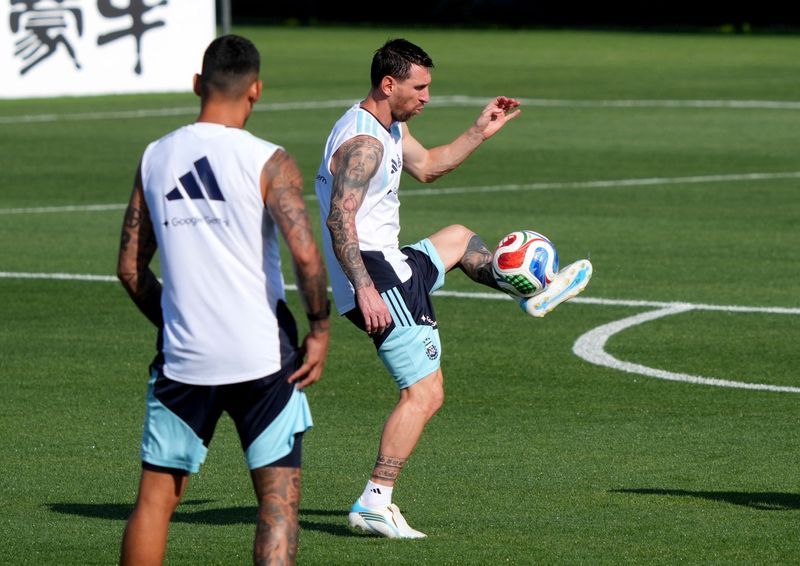
Cape Verde's remarkable World Cup journey faces its ultimate test when the island nation confronts reigning world champions Argentina in Friday's round-of-32 encounter. On paper, the mismatch appears stark—yet the African side approaches the match with genuine belief that defying the odds remains entirely possible. Having already exceeded expectations simply by qualifying for the knockout rounds, Cape Verde now pursues a result that would rank among football's most stunning upsets.
The path that brought Cape Verde to this juncture defied convention from the outset. Draws against former World Cup winners Spain and Uruguay—two opponents of vastly greater pedigree and resources—proved sufficient to vault the island nation into the knockout stage ahead of more established competitors. Rather than viewing a clash with Argentina as a cruel lottery draw, Cape Verde's delegation views the fixture through an entirely different lens. Assistant coach Humberto Bettencourt articulated this perspective with remarkable composure, describing the prospect of facing the Albiceleste not as an ordeal but as something to relish.
Bettencourt's comments at the team's Tampa camp revealed a philosophical approach that transcends numerical probability. He dismissed the relevance of statistical forecasts, arguing that football's history demonstrates repeatedly how predictions crumble against what unfolds within the pitch boundaries. His observation that pre-tournament analysts assigned Cape Verde a one-percent qualifying probability—now somehow risen to four percent for this match—underscored how far the team has exceeded even modest expectations. Rather than fixate on such figures, Bettencourt emphasised that Cape Verde's focus remains anchored to their own capabilities, ambitions, and the collective character of their squad.
The tactical approach Cape Verde intends to employ against Argentina reveals confidence that extends beyond mere motivation. Bettencourt confirmed the team would not fundamentally alter their playing style in response to the challenge posed by the world champions. This decision carries significance: many underdog teams abandon their identities entirely when confronting superior opponents, adopting defensive postures that almost guarantee elimination. Cape Verde's refusal to contract into a purely defensive shell suggests genuine strategic conviction. The team will not attempt to man-mark Messi in isolation, a common but often counterproductive strategy against the Argentine magician. Instead, Cape Verde intends to concentrate on collective defensive shape and the spaces that Argentina's attacking movements might leave exposed.
Messi himself represents the obvious focal point of Argentina's threat, yet Bettencourt's framing acknowledged this reality while declining to make the superstar the singular object of tactical obsession. Recognising Messi as a transformative individual talent, Cape Verde nonetheless believes the broader team dynamics—the combinations Argentina seek to construct, the width they might exploit—merit equal attention. This balanced perspective suggests analytical sophistication rather than naïve optimism.
Cape Verde's entire World Cup adventure carries profound implications far beyond football. As the least populous nation ever to participate in a World Cup knockout stage, the team's presence has fundamentally transformed the island nation's international visibility. The squad itself embodies the diaspora experience that defines Cape Verdean history. Players represent births across the Netherlands, Portugal, France, the United States, and Ireland—geographic testimony to centuries of migration flows. This composition includes significant numbers with roots in Argentina itself, creating intriguing subnarratives within the broader contest.
Team availability issues could influence the outcome. Telmo Arcanjo, a skilled midfielder central to Cape Verde's attacking approach, remains uncertain with a leg injury that prevented full training participation earlier in the week. His status represents a genuine concern for Bettencourt's preparation. Conversely, left back Sidny Lopes Cabral returns from a one-match suspension incurred through accumulated cautions against Spain and Uruguay, restoring defensive resilience to Cape Verde's flank.
Argentina, meanwhile, approaches the fixture as comfortable favourites despite Argentina coach Lionel Scaloni's decision to bench Messi during the group stage's final encounter against Jordan. That tactical choice appears designed to manage the superstar's workload through the opening round rather than signal any decline in his status. Messi capitalised on his substitution appearance against Jordan by scoring his sixth tournament goal in Argentina's 3-1 victory, maintaining a perfect three-from-three record through group play. Scaloni faces the pleasant predicament of selecting from multiple elite attacking talents to dismantle Cape Verde's defence without appearing to take unnecessary risks against an opponent capable of occasional brilliance.
The historical weight of this fixture cannot be overstated for Cape Verde's footballing development. Victory would constitute not merely an upset but a genuine transformation of African football's global standing. Yet even defeat against a superior opponent while competing with honour would cement Cape Verde's World Cup participation as a watershed moment in the nation's sporting identity. The match represents far more than ninety minutes of football—it embodies aspirational possibilities for smaller nations and genuine proof that preparation, collective resolve, and tactical discipline can occasionally bridge seemingly unbridgeable gaps between competitors of vastly different scale and resources.

