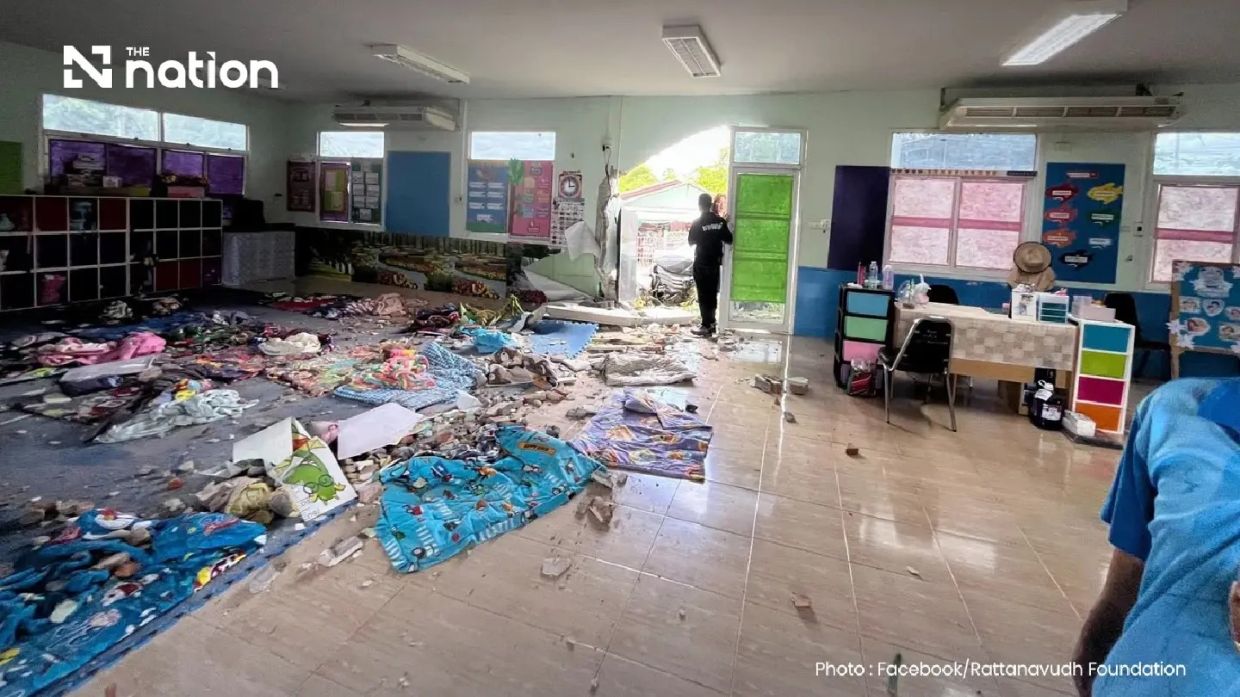
A harrowing incident unfolded in Kanchanaburi on Friday afternoon when a private saloon car veered out of control and crashed directly into the Ban Nong Song Ton Child Development Centre in Mueang Kanchanaburi district. The collision sent shockwaves through the local community and brought emergency responders to the scene within minutes. Of the 34 children present at the facility that day, 15 were injured in the accident, while the remaining 19 escaped harm. The vehicle's impact damaged both the structural integrity of the building and its interior contents, leaving educators and staff scrambling to respond to a crisis that unfolded during what should have been a peaceful afternoon rest period.
The timing of the crash proved particularly catastrophic, as the vehicle struck a classroom where young children were in the midst of their afternoon nap. At this vulnerable moment, when supervision is typically minimal and children are stationary, the sudden impact created a chaotic and frightening situation. The injured youngsters sustained a range of injuries from the collision, including head wounds and trauma from debris and structural fragments scattered across the classroom. Beyond the physical injuries, many children were severely traumatised by the shocking nature of the event. The psychological impact of such a sudden, violent intrusion into their safe space would likely linger long after their physical wounds healed.
Emergency response units moved swiftly to manage the crisis. Personnel from the Rattanavudh Foundation and the Phithak Kan Foundation arrived at the scene rapidly to provide immediate first aid and stabilise the injured children before they could be safely transported. Local authorities coordinated with emergency and rescue vehicles to clear routes through Mueang Kanchanaburi district, allowing ambulances to reach the facility without delay and enabling swift transfer of the wounded children to medical care. This coordinated response system, though tested by the magnitude of the incident, demonstrated the importance of well-rehearsed emergency protocols in minimising harm during such unforeseen events.
All 15 injured children were conveyed to Phaholpolpayuhasaena Hospital for comprehensive medical examination and treatment. Hospital staff conducted thorough assessments to identify the full extent of injuries and monitor for potential delayed complications. The facility's medical team worked to address both the visible physical injuries and any internal trauma that might not be immediately apparent. Following their examination and treatment, hospital authorities confirmed that all 15 children were in safe condition, providing considerable relief to parents and guardians who had been notified of the accident.
The incident raises critical questions about the adequacy of safety measures at childcare facilities across the region. Most early childhood development centres operate with front-facing classrooms and structures designed for ease of access and visibility, often with large windows and open layouts that inadvertently leave children vulnerable to vehicular intrusions. The Ban Nong Song Ton facility, like many similar institutions in Southeast Asia, likely had minimal vehicular barriers or protective infrastructure designed to prevent vehicles from reaching playing and resting areas. For Malaysian parents and policymakers, this incident serves as a stark reminder that childcare safety extends beyond traditional concerns of supervision and food handling to encompass protection against external hazards.
The circumstances surrounding how and why the vehicle lost control remain under investigation. Whether the accident resulted from mechanical failure, driver error, a medical emergency affecting the driver, or environmental conditions will be crucial in determining whether accountability measures or safety recommendations should follow. Thai authorities and local officials would need to examine these factors thoroughly to prevent similar incidents in the future. The broader question of whether childcare facilities should be required to have protective barriers, restricted parking zones, or additional safety measures around vulnerable areas remains unaddressed in many jurisdictions across the region.
For childcare operators and parents in Malaysia and Thailand, this incident underscores the multifaceted nature of child safety. While most early childhood centres invest heavily in food safety, hygiene protocols, and trained supervision, the possibility of external vehicular impacts is seldom prioritised in planning or design considerations. This event may prompt facility managers to reassess their physical infrastructure and consider whether additional protective measures such as bollards, reinforced walls, or redesigned layouts could mitigate such risks. The cost of implementing such modifications must be weighed against the potentially tragic consequences of remaining unprepared.
The 19 children who were not injured in the accident will likely carry memories of this traumatic event for years to come, even without sustaining physical injuries. The psychological impact on witnesses, particularly young children still developing their understanding of safety and security, should not be underestimated. Parents may experience heightened anxiety about childcare arrangements, while educators may need support in processing the stress of having their facility struck by a vehicle and their young charges injured. Beyond the immediate aftermath, the facility will need to address how to rebuild the sense of safety and security that is fundamental to a positive learning environment.
The incident also reflects broader infrastructure and urban planning issues across Southeast Asia. Rapid urbanisation and the proliferation of motor vehicles have created new hazards in spaces traditionally considered safe for children. Childcare centres, schools, and playgrounds are increasingly located in areas with significant vehicular traffic, yet the safety infrastructure protecting these vulnerable populations has not always evolved accordingly. As Thailand and Malaysia continue to develop economically and urbanise further, integrating child safety considerations into urban design and traffic management becomes increasingly important.
The Kanchanaburi incident will likely prompt discussions among Thai authorities, childcare associations, and safety experts about minimum standards for facility design and operation. Whether these discussions result in legislative changes or voluntary safety guidelines will depend on political will and the degree of public attention the incident receives. For Malaysian stakeholders, monitoring Thailand's response to this accident could provide valuable lessons for strengthening existing childcare safety standards domestically. Ultimately, while such accidents cannot be entirely prevented without fundamental changes to urban life, their frequency and severity can be reduced through thoughtful planning, appropriate infrastructure investment, and a commitment to prioritising child safety across all dimensions of facility design and operation.

