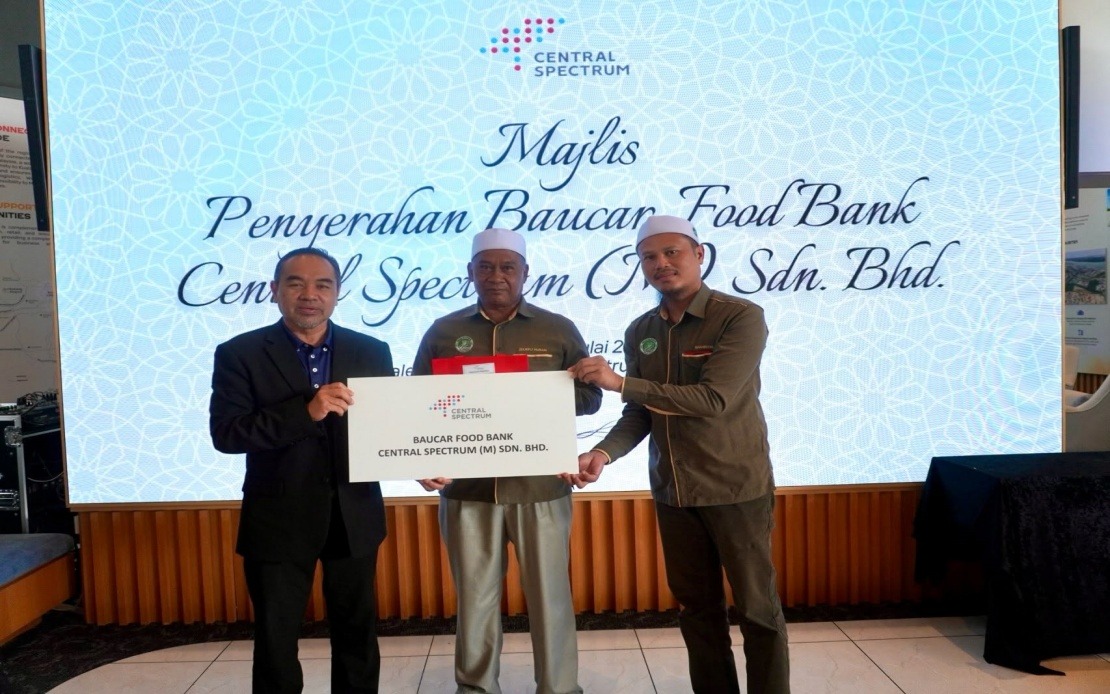
A property developer operating in the Klang Valley has bolstered its community engagement efforts through a targeted food assistance programme, channelling RM10,000 worth of support to vulnerable residents in the Pulau Indah area of Selangor. Central Spectrum (M) Sdn Bhd unveiled the initiative on July 31, marking a significant commitment to addressing food insecurity within the locality whilst simultaneously reinforcing its ties to the neighbourhoods where it operates.
The distribution of 500 food vouchers occurred at the company's Sales Gallery in Pulau Indah, with the initiative designed to reach eligible families and individuals identified by four participating religious institutions. The chosen mosques—Masjid Al-Qayyum in Bandar Armada Putra, Masjid Ar-Rahman in Kampung Sungai Pinang, Masjid Ar-Raudhah in Kampung Sungai Kembong, and Masjid Sultan Abdul Aziz in Kampung Perigi Nanas—serve as the primary conduits for identifying beneficiaries and ensuring equitable distribution of assistance.
The company's decision to partner with mosques reflects an understanding of how religious institutions function as crucial social infrastructure in Malaysian communities. Beyond their spiritual role, mosques maintain detailed knowledge of their congregation members' circumstances and financial situations, positioning them as trustworthy intermediaries capable of directing aid to those facing genuine hardship. This approach acknowledges the established networks and credibility that these institutions already possess within their neighbourhoods, reducing administrative overhead while maximising the programme's effectiveness and community acceptance.
Central Spectrum's acting chief operating officer, Edi Zuhri Abd Rahim, presided over the presentation ceremony, signalling senior management commitment to the welfare initiative. In his remarks, Edi Zuhri articulated the company's vision of corporate social responsibility extending beyond profit generation to encompass genuine community development. He emphasised that programmes such as the Food Bank initiative serve multiple purposes simultaneously—alleviating immediate material hardship while cultivating goodwill and deepening institutional relationships with the communities where Central Spectrum maintains business interests.
The timing and scale of this intervention carry particular relevance in the Malaysian context, where inflation pressures and rising living costs have intensified financial pressures on lower-income households. Food insecurity remains a persistent challenge in urban fringe areas like Pulau Indah, where transient populations and informal employment patterns create vulnerability to economic shocks. By targeting essential food support rather than cash transfers, Central Spectrum ensures that assistance directly addresses household nutrition needs whilst maintaining fiscal discipline in its charitable spending.
The company's selection of mosques as delivery partners also reflects broader corporate recognition of how religious organisations serve as legitimate gatekeepers of community welfare in Muslim-majority Malaysia. This approach demonstrates cultural sensitivity and pragmatism, acknowledging that such institutions possess both the legitimacy and the infrastructure to identify beneficiaries fairly and transparently. The partnership model thus avoids potential accusations of paternalism or arbitrary beneficiary selection that sometimes plague corporate welfare programmes lacking community anchoring.
For residents of Pulau Indah, the programme represents tangible recognition that private sector entities operating within their area acknowledge responsibility toward local wellbeing. Industrial and residential areas on the periphery of major urban centres often experience weak government service delivery and limited philanthropic attention, making corporate initiatives particularly consequential. This food bank initiative signals that developmental projects undertaken by private firms in such localities should incorporate genuine community benefit mechanisms rather than remain isolated enclaves benefiting only direct employees and customers.
The RM10,000 commitment, whilst modest in absolute terms relative to corporate balance sheets, carries symbolic weight within the Klang context. The distribution of 500 vouchers suggests an estimated benefit of RM20 per recipient, a meaningful contribution toward monthly food expenditures for families living paycheck-to-paycheck. For households already managing housing costs, transport expenses, and utility bills on limited incomes, even partial subsidisation of food procurement can meaningfully improve dietary quality and reduce stress during financial shortfalls.
Central Spectrum's framing of this initiative as part of ongoing commitment rather than one-off charity suggests potential durability and scaling. The company explicitly positioned the Food Bank Programme as a platform for fostering compassion and collaborative networks, language implying institutional integration rather than temporary benevolence. Should the company sustain and expand such programming, it could establish a replicable model for how property developers operating across Malaysia's urban periphery might operationalise corporate social responsibility in ways addressing genuine community vulnerabilities rather than merely generating positive publicity.
The initiative also illustrates evolving corporate expectations around stakeholder capitalism in Malaysia, where shareholders and regulators increasingly scrutinise whether firms contribute meaningfully to the societies hosting their operations. By embedding welfare programmes within community institutions rather than operating them as corporate vehicles, Central Spectrum potentially builds more resilient and locally-rooted approaches to development impact. This collaborative model between private enterprise and community anchors may offer lessons for other sectors seeking to balance profitability with meaningful social contribution in rapidly urbanising regions across Southeast Asia.

