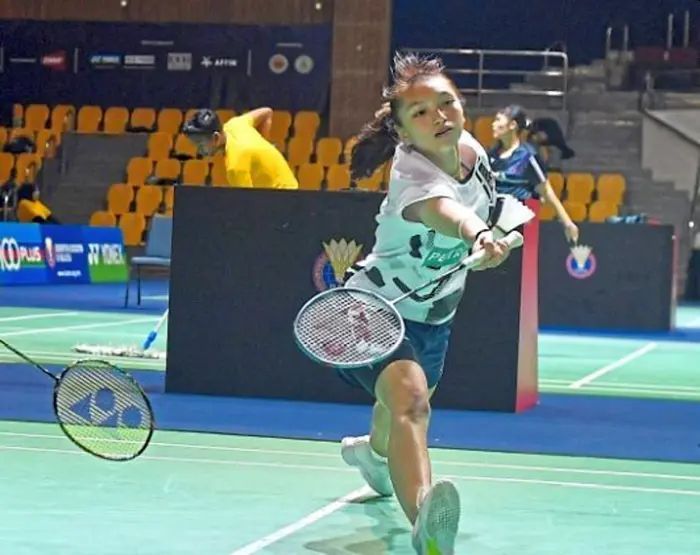
Rising badminton talent Noraqilah Maisarah Ramdan possesses undeniable skill across multiple disciplines, but her mixed doubles coach Nova Widianto cautions that technical prowess alone will not guarantee sustained excellence. Speaking in Petaling Jaya, Widianto emphasised that the 19-year-old's trajectory depends equally on psychological fortitude and character development as on refining her playing ability. This assessment reflects a deeper philosophy within Malaysian coaching circles about nurturing athletes holistically rather than pursuing purely technical improvement.
Widianto's perspective carries weight, given his long association with the player. He has observed Noraqilah's development since her junior years and recognises her innate capacity for badminton. Yet his concern centres on how young athletes navigate the psychological complexities that accompany early success. When acclaim and public recognition arrive quickly, athletes risk losing their grounding and perspective. Widianto identified this mental management dimension as equally critical as court performance, reflecting contemporary coaching wisdom that treats the athlete's psychological ecosystem as integral to development.
The coaching philosophy Widianto articulated reflects Malaysia's extensive experience in developing badminton talent. The country has produced generations of elite shuttlers, and the coaching fraternity understands that many promising young players plateau or falter when external pressures and expectations intensify. What distinguishes successful athletes from those who underperform relative to their talent is often their mental resilience, consistency of preparation, and ability to maintain perspective during both triumph and adversity. Widianto's emphasis on character building underscores this reality.
Noraqilah has already demonstrated her versatility across women's doubles and mixed doubles competition. Her recent achievements validate the coaching team's multi-discipline approach at this developmental stage. Playing in both formats allows her to accumulate competitive experience, understand tactical variations, and develop adaptability. Recently, she partnered with Ong Xin Yee to capture the women's doubles title at the second leg of the Under-21 National Championship in Kuantan, showcasing her ability to perform alongside different partners and in varying formats.
Her partnership with regular partner Low Zi Yu proved especially fruitful at the Australian Open, where they advanced to the quarter-finals and subsequently climbed to a career-high world ranking of No. 70 in women's doubles. This achievement represents tangible progress and validates her competitive readiness at international level. Additionally, her mixed doubles work alongside Loo Bing Kun reached the second round in Sydney, with the pair currently occupying world ranking No. 115. These results collectively paint a picture of a player maturing across multiple competitive fronts.
However, Widianto stressed that Malaysia's coaching philosophy, while encouraging broad-based development in youth players, ultimately recognises the necessity for specialisation. The coach acknowledged that Noraqilah cannot maintain peak performance across both women's doubles and mixed doubles indefinitely if she aspires to the highest echelons of international badminton. Elite competition demands focused preparation, specific tactical training, and partnership development that becomes increasingly difficult when divided between disciplines.
The distinction Widianto made regarding long-term ambitions carries particular relevance. If Noraqilah's ultimate goal involves Olympic qualification and medal contention, specialisation becomes essential. The Olympics represents badminton's pinnacle, and athletes who reach that stage typically have spent years perfecting a single discipline. Competing at Olympic level requires not merely skill but the accumulated tactical intelligence, partnership chemistry, and physical conditioning specific to one format. Countries like China, Indonesia, and Thailand have demonstrated that Olympic success in badminton demands singular focus.
Currently, Widianto appears content permitting Noraqilah the flexibility of dual competition while she remains young. This developmental window offers valuable learning opportunities. Playing multiple formats broadens her understanding of the sport, develops different muscle-memory patterns, and exposes her to diverse opponents and tactical situations. The experience gained now may ultimately strengthen whichever discipline she eventually chooses, as the foundational skills and strategic insights transfer across formats.
Malaysia's badminton ecosystem benefits from having multiple development pathways. The Badminton Association of Malaysia and its coaching staff have cultivated systems that identify talent early and provide progressively challenging competitive opportunities. Yet this same system recognises that eventually, talented players must choose their specialisation strategically. The question is not whether Noraqilah will narrow her focus, but when, and which discipline will best suit her physical attributes and competitive temperament.
The broader context illuminates why Widianto's emphasis on character building carries such significance. Malaysia frequently produces technically gifted players, yet consistent international success at elite level remains challenging. Mental resilience, consistency, adaptability to pressure, and mature professionalism often differentiate world-class athletes from merely talented ones. Noraqilah's proven adaptability—demonstrated through her capacity to excel with different partners and in varying circumstances—suggests she possesses the temperament that character development could amplify.
Looking forward, Noraqilah's development trajectory will likely involve gradually increased specialisation, possibly within the next two to three years. Whether women's doubles or mixed doubles becomes her primary focus will depend on her own preferences and objective assessment of where she performs most consistently. What appears certain is that her coaching team, guided by Widianto's philosophy, will not push this decision prematurely. Instead, they will continue cultivating both her technical sophistication and psychological maturity, recognising that sustainable excellence in badminton requires both dimensions operating in harmony.

