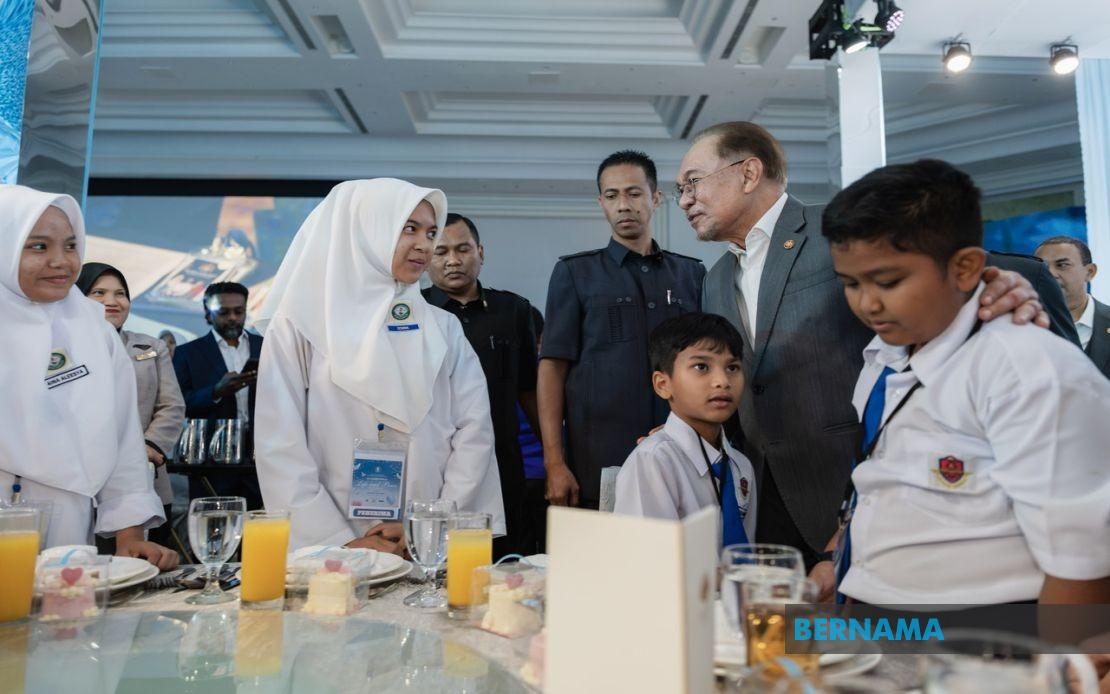
Prime Minister Datuk Seri Anwar Ibrahim has underscored a fundamental principle in education that extends beyond examination results and grades: the necessity of raising children who possess both intellectual capacity and sound moral character. Speaking at a youth gathering in the capital, he articulated a vision of schooling that encompasses not merely the acquisition of knowledge but the formation of individuals who understand their responsibilities to society, their educators, and their families.
Addressing some 700 pupils drawn from 47 schools across Kuala Lumpur and Putrajaya at the "Celebration of Life and Peace" event, Anwar challenged young Malaysians to recognise that academic prowess divorced from ethical behaviour serves little constructive purpose. The Prime Minister posed a rhetorical question to his young audience: what benefit accrues to a child who masters academic subjects yet engages in destructive conduct that harms their peers and damages their own trajectory toward meaningful adulthood? This framing suggests a growing concern within Malaysia's leadership circles about the correlation between educational attainment and social responsibility.
The Prime Minister's remarks arrive against a backdrop of persistent concerns about bullying in Malaysian schools, a phenomenon that education officials and child welfare advocates have identified as undermining the wellbeing of students and, paradoxically, their academic performance. Anwar directed his appeal specifically to young people themselves, inviting them to make a conscious commitment to studying diligently, honouring their teachers, and demonstrating filial piety toward their parents. By framing these expectations as a personal promise rather than an imposed obligation, he appealed to children's capacity for moral agency and self-determination.
The venue for these remarks was significant: an event organised by the ERM Foundation that celebrated the birthdays of participating schoolchildren in conjunction with the natal day of Xin'er, the foundation's founder. This convergence of celebration and moral instruction created an opportunity to reinforce values in an emotionally receptive environment. Anwar's wife, Datuk Seri Dr Wan Azizah Wan Ismail, and his political secretary, Datuk Azman Abidin, were present, lending the occasion additional ceremonial weight and suggesting the Prime Minister's personal commitment to youth development initiatives.
Xin'er articulated the philosophical underpinnings of the gathering, noting that many children globally lack access to the birthday celebrations and opportunities for joy that privileged children often take for granted. Her remarks contextualised the event within a broader framework of equity and universal human dignity. By bringing together children from multiple schools and creating an occasion marked by material provision, communal celebration, and artistic entertainment, the programme sought to affirm that every child merits recognition and joy regardless of their circumstances. This approach aligns with international child development principles that emphasise the importance of celebration and recognition in fostering psychological wellbeing and resilience.
Each attending child received RM500 in cash assistance, access to a specially prepared meal, and opportunities to participate in various performances and recreational activities. The provision of direct financial support reflects an understanding that many families in Malaysia face economic constraints that limit their capacity to mark important occasions meaningfully. This material dimension of the programme addresses a practical aspect of child development while simultaneously conveying a message about societal valuing of youth.
The emphasis on peer-to-peer responsibility and community standards evident in Anwar's address reflects an evolving approach to addressing behavioural challenges in educational settings. Rather than relying solely on top-down enforcement of discipline, the appeal to children themselves to commit to higher standards recognises their capacity to influence the culture of their schools. This peer influence dynamic is often more powerful than adult-imposed rules in shaping adolescent behaviour, particularly during the formative years when children's sense of identity and values are crystallising.
The inclusion of educators and parents in Anwar's call for action reinforces the understanding that child development operates within an ecosystem rather than in isolation. Teachers are positioned not merely as subject-matter instructors but as moral exemplars and guides. Parents, similarly, are called upon to model values of respect, compassion, and commitment to their children's holistic development. This tri-partite responsibility—children, educators, and parents—acknowledges the complexity of raising individuals equipped for both economic participation and social contribution.
The Malaysian context gives particular resonance to the Prime Minister's message. As the country navigates rapid economic development and demographic change, questions about maintaining social cohesion, intergenerational equity, and national identity assume heightened importance. The emphasis on kindness, respect, and rejection of violence in schools speaks to these broader concerns. Bullying and disruptive behaviour in educational settings, if left unaddressed, can corrode the foundations of social trust that economically developing nations require for sustained progress.
Furthermore, Anwar's framing of this issue positions Malaysia within a global conversation about education's purposes. While standardised testing and subject-matter mastery remain important, there is growing international recognition that schools must also cultivate what educators term "soft skills" and character strengths: empathy, resilience, ethical reasoning, and collaborative capacity. These qualities increasingly determine success in rapidly changing labour markets and are essential for democratic participation and social stability.
The "Celebration of Life and Peace" framework itself carries symbolic weight, particularly given Malaysia's multicultural composition and historical experiences of social division. The explicit invocation of peace suggests an understanding that educational institutions serve not merely as sites of knowledge transmission but as spaces where young Malaysians learn to coexist respectfully across lines of difference. In this interpretation, the rejection of bullying becomes not merely a matter of individual ethics but a foundational commitment to the kind of society Malaysia aspires to be.
Looking forward, the challenge lies in translating such exhortations into sustained institutional and cultural change. One-off events, however well-intentioned and emotionally resonant, require complementation through curriculum review, teacher professional development, school-based peer mediation programmes, and parent engagement initiatives. The Prime Minister's articulation of the vision sets a marker; the substantive work of embedding these values into educational practice remains ongoing.

