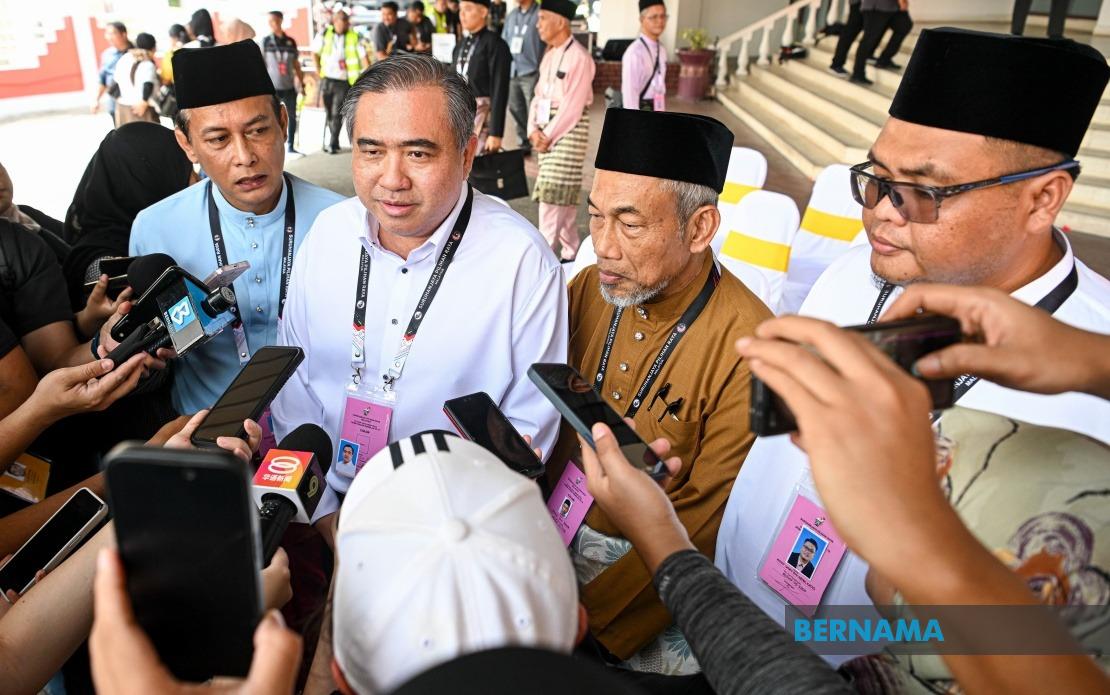
Transport Minister Anthony Loke has underscored the strategic importance of the Chennah state seat in Jelebu parliamentary constituency, identifying it as one of four critical electoral battlegrounds for Pakatan Harapan's push to retain control of the Negeri Sembilan state government. Speaking after the nomination process at Dewan Besar Kuala Klawang, Loke emphasized that securing this seat remains essential to his coalition's broader electoral ambitions in the state assembly polls.
The contest in Chennah will see a direct three-cornered clash between the incumbent Loke and Barisan Nasional's Siow Kong Choon, according to the announcement by Jelebu Parliamentary returning officer Abdul Rahim A Aziz. This straight fight marks a concentrated battle for one of the most consequential constituencies in the region, reflecting both coalitions' assessment of its electoral weight.
Loke's confidence in Pakatan Harapan's prospects rests fundamentally on the coalition's performance since capturing power across Malaysia in 2018. The Transport Minister pointed to tangible achievements in service delivery and infrastructural development over two successive terms, arguing these accomplishments have established trust and demonstrated competence among Negeri Sembilan voters. This narrative of proven governance forms the cornerstone of the coalition's electoral pitch heading into the state election.
The significance attributed to Chennah reflects broader electoral mathematics in Negeri Sembilan. Loke specifically recalled that during the 2018 state election, two seats in the Jelebu parliamentary constituency—Chennah and Kelawang—proved decisive in enabling Pakatan Harapan to form government. This historical precedent has prompted the coalition to treat these constituencies as non-negotiable priorities. Losing either would inflict psychological and practical damage on their ambitions.
For Malaysian observers following state-level politics, the Negeri Sembilan contest carries implications extending beyond the peninsular state itself. As one of Malaysia's more politically contested states, outcomes here often signal broader shifts in voter sentiment and can influence momentum ahead of future federal elections. Pakatan Harapan's performance will be scrutinized by coalition partners and rival factions alike as an indicator of electoral health.
The Jelebu parliamentary constituency itself encompasses multiple state assembly seats, making it a microcosm of the larger electoral challenge Pakatan Harapan faces. By concentrating resources and attention on constituencies like Chennah, the coalition aims to secure decisive wins in key regions while managing competition in more volatile areas. This targeted approach reflects sophisticated electoral strategy rather than blanket campaigning across all constituencies equally.
Barisan Nasional's nomination of Siow Kong Choon signals the opposition's determination to reclaim ground in Negeri Sembilan after their 2018 setback. The BN continues to draw on substantial organizational infrastructure and financial resources, presenting a formidable challenge to the incumbent coalition. The straight fight nature of the contest in Chennah eliminates third-force complications and concentrates voter choice around two principal alternatives.
For residents of Jelebu and surrounding areas, the election represents an opportunity to assess not only national political movements but also local governance quality. Issues pertaining to rural infrastructure, educational facilities, healthcare provision, and economic opportunities typically dominate state-level electoral discourse in constituencies like Chennah. Both Pakatan Harapan and Barisan Nasional will likely emphasize their respective records and promises on these practical matters.
Loke's explicit framing of Chennah as crucial reflects the high stakes involved. Should Pakatan Harapan succeed in retaining this seat while securing other key constituencies in Jelebu, their path to state government control becomes substantially more achievable. Conversely, a loss here would represent a symbolic and numerical blow to coalition aspirations. The binary nature of electoral politics means that local contests become proxies for larger ideological and governance debates.
The nomination process completion marks the transition from pre-campaign positioning to active electoral mobilization. Campaign teams will now intensify grassroots engagement, distribute manifestos, and conduct candidate exposure activities throughout the Chennah constituency. This period typically sees elevated political activity, media coverage, and public attention focused on individual seat contests and constituency-specific issues.
For Southeast Asian analysts monitoring Malaysia's political trajectory, the Negeri Sembilan election offers valuable data points regarding Pakatan Harapan's ability to sustain electoral support following their return to opposition at federal level following the 2022 elections. State-level performance provides comparative measures of coalition strength and vulnerability across different regions, demographics, and governance contexts.
As voting day approaches, the Chennah constituency will likely witness intensified campaign efforts from both sides, with constituency-specific issues taking prominence alongside broader coalition narratives. The outcome here will form part of the broader verdict on Pakatan Harapan's stewardship of Negeri Sembilan and their trajectory within Malaysian politics more broadly.

